Poop cruise passengers get bathrobes

It’s the perfect re-gift, for someone you despise.

Carnival Triumph announced Friday the bathrobes used by the over 4,000 carnivale.cruise.robepassengers adrift in poop on a disabled ship in the Gulf of Mexico would be gratis.

“Of course the bathrobes for the Carnival Triumph are complimentary,” it said in a tweet on the official @carnivalcruise account.

Somehow, this didn’t go over well.

“Who wants a stinky robe?!” tweeted a reporter in North Carolina, Astrid Martinez, while another user of the social media site, Natalie Eshaya, enthused sarcastically, “Oh how generous.”

Another sceptic, Paul Nather, wondered “What do you think the going rate for a Carnival cruise bathrobe will be on eBay tomorrow?”

The white bathrobe has become an unlikely symbol of the nightmare of the cruise-goers, who donned them to attract attention as they stood on the drifting ship.

Others used the white terrycloth as a canvas to write messages, with one passenger proclaiming, “I survived Carnival’s triumph redbags” – a reference to the bags that substituted for toilets.

17527_10151447546963606_1262938859_n

347 sick; 8 multistate outbreaks of human Salmonella infections linked to small turtles

On March 30, 2012, the U.S. Centers for Disease Control announced an outbreak of Salmonella in small turtles that had sickened 66 people – mainly kids – across three states.

That initial outbreak has progressively grown to eight multistate outbreaks sickening at least 347 people with Salmonella Sandiego, Newport, Pomona, Poona, I 4,[5],12:i:-, and Typhimurium from 37 states and the District of Turtle signColumbia in overlapping, multistate outbreaks linked to contact with small turtles and their habitats. Characteristics of the outbreaks are summarized below:

• 28% of ill persons have been hospitalized, and no deaths have been reported;

• 70% of ill persons are children 10 years of age or younger, and 33% of ill persons are children 1 year of age or younger;

• 44% of ill persons are of Hispanic ethnicity;

• 70% of ill persons reported exposure to turtles prior to their illness;

 • 90% of ill persons with turtle exposure specifically reported exposure to small turtles (shell length less than 4 inches); and,

• 33% of ill persons with small turtles reported purchasing the turtles from street vendors, and 11% reported purchasing small turtles from pet stores.

Small turtles are a well-known source of human Salmonella infections, especially among young children. Because of this risk, the Food and Drug Administration has banned the sale and distribution of these turtles as pets since 1975. Turtles with a shell length of less than 4 inches in size should not be purchased as pets or given as gifts.

4 sick; Campylobacter linked to raw milk in Alaska outbreak

alaskapublic.org reports the Alaska State Department of Health is investigating an outbreak of a foodborne illness linked to raw milk. Officials have confirmed four cases of Campylobacter infection in people who drank raw milk on the Kenai Peninsula.

Dr. Brian Yablon is a medical epidemiologist with the state. He says the cases colbert.raw.milkhave all been identified by the state lab in the last three weeks:

“When they looked at these strains, they found that the four specimens were all exactly the same type, so that is consistent with a cluster of illnesses and when we found out additional information it seemed that all of the people who developed the infection had consumed raw milk or unpasteurized milk in the proceeding several days before they got sick,” Yablon said.

The state is still working to identify the source of the raw milk. A farmer named Kevin Byers in Kasilof distributes raw milk to families around the state. He did not agree to a recorded interview, but said he doesn’t know if his milk is responsible for the outbreak. He says his customers drink his milk for the perceived health benefits. According to a recent newspaper article, Byers has 150 customers as far away as Sitka.

Selling raw milk is illegal in Alaska. But farmers have found ways to do it legally.

A similar outbreak of Campylobacter bacteria was traced to a Mat-Su Valley farmer in 2011. There were 18 people with probable or confirmed illness in that outbreak. That operation has since gone out of business.

Horse meat scandal: Finger-pointing and false trust

Supermarkets in the UK are really, really super mad about the horse meat scandal.

Probably not as mad and violated as consumers, but hey, we’re all in this together right, retailers, consumers, you, me – except only one makes money on the deal.

And how well do retailers know their suppliers?

In a public letter, 11 firms, including Tesco and Asda, said they shared mr.edshoppers’ “anger and outrage”.

BBC News reports UK retailers have rejected government criticism they “remained silent” over the horsemeat crisis – as they begin to release test results on beef products.

Earlier, Downing Street said big retailers selling affected products had a responsibility to answer key questions on the scandal.

Sources said it was not “acceptable for retailers to remain silent while customers have been misled about the content of the food they have been buying.”

Meanwhile, the results of up to one third of tests on the presence of horsemeat in processed meals ordered by the Food Standards Agency (FSA) are being released.

Whitbread, which supplies thousands of pubs and owns Premier Inn, Beefeater Grill and Brewers Fayre, has confirmed two of its products have been found to contain horsemeat.

Compass Group, one of the biggest school food providers in the UK, says its tests have found between 5% and 30% horse DNA in burgers it sold in Ireland and Northern Ireland.

Cottage pie delivered to 47 schools in Lancashire has tested positive for horse DNA. The product has now been withdrawn from kitchens. And beefburgers containing horsemeat had been withdrawn from hospitals in Northern Ireland.

That will be reassuring to parents and patients. You know, consumers, partners.

The French government has accused meat processing company Spanghero of knowingly selling horsemeat labeled as beef. The firm has denied the allegations, but apologized to British consumers, saying it was “tricked as well.”

Further to the arrests made yesterday in Wales and West Yorkshire in relation to suspected fraud, there have been seizures of evidence in Hull and London.

UK Food Safety Authority officers entered an additional three premises in England today with local authorities and the police; one was in Hull and two in Tottenham. Computers and documentary evidence have been removed from these premises, as well as meat samples that have been taken for testing.

FSA has submitted a full file and evidence on this issue to Europol.

France has pinned much of the blame for Europe’s meat scandal on a French firm that allegedly sold 750 tonnes of horsemeat as beef that ended up in millions of ready-to-eat meals sold across the continent.

Agence France-Presse reports Spanghero denied any wrongdoing, saying it had never ordered, received or resold any meat that it did not believe to be beef. 

The findings of an investigation by France’s anti-fraud office, presented by the Consumer Affairs Minister, Benoit Hamon, were staggering.

It said Spanghero, a meat-processing firm in the southwestern town of Castelnaudary, had knowingly sold 750 tonnes of horsemeat mislabelled as beef over a period of six months, 500 tonnes of which were sent to French firm Comigel, which makes frozen meals at its Tavola factory in Luxembourg.

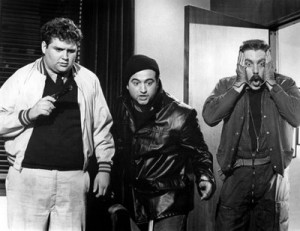
That meat was used to make 4.5 million products that were sold by Comigel to d-day in animal house28 companies in 13 European countries, it said.

Mr Hamon said Spanghero would be prosecuted and officials said its licence to handle meat would be suspended pending further investigations.

The minister said that Comigel, which supplied millions of ready-to-eat meals to supermarkets, which have now removed them from their shelves, had been deceived by Spanghero.

But he said Comigel had failed to carry out tests or inspect paperwork that would have alerted it to the scam. He said Romanian abattoirs named in the affair appeared to have acted in good faith.

Audits inspections never enough; arrests in horse fraud

As UK police made arrests at the two food plants raided jointly with the Food Standards Agency on Tues., the uber-witty Economist says “big retailers and producers have brands to protect, so they are vigilant.”

Hilarious.

An audit by Tesco of its suppliers “is one of the most feared and respected things in the industry,” says Michael Walker, a food-safety consultant. “How come it didn’t pick this up?”

Because audits and inspections are never enough.

124 sick from Salmonella in 12 states, many linked to Foster Farms chicken

The U.S. Centers for Disease Control reported today that since June 4, 2012, a total of 124 persons infected with the outbreak strain of Salmonella Heidelberg have been reported from 12 states.

Among 124 persons for whom information is available, illness onset dates range from June 4, 2012, to January 6, 2013. Ill persons range in age from less than 1 year to 94 years, with a median age of 23 years. Fifty-five percent of ill persons
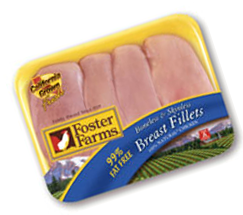
Foster-Farms-Chicken-Breastare female. Among 97 persons with available information, 31 (32%) reported being hospitalized. No deaths have been reported.

Most of the ill persons have been reported from two states, Washington (56) and Oregon (38).

State public health officials are interviewing ill persons to obtain information regarding foods they might have eaten and other exposures in the week before illness.

Information available to date indicates that consumption of chicken is the most likely source of infection for many of the ill persons.

Oregon and Washington have identified Farms brand chicken as the most likely source of the infections in their states.

The U.S. Department of Agriculture Food Safety and Inspection Service (USDA-FSIS) is currently conducting an investigation to determine the source of infections in this outbreak.

It is not unusual for raw poultry from any producer to have Salmonella. This underscores the importance for consumers to follow food safety tips to help protect themselves and others from foodborne illness.

18 now sick from Salmonella linked to kibbeh in Michigan

CDC reports a total of 18 persons infected with the outbreak strain of Salmonella Typhimurium have been reported from 5 states.

The number of ill persons identified in each state is as follows: Arizona (1), Iowa (1), Illinois (2), Michigan (9), and Wisconsin (5). Two new cases have been kibbeh.banned.windsor.jun.12reported from Wisconsin since the last update.

50% of ill persons have been hospitalized, and no deaths have been reported.

Among persons for whom information is available, illness onset dates range from December 9, 2012 to January 7, 2013. Ill persons range in age from 2 years to 87 years, with a median age of 47 years. Fifty percent of ill persons are female.

Collaborative investigative efforts of state, local, and federal public health and regulatory agencies indicated that ground beef produced by Jouni Meats, Inc. and Gab Halal Foods are likely sources of this outbreak.

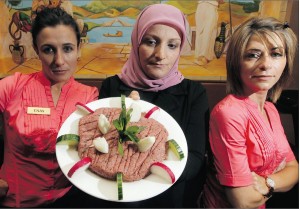
Seven of the ill persons reported eating a raw ground beef dish at the same restaurant before becoming ill. The restaurant served raw beef to customers and had acquired the raw beef from two retailers.

On January 24, 2013, Jouni Meats, Inc. recalled approximately 500 pounds of ground beef products.

On January 25, 2013, Gab Halal Foods recalled approximately 550 pounds of ground beef products.

Consumers should not eat raw or undercooked ground beef.

Cook ground beef hamburgers and beef mixtures such as meat loaf to 160°F internal temperature using a food thermometer.

It’s poop: E. coli found on Taylor Farms organic spinach; recall launched

When did press release writing drones come up with the phrase, “out of an abundance of caution?” It seems to be appearing in every recall release.

How about, “in the course of doing our job to provide safe food, we found dangerous E. coli on our raw spinach and decided it would be a good idea to warn
org_traysal_bbyspnpeople.”

But I don’t get paid the big bucks.

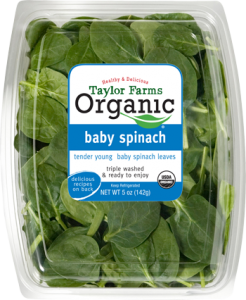
Taylor Farms Retail, Inc. is initiating a voluntary recall of select Organic Baby Spinach products with the potential to be contaminated with (EHEC) Enterohaemorrhagic Escherichia coli.

(That’s the nasty kind)

The company is cooperating with the Food and Drug Administration (FDA) and California Department of Public Health (CDPH) regarding this recall. There have been no reported illnesses attributed to the recalled items.

How was this positive picked up, through internal or random testing? What is the strain of E. coli? Where did it come from?

And who knew what when?

Martine likes horse; so do some Brits; FSA raids meat plant involved in alleged supply of horse meat

Martine’s as hungry as a horse.Martine et les lasagnes

So she opens the fridge.

And now she has a horse in her stomach.

Martine is not only the middle name of daughter Courtlynn, but apparently the title character in a series of books for children written in French by the Belgians Marcel Marlier and Gilbert Delahaye and edited by Casterman. The first one, Martine à la ferme (Martine at the farm), was published in 1954, followed by over 50 other books, which have been translated into many different languages.

Frenchy Amy says we have one of those books for Sorenne.

But friend of the blog Albert Amgar sent us this satirical one, Martine Likes Lasagna, and Amy translated his note, above.

Sometimes when I read about food issues or outbreaks, I begin to crave that food: horse sounds delicious.

I’m not alone.

According to the Globe and Mail, specialty meat suppliers in Britain have seen a surge in sales of horse burgers, with a scandal over the discovery of horsemeat in beef burgers and ready meals apparently piquing the curiosity of some shoppers.

Horsemeat, which has a sweet, gamey flavour, is cheaper and healthier than beef, containing half the fat, more Omega 3, and higher amounts of protein and iron.

Though none of Britain’s supermarkets sell horsemeat, it is available through specialty meat suppliers and is on the menu of a few notable restaurants, such lasagnaas L’escargot Bleu in Edinburgh.

Exotic Meats has seen sales of horsemeat burgers, steaks and mince increase ten-fold since the scandal erupted on Jan. 15.

Exotic Meats’ horsemeat is sourced from either France, Spain or Italy and processed in Britain by an EU-approved plant.

Last week in response to the Findus scandal the firm posted on its website a recipe for horsemeat lasagne.

Berwickshire, Scotland-based Kezie Foods, which sells horsemeat products alongside elk, kangaroo and crocodile, has seen horsemeat sales double over the last three weeks, with strong demand from restaurants as well as individuals.

But consumers should get what they pay for; and food fraud is as reprehensive as eating ___________.

The UK Food Standards Agency and police today entered two meat premises, one in West Yorkshire and the other in West Wales.

The plant in West Yorkshire is Peter Boddy Licensed Slaughterhouse, Todmorden, West Yorkshire, and was believed to supply horse carcasses to Farmbox Meats Ltd, Llandre, Aberystwyth. The Agency and the police are looking into the circumstances through which meat products, purporting to be beef for kebabs and burgers, were sold when they were in fact horse.

The FSA has suspended operations at both these plants. Both West Yorkshire and Dyfed-Powys police have entered the premises with the FSA. The FSA has detained all meat found and seized paperwork, including customer lists from the two companies.

Andrew Rhodes, FSA Director of Operations, said: ‘I ordered an audit of all horse producing abattoirs in the UK after this issue first arose last month and I was shocked to uncover what appears to be a blatant misleading of consumers. I have suspended both plants immediately while our investigations continue.’

But weren’t there inspectors at those plants?

Woolworths, the largest retailer in Australia, got it right when they announced it would use DNA tests to verify what’s in their meat.

“While we have a robust traceability process in place, we will be testing Woolworths-branded ready meals and other meat lines for customers’ peace horse.o.brotherof mind,” spokesman Benedict Brook told News Limited last night.

“We expect them to all come back correct.”

Rival Coles said it had strong quality control – but would contact its suppliers just to “make sure.”

The New South Wales Food Authority noted measures the feds and state uses to keep horse meat out of human food.

  • The Department of Agriculture, Fisheries and Forestry, which controls quarantine, advises Australia does not import any lasagna from Europe or beef patties from the UK or Ireland. 
  • There is a low risk of the EU substitution issue being experienced here, as Australia imports negligible amounts of raw meat. 
  • Horse meat is not processed for human consumption in NSW. 
  • Horse meat is processed for pet food at NSW knackeries. Strict laws are in place that requires knackeries to stain horse meat with a bright blue dye and to prevent it from entering the human food supply chain. 
  • The Authority conducts routine inspections of knackeries to assess compliance with the staining laws. 
  • The Authority conducts random species testing of meats sold at butchers in NSW. 
  • Food labelling laws in Australia require food to be correctly and truthfully labelled. 
  • There are significant penalty provisions under the Food Act 2003 for substitution and deceptive labelling of food. 

Barefoot’s Joe closed? Norovirus runs rampant at university in Tenn

WREG reports Union University in Jackson, Tennessee, is closed until Wednesday after a stomach virus sickened about 300 of the 1,100 students living on campus.

All classes at the university’s campus are cancelled and the library, wellness barefootsjoelogocenter, and Barefoots Joe will also be closed.

Off-campus clinical sessions for nursing and pharmacy will continue to meet as scheduled.

Brewer Dining Hall and the Lexington Inn will remain open and will offer carry out food services.

In addition, Monday’s West Tennessee Ministers and Wives Valentine’s Banquet is cancelled.

A suggestion: any students working in food service, don’t go to work.