‘Superfood Co’ super-sucks with Salmonella on sprouted chia powder

Navitas Naturals, the Superfood Company is voluntarily recalling products which contain Organic Sprouted Chia Powder due to possible health risks related to Salmonella contamination. “We have chosen to voluntarily recall products containing Organic Sprouted Chia Powder with the goal of utmost safety for our consumers” stated Zach Adelman, Navitas Naturals CEO.

salm.chia.sprout.powderThe affected products were distributed nationally and include:

Navitas Naturals Organic Sprouted Chia Powder, 8oz, UPC 858847000369 with best buy dates from 04/30/2015 through 09/05/2015

Navitas Naturals Omega Blend Sprouted Smoothie Mix, 8oz, UPC 858847000314 with best buy dates from 07/29/2015 through 09/19/2015

Williams-Sonoma Omega 3 Smoothie Mixer, 8 oz, SKU 506436 with best buy dates from 09/12/2015 through 10/02/2015

No other Navitas Naturals products are affected by this recall.

Consumers who have purchased this item are urged to not eat the product, and to dispose of it or return it to the store where it was originally purchased.

Salmonella is an organism that can cause serious and sometimes fatal infections in young children elderly people, and others with weakened immune systems. Healthy persons infected with Salmonella often experience fever, diarrhea, nausea, vomiting and abdominal pain. In rare circumstances, infection with Salmonella can result in the organism getting into the bloodstream and producing more severe illnesses.

The company is working closely with FDA and California Department of Public Health on this issue. “Ensuring the premium quality of the superfoods we provide is our highest priority,” said Adelman.” We stand behind the safety and integrity of our products and their valuable superfood nutrients,” confirmed Adelman.

Customers with questions or who would like product replacements or refunds may contact 888-886-3879 between 8:00-4:30 PST, Monday through Friday.

Asparagus farmer: he’s not heavy, he’s my cuz

Between the anguished cries in the fetal position after his beloved Boston Bruins were bumped out of the Stanley Cup playoffs (that’s ice hockey to Australians), my cousin, Tim Barrie, manages to carry on the family tradition and farm asparagus.

It’s a late spring in southern Ontario (Cambridge area, to be specific), but Tim says the flavor is great and Tim is always finding the bright side.

tim.barrie.asparagusAnd he knows enough to practice good food safety.

According to the K-W Record, green and sweet asparagus is what spring is all about his 25-acre farm off Kings Road.

Blame a hard snowy winter and a wet spring for a tardy crop at Barrie’s Asparagus Farm, but the good news is it’s lip-smacking luscious and sweet-pea scrumptious.

Two years ago, drought made for a bitterly disappointing harvest, said 52-year-old Tim Barrie. Last year was a great crop for quantity. This year, quality binds every $3-a-pound bunch.

“Taste-wise, it’s as good as I can remember,” Barrie said from beneath his favorite spoked-number-four Bobby Orr ball cap.

This asparagus operation goes back four decades on this former cattle farm. The future is asparagus, Barrie’s father David was told by his father-in-law Homer — an Alliston asparagus grower.

David, who still trims the grass at the farm (and still plays pickup hockey at 80- years-old), listened and became a spear plucker.

His son Tim and his wife Libby run the fields of green and the farmhouse shop now.

Their grown daughters — Mallory, Emily and Hannah — and son Will, 13, help out too.

asparagu.barrieThere are only about 100 asparagus operations in Ontario because it’s labor-intensive. Barrie has 10 locally hired pickers harvesting his 24 acres every day until Canada Day. The spears are spun right into the farmhouse shop and put on sale within an hour of picking off the side of Kings Road.

On Saturday mornings, the parked cars fill up the country roundabout in front of the house, Barrie said. They come for the fresh asparagus. They may leave with pickled asparagus and asparagus barbecue sauce, too. Or asparagus ravioli and asparagus soap. Or asparagus salsa. A fresh batch of that salsa, bottled with a day of picking, is firehouse hot.

They plant strawberries too, along with rhubarb, sweet corn and pumpkins.

They sell some kettle chips, named Spud’s Finest in honour of Barrie’s mother Miriam (she’s my mom’s sister – dp). She grew up on a potato farm before her father turned to, of course, asparagus.

Of course it was Wales: KFC suspends Cardiff staffer after Facebook post claims she laced meal with pubic hair

I nag my five daughters about being careful what they post on Facebook, probably the same way my parents nagged me to stop being such an asshole.

A message on Facebook’s “Spotted Cardiff” page alleged a worker sabotaged a customer’s meal in revenge for rudeness, Walesonline reports.

kfcSpotted Cardiff is a page for Facebook users who “need to get something off (their) chest?”

The anonymous post appears to target a group of females who had threatened a female staff member at the Cardiff Excelsior Road drive-through in the UK because she “needed to smile more”.

The post said: “After over hearing the way you spoke to my girl on the head set be picking pubes out your teeth for a week.”

A spokeswoman for KFC told Walesonline: “We have investigated this incident and although there was an altercation in the drive-through between the customers and a member of our team, we do not believe the food was contaminated in any way.

“We have the highest standards of food hygiene and do not tolerate even the suggestion of this kind of behavior, and therefore the employee was suspended as soon as the matter came to our attention.”

Ron Doering: reducing antibiotics in meat

Ron Doering, the first and only president of the Canadian Food Inspection Agency anyone can remember, and current counsel in the Ottawa offices of Gowlings (Ronald.doering@gowlings.com), writes in his monthly Food Law column that:

Health Canada (HC) and the Canadian Animal Health In­stitute (CAHI), the trade asso­ciation representing Canadian veterinary drug manufacturers, are to be com­mended for their decision on April 10 to follow the American initiative to address the growing concern over antimicrobial resistance in humans by introducing measures to promote the more prudent use of antimicrobials in animal produc­tion. HC announced its intention (1) “to work towards the removal of growth promotion and/or production claims of medically important antimicrobial drugs” and (2) “to develop options to strengthen the veterinary oversight of antimicrobial use in food animals.”

ab.res.prudent.may.14Contrary to many mainstream media reports, this does not mean that Canada is phasing out antibiotic use in meat production. Moreover, both initiatives face several difficult barriers to implementa­tion. This month we look at the difficulties associated with the first proposal, leaving next month for an analysis of why the oversight role by veterinarians must be strengthened if we are ever going to make real progress on what may be the most serious public health problem of our time.

First some law. The licensing and sale of antimicrobials fall under the jurisdic­tion of the federal government and its Food and Drugs Act, but the authority to manage their “use” lies with the provinces. The provinces also have the exclusive authority over the practice of veterinary medicine. What this means is that HC can require that a vet drug no longer have “growth promotion” as an indicated use on its label, but under the current regime it has limited power to actually determine how the drugs are used.

The issue of preventing growth promotion claims, and whether such a step will actually make a real difference, is a complex one. To begin with, most antibiotics are not actually used directly for growth promotion purposes but rather for disease prevention and control, what is often called disease prophylaxis. Removal of growth promotion claims will not prevent drugs to claim and be used for disease prevention. Farmers can continue to give their animals low doses of antibiotics to keep them from getting sick. The Public Health Agency of Canada, estimating that 90 per cent of the medication on farms is used for disease prevention, argues that antimicro­bials should not be used in this way and should be “limited to treating infection and not long-term mass medication for growth promotion or guarding against disease.” Others argue that there is insuf­ficient science to support the conclusion that low doses given to animals contrib­ute to antimicrobial resistance in humans and that outlawing the practice would result in more animal disease and the need for more drugs for disease treat­ment, possibly exacerbating the problem of antimicrobial resistance. When the science is uncertain, policy development is always difficult.

What is clear is that the proposal will not even apply to a large amount of anti­biotic use because of regulatory loopholes that result in part from our jurisdiction­ally fragmented regulatory framework. Our provinces still allow veterinarians to prescribe drugs for purposes not indicated on the product label (extra-label use). Unapproved drugs may be used on ani­mals because it is still legal for drugs to be imported for livestock production “own use” (OUI) if the drug is not offered for resale and it is not a prescrip­tion drug. As well, Active Pharmaceutical Ingredients (APIs) can still be imported by livestock producers to be mixed into feed on farm. None of these unregulated antibiotics are covered by the proposal. The latest Canadian Medical Association Journal contains a critical assessment of Canada’s performance in enhancing antimicrobial stewardship in agriculture and veterinary medicine, but it does state that HC has recently proposed measures to address OUI and API so, hopefully, reforms may be imminent.

As we shall see next month, none of the barriers described above can be adequately tackled without Canada’s veterinarians and their provincial regula­tory bodies taking a greater leadership role in combating the serious and growing problem of antimicrobial resistance in humans. Nowhere is the concept of One Health more compelling.

Eva Longoria’s Vegas steakhouse closes following bad health reviews

After being temporarily closed by Nevada health types in early May, Eva Longoria’s female-focused Las Vegas Strip steakhouse has closed for good, less than two years after opening in a swanky shopping centre on the Las Vegas Strip.

eva.longoriaOfficials with parent company Landry’s say SHe by Morton’s shut down effective Sunday.

STEC on beef; Texas A&M investigators develop research to reduce dangerous E. coli

Texas A&M investigators are part of a research effort working on ways to inhibit the growth of Shiga-toxin producing E. coli (STEC) on beef.

Carolina Gonzalez, a graduate student at TAMU, studied the use of fermentative microorganisms to produce natural antimicrobial compounds that can inhibit the growth of STEC on beef top sirloins.

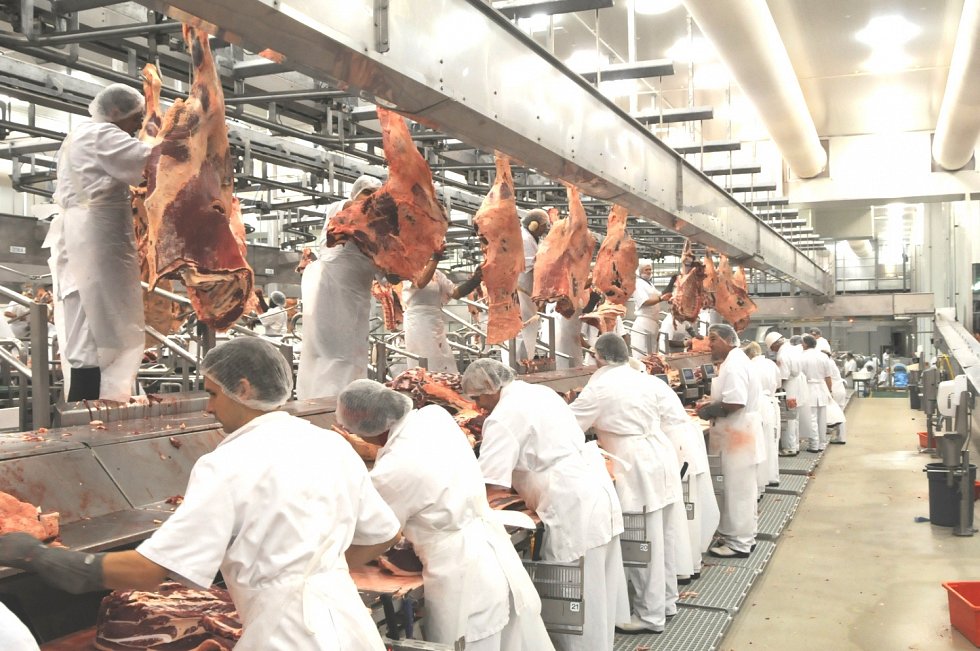
beef.processingUsing this methodology, Gonzalez was able to reproduce the production of lactic acid by these organisms on beef surfaces during product aging, which will help producers understand how the non-pathogenic microorganisms can inhibit the growth of pathogenic microbes on major pieces of beef before preparation.

Tamra Tolen, a Ph.D. student, studied the ability of different plant-derived, antimicrobial essential oils such as clove and oregano to not only to restrain the growth of STEC on ground beef, but also exhibit antimicrobial properties. Such essential oils are identified as generally safe by the U.S. Food and Drug Administration and U.S. Department of Agriculture Food Safety Inspection Service, and may be particularly relevant in both beef transportation and retail.

The results of the new research will be presented at the 2014 Governor’s Conference/STEC CAP Annual Conference May 27-29, in Lincoln, Neb. Attendees at the conference will also discuss progress in prevention and control of microbials. “The Texas A&M AgriLife Research team is pleased to have the opportunity to collaborate with such a prestigious research group working to help assure the safety of our food,” said Dr. Gary Acuff, director of the Texas A&M Center for Food Safety in College Station and one of the collaborative research team members.

beef.stec“The long-term goal of the project is to reduce the occurrence and public health risks from Shiga toxin-producing E. coli in beef, while preserving an economically viable and sustainable beef industry,” said Dr. Rod Moxley, project director from the University of Nebraska-Lincoln. “This can only be accomplished by a multi-institutional effort that brings together complementary teams of the nation’s experts whose expertise spans the entire beef chain continuum and then sharing the research findings through conferences such as this.”

Texas A&M is one of the 15 universities engaged in STEC research, which was funded by a five-year, $25 million grant from the U.S. Department of Agriculture.

A survey of Escherichia coli O157:H7 virulence factors: the first 25 years and 13 genomes

Escherichia coli O157:H7 is a human pathogen that was first identified from a foodborne outbreak in 1982, and in the 25 years that followed, many new strains were identified and emerged in numerous outbreaks of human disease. Extensive research has been conducted to identify virulence factor genes involved in the pathogenesis of E. coli O157:H7 and many genome sequences of E. coli O157:H7 strains have become available mason.jones.IIto the scientific community. Here, we provide a comprehensive overview of the research that has been conducted over the first 25 years to identify 394 known or putative virulence factor genes present in the genomes of E. coli O157:H7 strains. Finally, an examination of the conservation of these 394 virulence factor genes across additional genomes of E. coli O157:H7 is provided which summarizes the first 25 years and 13 genomes of this human pathogen. 

Advances in Microbiology, 4, 390-423

Holly A. Reiland, Morrine A. Omolo, Timothy J. Johnson, and David J. Baumler

http://www.scirp.org/journal/PaperInformation.aspx?PaperID=46371#.U4XdzRYqbSt

Infant with botulism identified in Israel; treated with antitoxin

Botulism is scary. In adults, consuming small amount of toxin (as little as a couple of nanograms) can cause paralysis; victims often end up on a ventilator for months. Intoxication is fatal in 5-10% of cases (depending on the type).
In infants, the risk comes from ingesting C. botulinum spores (most often associated with honey)Household dust has also also been identified as a potential source in at least one case.botulism_starter_kit_by_strangecraftdesign-d3cwcvg
Regardless of the source, the consequences can be catastrophic. Illness severity is linked to how quickly the right treatment is administered — identification of the symptoms takes an on-the-ball physician who knows a bit about food safety.
According to Algemeiner.com, an Israeli doctor’s access to antitoxin may have saved an infant’s life.
A 7-month-old child is in serious condition in an Israeli hospital after ingesting spores of a rare and deadly disease just days earlier.
 
“During our checkup, we concluded that he was suffering from botulism,” Dr. Eli Shapiro, Pediatric Intensive Care Unit chief at Rehovot’s Kaplan Hospital, told Army Radio on Wednesday.
 
Kaplan, like all Israeli medical facilities, keeps ample supplies of biological and chemical warfare antidotes on hand in case of war or terrorist attacks, and regularly drills staffers in dealing with the symptoms of various chemical, neural and blister agents.
 
The quick-thinking mother immediately brought the child to the hospital when she saw he was suffering from vomiting, difficulty in breathing, listlessness and an inability to nurse or eat, hospital officials said.
 
“The infant is still in a life-threatening situation, however, the muscular paralysis has been checked and there’s been a small degree of improvement in his muscular weakness,” Shapiro said.
 
Shapiro said it was, as yet, unclear as to the source of the poisoning, however, Health Ministry officials have been alerted and are investigating the circumstances.

Ill employee linked to celebrity chef’s restaurant outbreak?

Famous chefs seem to have the same problem as mere mortals when it comes to having food handlers show up to work ill. It’s a bad idea and a risk factor for foodborne illnesses. In 2009, Heston Blumenthal’s fancy pants Fat Duck restaurant was linked to a massive norovirus outbreak. A report in Epidemiology and Infection concluded that 591 people were sickened, the restaurant failed to notify public health types as dozens of complaints poured in, hired its own food safety consultant, did a deep clean, and then temporarily closed.

Heston blamed the oysters; public health officials fingered ill employees.

An ill employee mighta, sorta, be the source of another celeb chef outbreak, according to health officials. This time in George Calombaris’ restaurant Hellenic Republic in Melbourne. According to Mail Online, After 90 reported illnesses in May (initially thought to be Salmonella, but confirmed as norovirus) after eating Mothers’ Day meal at the restaurant.article-2631159-1DEF6E5300000578-414_634x358

Health Department spokesman Bram Alexander said the department’s tests determined norovirus, a common and highly contagious cause of gastroenteritis, as the cause of the illness.

‘Of the 300-plus diners we interviewed, around 90 reported illness, which could have been associated with eating at Hellenic Republic Kew,’ Mr Alexander said.

Mr Alexander added it was ‘likely’  to have come from an infected food handler at the restaurant.

Mr Calombaris, a co-owner of the restaurant, previously issued a statement saying his Kew team had been ‘absolutely devastated by the recent events’.

‘I am so sorry for those poor people that have been affected and to those inconvenienced by us taking precautionary measures and closing down the venue,’ he said.

‘We are confident in our procedures and standards of hygiene and the welfare and enjoyment of our guests has always been and will continue to be our highest priority.’
 
‘Although there is no evidence as to the cause of this, we are working closely together with Boroondara Council and health authorities to discover the cause,’ she said.
 
It’s all so confusing; is it an ill employee, or something else (like a vomit event in the restroom that someone dragged back to the kitchen)?

‘C? I haven’t seen no C’; Carlito’s Burritos in Vegas

Carlito’s Way should not be the theme for Carlito’s Burritos on Patrick and Pecos in Las Vegas, which came in with a 36-demerit “C.”

We got a warm welcome from customers, who said, “I love you, I love you, I love you but this is not the spot for Dirty Dining.”

carlitos-way-movie-image-1They were disappointed that their favorite hangout got a bad health inspection.

Milk that was almost two weeks expired. Eggs that were almost as old as the milk. They had to throw out tomatoes, cooked vegetables and green chile pork because all were at unsafe temperatures.

There was rust and mold in the ice machine. Soda nozzles were moldy too. Raw eggs, some of which were cracked and leaking, sat on top of shredded cheese.

“We’d like your side of the story to know what they found, why they found all the stuff that caused you to get so many demerits,” said Darcy Spears.

“That one, you need to speak to the owner, sweetheart, I have no comment. I came in and, I don’t know,” said the person in charge.

“You saw that C posted on the wall?” asked Darcy.

“I haven’t seen no C.”

That’s because it’s not posted, which in itself is a violation. Right above her, there’s an empty nail on the wall.