Pet treat mystery: more dogs dead, 3 people sick, FDA says

Pet jerky treats, mostly imported from China, are now linked to more than 1,000 deaths in dogs, more than 4,800 complaints about animal illness, and, for the first time, sickness in three people who ate the products, federal health officials said Friday.

Bone-JerkyBut, according to JoNel Aleccia of NBC News, U.S. Food and Drug Administration officials say they still can’t identify a specific cause for the reported illnesses or deaths, despite seven years of testing and investigation.

“The agency continues to caution pet owners that jerky treats are not required for a balanced diet and encourage them to consult with their veterinarians, both prior to feeding treats and if they notice symptoms in their pets,” FDA said in a statement.

The humans who consumed the treats included two toddlers who ingested them accidentally and an adult who may have been snacking on the questionable products, which include chicken, duck or sweet potato jerky treats, an FDA official said.

“The agency continues to caution pet owners that jerky treats are not required for a balanced diet and encourage them to consult with their veterinarians.”

One of the children was diagnosed with a salmonella infection, which can be spread by touching contaminated pet food and treats. The other child developed gastrointestinal illness and fever that mirrored the symptoms of dogs in the house that also ate the treats. The adult reported nausea and headache, said Siobhan DeLancey, an FDA spokeswoman.

The agency has received about 1,800 new reports of illnesses and deaths since its last update in October, some involving more than one pet. The numbers now include 5,600 dogs and 24 cats. 

2 sick with E. coli from raw milk in Michigan

Two people in West Michigan, including a 6-year-old child, contracted a strain of E. coli after drinking raw milk from a cow share program.

colbert.raw.milkAccording to a press release from the Kent County Health Department, a 31-year-old Muskegon County women and a 6-year-old from Kent County became sick after drinking raw milk from an Ottawa County cow share program.

Both of these cases were reported in March and April of this year.

Food safety scientists double up on ground beef testing this summer

As grilling season heats up, the USDA’s Food Safety and Inspection Service is enhancing our food safety testing program for ground beef.  While FSIS has a range of safeguards to reduce E. coli in ground beef, this summer we will begin new testing to improve the safeguards against Salmonella as well.  Salmonella is commonly found in ground beef and, in fact, caused an illness outbreak in January 2013 in six states.  Salmonella is an especially difficult bacteria for food safety experts to address because it is so prevalent in almost all food sources.

ben-newRecognizing that we need more information about the prevalence of Salmonella in ground beef to better prevent food-borne illness, FSIS is “super-sizing” our pathogen testing program to include Salmonella every time our laboratories test for E. coli in samples of ground beef and ground beef sources. Because the samples taken for E. coli testing are much larger than those we have taken in the past for Salmonella, there is higher likelihood that we will be able to detect the bacteria if it is present.

Once FSIS has collected enough data about the prevalence of Salmonella in ground beef, we will create a new standard to encourage ground beef processors to strengthen their Salmonella controls, resulting in safer products and fewer foodborne illnesses.  The data collection process will take some time, but it is critical that the new standard is supported by meaningful data.  Of course, we will continue to analyze any positive samples for multi-drug resistance and specific serotypes to determine whether they are contributing to human illnesses.

Salmonella is the most urgent issue facing FSIS when it comes to protecting consumers and it is why we developed our Salmonella Action Plan.  This plan details our strategy for reducing the number of Salmonella-related illnesses, and this enhancement to our sampling and testing programs is part of that comprehensive effort.  

We’re gonna ride the gravy train; passion, engagement doesn’t happen top-down at universities; it’s people

My father and uncle always told me, I don’t care what you do, just be really good at it.

For awhile I was going to be a bicycle repair dude; then a carpenter; I found I wasn’t good at either. Then I hit on the writing and professoring thing and at least I don’t suck.

So why are talented university researchers toiling away in the ever growing ranks of administratium, when they are not good at it?

And why are taxpayers continually asked to pay?

The head of the University of Saskatchewan’s School of Public Health (that’s in Canada) was fired a couple of days ago after he spoke out against the school’s TransformUs restructuring plan.

I don’t know what TransformUs is, but suspect it is largely similar to Kansas State University’s 2025 initiative and numerous other marketing duds at numerous other universities, paid for by tax dollars (individual and corporate donations are a form of tax dollars).

Having university professors as administrators is problematic; many seem to go to the same Tony-Robbins-how-to-be-a-great-leader seminar and end up whores for money.

The role of president has been transformed to cheerleader-in-charge.

The provost runs a dictatorial state – it’s not even benevolent – that demands strict adherence to institutional goals.

The University of Saskatchewan confirmed that it fired professor Robert Buckingham, but would not comment further.

When Buckingham showed up to work a few days ago, he said he was met by two police officers. He said they handed him a note, which talked about a letter he released yesterday called ‘The Silence of the Deans.’

Buckingham said the university claimed he breached his contract through the letter, and irrevocably damaged his relationship with the university.

He was escorted off campus by the pair of officers. He was told to stay off university property, but will be allowed to return at a later date to collect his personal belongings.

He said his tenure and benefits have been revoke and cannot comment further until he obtains a lawyer.

In a public letter Buckingham titled “The Silence of the Deans,” he detailed a December 2013 meeting between senior academic leaders at the school. He said deans and vice-presidents were in attendance. Buckingham claims that president Busch-Vishniac told the group not to “publicly disagree with the process or findings of TransformUs.” Buckingham alleges President Busch-Vishniac went on to tell the group that if they did speak out against the cost-cutting process their “tenure would be short.”

Sounds about right.

And it’s a sad state for academic institutions.

An excerpt from an email the US provost sent said, “you are in an especially tough position and are subject to the expectation the president has of all of its leaders, that you will support TransformUs and the university’s messaging.”

The next day, US rehired Buckingham.

But not as Dean.

“Dr. Buckingham, who was terminated from his position (as dean of Public Health) on May 14, will not return to that leadership position,” said Busch-Vishniac. “He will, however, be offered a tenured faculty position. The confusion on this issue stems from differing interpretations based on his contract. Because we hold tenure in high regard, we will immediately reverse that part of our initial decision.”

Why do taxpayers foot the bill for administrative idiocy?

In Kansas, the state board of regents has upheld an idiotic decision that professors better mind their manners on twitter or other social media, or they can be fired.

I have no doubt I was fired because of the things I write that didn’t please university donors, but don’t dwell on conspiracy theories.

Why assume conspiracy when stupidity explains most things?

I’ve benefitted from the university system, as has my family, but when I see the debt my children have acquired with a complete lack of accountability and the growing administrtium org chart with the salaries and benefits, I recommend other alternatives.

The system is broken.

To me, the driving interest is to be curious, ask the right questions, and engage people.

The universities I know gave up on that long ago.

So why should taxpayers pay?

Raw meat dripping on sponges: UK takeaway owner ‘had scant regard for food safety’ in filthy fast food outlet

Filthy conditions and hygiene breaches including a lack of a staff toilet were uncovered at a Bradford fast food restaurant in a swoop by environmental health officers, a court heard.

Raw meat was found to be kept next to fresh food and a collandar of thawing chicken was found to be dripping on to cleaning sponges at Fresh Fillingz in Duckworth Lane.

Fresh FillingzMohammed Ayaz Rashid, 46, then sole owner of the business, appeared before Bradford and Keighley magistrates yesterday after pleading guilty to a total of 10 charges on Tuesday – the day before he was due to face trial.

Abdul Shakoor, prosecuting on behalf of Bradford Council, said the eight food hygiene and two health and safety charges related to findings made during an inspection of the property on January 23 last year.

Rashid, of Granville Road, Frizinghall, also asked for a further 10 food hygiene breaches, identified on subsequent visits to the business in July 2013 and January this year, to be taken into consideration by the court.

Details of the charges included numerous food cross-contamination issues, food being prepared on a freezer top, and cleanliness problems including a dirty fridge, grease-encrusted air filters above the cooker, and a lack of disinfectant to clean work surfaces.

Mr Shakoor said staff had not been adequately trained in food hygiene procedures, and that Rashid had failed to comply with a hygiene notice, telling the court he “showed little regard for food safety in his business”.

The court also heard that Rashid had breached health and safety regulations due to a lack of suitable handwashing facilities for staff who had to use a toilet, kept padlocked, at premises two doors away. 

Customers complain of roaches at Great Wall Chinese in Florida

Great Wall Chinese is located in St. Petersburg along 62nd Avenue North and Martin Luther King Street in the Rutland Plaza shopping center. The take-out restaurant is popular among customers.

“It’s good, quick service,” said one previous customer we found in the restaurant’s parking lot. “The people were really friendly and the food was pretty good.”

Great Wall Chinese is located in St. PetersburgBut not everyone leaves Great Wall Chinese Take-Out satisfied with their service.

“She was eating her rice, and there was a little roach in it,” said Doriona Watson whose cousin, Twanisha Wright, filed a consumer complaint with the state, prompting a surprise visit by a health inspector.

The Florida Division of Hotels and Restaurants ordered an emergency closure April 28 after finding 28 violations. Among the issues were chicken stored in the freezer, unwrapped and with freezer burn; no soap at the employee hand washing sink; and roach activity, with 20 live roaches found under the three-compartment sink.

Food Safety Talk 60: Pour maple syrup on it

Food Safety Talk, a bi-weekly podcast for food safety nerds, by food safety nerds. The podcast is hosted by Ben Chapman and barfblog contributor Don Schaffner, Extension Specialist in Food Science and Professor at Rutgers University. Every two weeks or so, Ben and Don get together virtually and talk for about an hour.  They talk about what’s on their minds or in the news regarding food safety, and popular culture. They strive to be relevant, funny and informative — sometimes they succeed. You can download the audio recordings right from the website, or subscribe using iTunes.

The guys start off the show discussing starting a food safety talk live morning show under the pseudonyms of Ace and Lefty. Ben tells Don that he’s watching an old Judd Aptow show, Undeclared  on Netflix. Don says he doesn’t even have time to watch Ben’s favorite Canadian show, the oft-mentioned The Newsroom. The guys then quickly celebrate their AARP episode birthday and talk about Ben’s dad love of medieval times and Medieval Times. Ben announces that he’s on his way to his hometown of Port Hope, Ontario (that’s in Canada) and will be watching Float Your Fanny Down the Ganny – a celebration commemorating a flood. Ben shares a recent dream that he had about the Conference for Food Protection and being uninvited.images-1

In outbreak flashblack Don and Ben talked about a 2004 Salmonella outbreak associated with sliced roma tomatoes sold through Sheetz gas station delis. The Sheetz outbreak was notable from a lawsuit  and communication standpoint. Although it looked at as a teachable moment, Don and Ben evaluated and critiqued the messages that the Partnership for Food Safety Communication put out at the time of the outbreak.

The guys then talked about a restaurant inspection media exposes and their impacts, Don and Ben agree that they don’t always get it right but have a place. Ben’s friends Jim Chan and Dominic Losito both retired Public Health Inspectors, pulled back the curtain on inspections on a CBC show, Marketplace – that Ben also appeared on in 2008. Their discussion continued to disclosing and translating restaurant inspection results for the masses. Don provided some insight into his ongoing Rutger’s cafeteria food safety project and the potential impacts of having extra outside eyes on running a kitchen — supplemented with micro sampling.

Ben then put Don to the test on a question he received on using vinegar as a sanitizer in a food business. Don passed the test.

In a short after dark, Don suggested a puzzle game, Monument Valley for Ben to check out.

Why I don’t eat sushi: What consumers expect from food control and what they get – A case study of the microbial quality of sushi bars in Denmark

Sushi is a traditional Japanese food, also popular in Europe, consisting of acidified rice and raw fish. This study investigated the correlation between monitoring of hygienic levels and compliance with establishment-managed controls by public food inspectors and observed microbial levels of two types of sushi products, Maki salmon and Nigeri salmon, sold by Danish outlets.

sushi denmarkDanish consumers’ knowledge of the specific tests carried out by food inspectors was also examined. The total microbial contents of the products ranged from 4.1 to 7.5 log CFU/g and contents of Escherichia coli and Staphylococcus spp. ranged from <1 to 2.3 and <2 to 3.0 log CFU/g, respectively. There was in general no correlation between the publicly accessible rankings by the food inspectors and the microbiological contents of the products. Underlying reasons might be that the regulatory monitoring of compliance with control programs does not readily include two important parameters, personal hygiene and initial microbial quality of products. Microbiological examination of sushi products does not constitute a part of routine monitoring of hygienic levels, a fact that by use of a questionnaire study was found not to be widely known among consumers.

Food Control, Volume 45, November 2014, Pages 76–80

J.J. Leisner, T.B. Lund, E.A. Frandsen, N.B.E. Andersen, L. Fredslund, V.P.T. Nguyen, T. Kristiansen

http://www.sciencedirect.com/science/article/pii/S0956713514002126

Controlling Salmonella along the food chain in the European Union – 10-year progress

Salmonella has long been recognized as an important food-borne zoonotic pathogen of economic significance in animals and in humans. The main reservoir of Salmonella is the intestinal tract of a wide range of domestic and wild animals, which may result in contamination of a variety of foodstuffs of both animal and plant origin. This risk has been taken seriously by food business operators (FBO) and policy makers in the European Union (EU).
ron.swanson.turkey.burgerThe incremental implementation of an integrated legislative approach to monitor and control Salmonella along the food chain, from primary production to consumption, over the last ten years has thus brought about important progress, however, challenges remain as a paper by Kinross et al. about an ongoing EU-wide outbreak of S. Stanley in this issue demonstrates [1].

In the EU, surveillance of food-borne salmonellosis in humans is mandatory [2, 3]. Food-borne outbreaks need to be thoroughly epidemiologically investigated [4]. Zoonoses and zoonotic agents, including Salmonella, are consistently monitored in food-producing animals and food thereof in EU countries [4]. Data on humans, animals and food are compiled and analysed jointly by the European Food Safety Agency (EFSA) and the European Centre for Disease Prevention and Control (ECDC) and presented annually in the EU Summary Report on trends and sources of zoonoses, zoonotic agents and foodborne outbreaks.

The 2012 report showed that, as in previous years, S. Enteritidis, S. Typhimurium and monophasic S. Typhimurium 1,4,[5],12:i:- were, by far, the serovars most frequently associated with human illness (Figure 1), followed by S. Infantis. S. Stanley was the causative pathogen in 0.8% and 1.4% of the human cases in 2011 and 2012, respectively [5]. Human S. Enteritidis cases are most commonly associated with the consumption of contaminated eggs and poultry meat, while S. Typhimurium cases are mostly associated with the consumption of contaminated pig, poultry and bovine meat [5].
mr-bean-turkeySalmonella has been isolated from a wide range of foodstuff, but typically from various types of meat and meat products. In 2012, the highest proportions of Salmonella-positive single samples were reported for fresh broiler meat and turkey meat at an average level of 5.5 %, while in fresh pig and bovine meat, the proportions equalled 0.7 % and 0.2 %, respectively, for the group of reporting countries [5].

In animals, in particular in poultry, Salmonella causes mostly sub-clinical infections and the organism may easily spread between animals in a herd or flock without detection; animals can become intermittent or persistent healthy carriers. The prevalence of Salmonella in poultry populations is considered as the main risk factor for presence of Salmonella in table eggs and poultry meat. In order to control Salmonella in various production types of domestic fowls and turkeys, and to limit the risk of contamination of poultry products, national control and surveillance programmes (NCP) of Salmonella have been implemented in the countries in accordance with the EU legislation [6].

NCP targeting several Salmonella serovars deemed to be of particular public health significance were set up in selected poultry populations, such as breeding flocks of Gallus gallus, laying hens and broilers, as well as breeding and fattening turkeys based on the evidence that these populations have the highest risk of transmitting Salmonella. The target Salmonella serovars include S. Enteritidis, S. Typhimurium, S. Hadar, S. Infantis and S. Virchow in breeding flocks of Gallus gallus and S. Enteritidis and S. Typhimurium in the additional poultry populations covered by the programmes. S. Typhimurium also includes monophasic S. Typhimurium 1,4,[5],12:i:-.
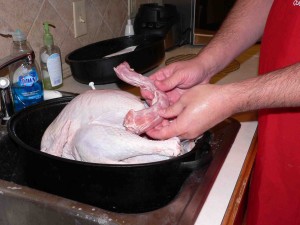
powell.turkey.neckNCP may vary to some extent between countries; nevertheless, they are based on the same principles and aims. NCP typically include systematic implementation of preventive measures of flock infection with Salmonella, thorough surveillance of the Salmonella status of flocks, and once a Salmonella infection is detected, implementation of control measures to prevent spread of infection. Poultry flocks are tested for the target Salmonella serovars at fixed stages of production at farms or hatcheries using harmonised sampling plans and standardised analytical methods.
With the exception of breeding flocks of Gallus gallus, EU Salmonella targets were set by the European Commission (EC) in consultation with EU Member States following EU-wide prevalence surveys [6]. The specific Salmonella control programmes and the reduction targets were progressively set up from 2005 onwards [7-14]. In the case of breeding and fattening turkey flocks, the mandatory NCPs for Salmonella came into effect on 1 January 2010 [8, 14, 15] and were reconfirmed in 2013[16].
EFSA monitors whether EU targets for Salmonella prevalence reduction have been met by the countries and follows the progress made. Most countries met their Salmonella reduction targets for poultry in 2012, and the prevalence of the target Salmonella serovars is significantly declining or remaining stable in poultry populations at the EU level [5].

FBO are committed to general requirements on hygiene of foodstuffs, such as implementing procedures based on Hazard Analysis and Critical Control Points (HACCP) and good hygiene practices [17], and specific hygiene requirements with regard to unprocessed and processed products of animal origin, including poultry meat and meat products [18].
Furthermore, FBO should comply with specific food safety criteria for Salmonella in minced meat and meat preparations, in particular from poultry. These criteria define the acceptability of foodstuffs placed on the market. Complementary process hygiene criteria for Salmonella, notably on carcases of broilers and turkeys, set an indicative value above which corrective actions are required in order to maintain hygiene during processing [19].
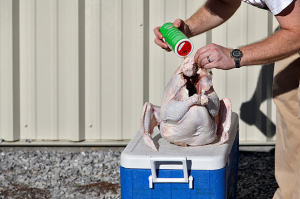
turkey.cross.contaminatinFinally, official controls on products of animal origin intended for human consumption ensure that the legal framework for hygiene conditions is implemented correctly by FBO [20].

In 2007, salmonellosis was the second most commonly reported zoonotic infection in the EU, with 151,995 human cases and a statistically significant decreasing trend in the notification rate in the EU over the past four years. [21]. The number of notified salmonellosis cases in humans in the EU continued to decrease in 2012, to 91,034 cases (Figure 2).This decline is part of the significant declining trend of 30 % observed over the past five years. [5]. It is assumed that the observed reduction in salmonellosis cases in humans is mainly the result of successful Salmonella control programmes in fowl (Gallus gallus) populations particularly resulting in a lower occurrence of Salmonella in eggs, though other control measures might also have contributed to the reduction.

These results indicate that FBO and veterinary public health authorities have continued to invest in Salmonella control and that this work is yielding improvements even though challenges remain.

Notwithstanding the positive developments, other Salmonella serovars, than the major targeted ones, may be occasionally implicated in food-borne outbreaks. In this issue of Eurosurveillance, Kinross et al. report about a cross-border outbreak of an unusual strain of serovar Salmonella Stanley that occurred in 2011-12 with more than 700 non-travel related human cases reported in 10 EU countries [1]. This number probably only represents the tip of the iceberg because additional cases might have not been captured by the surveillance systems in different countries. The investigations undertaken by affected countries, and subsequently coordinated by the European Commission ECDC and EFSA, suggested the turkey production chain as the source of the outbreak. More recently, further human cases of salmonellosis due to a S. Stanley strain exhibiting similar microbiological characteristics (i.e. resistance to ciprofloxacin) were detected and also linked to turkey meat in Austria in April 2014, suggesting that the outbreak may still be continuing with one or several similar sources [1, 22].
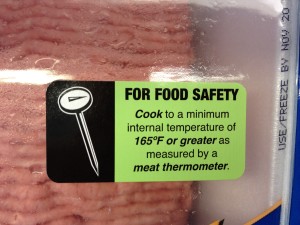
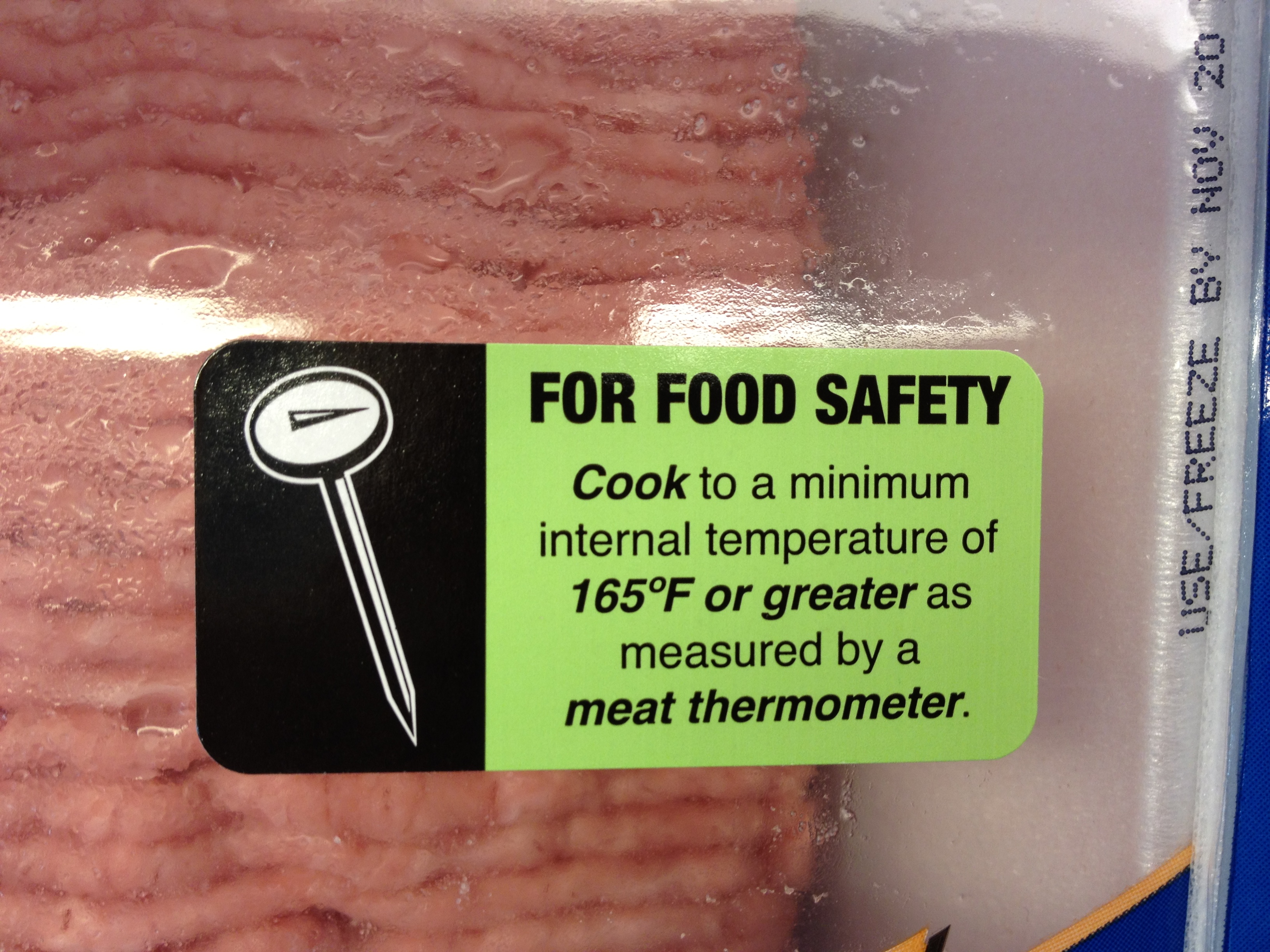
Ground Turkey Sticker In March 2012, EFSA adopted a Scientific Opinion on an estimation of the public health impact of setting a new target for the reduction of Salmonella in turkeys [16]. It concluded that control measures in turkeys have contributed to a considerable reduction in the number of turkey-associated human salmonellosis cases compared with the situation in 2007. The target focusing on S. Enteritidis and S. Typhimurium, including monophasic S. Typhimurium, was therefore confirmed by the legislation for the period starting in 2013 onwards [14]. In addition, complete serotyping was required to inform on the diversity of serovars, other than the targeted ones, prevalent in flocks. Where necessary, targeted control of Salmonella serovars other than S. Enteritidis and S. Typhimurium in turkey should be guided by the prevalence and public health impact in each individual country. If sufficient information becomes available to reliably identify particular strains of public health significance, the inclusion of such strains as part of the EU-wide targets should be considered.

Euro Surveill. 2014;19(19)

Hugas M, Beloeil PA.

http://www.eurosurveillance.org/ViewArticle.aspx?ArticleId=20804