710 sickened in 1.5-year EU Salmonella outbreak linked to turkey

Between August 2011 and January 2013, an outbreak of Salmonella enterica serovar Stanley (S. Stanley) infections affected 10 European Union (EU) countries, with a total of 710 cases recorded. Following an urgent inquiry in the Epidemic Intelligence Information System for food- and waterborne diseases (EPIS-FWD) on 29 June 2012, an international investigation was initiated including EU and national agencies for public health, veterinary health and food safety. 
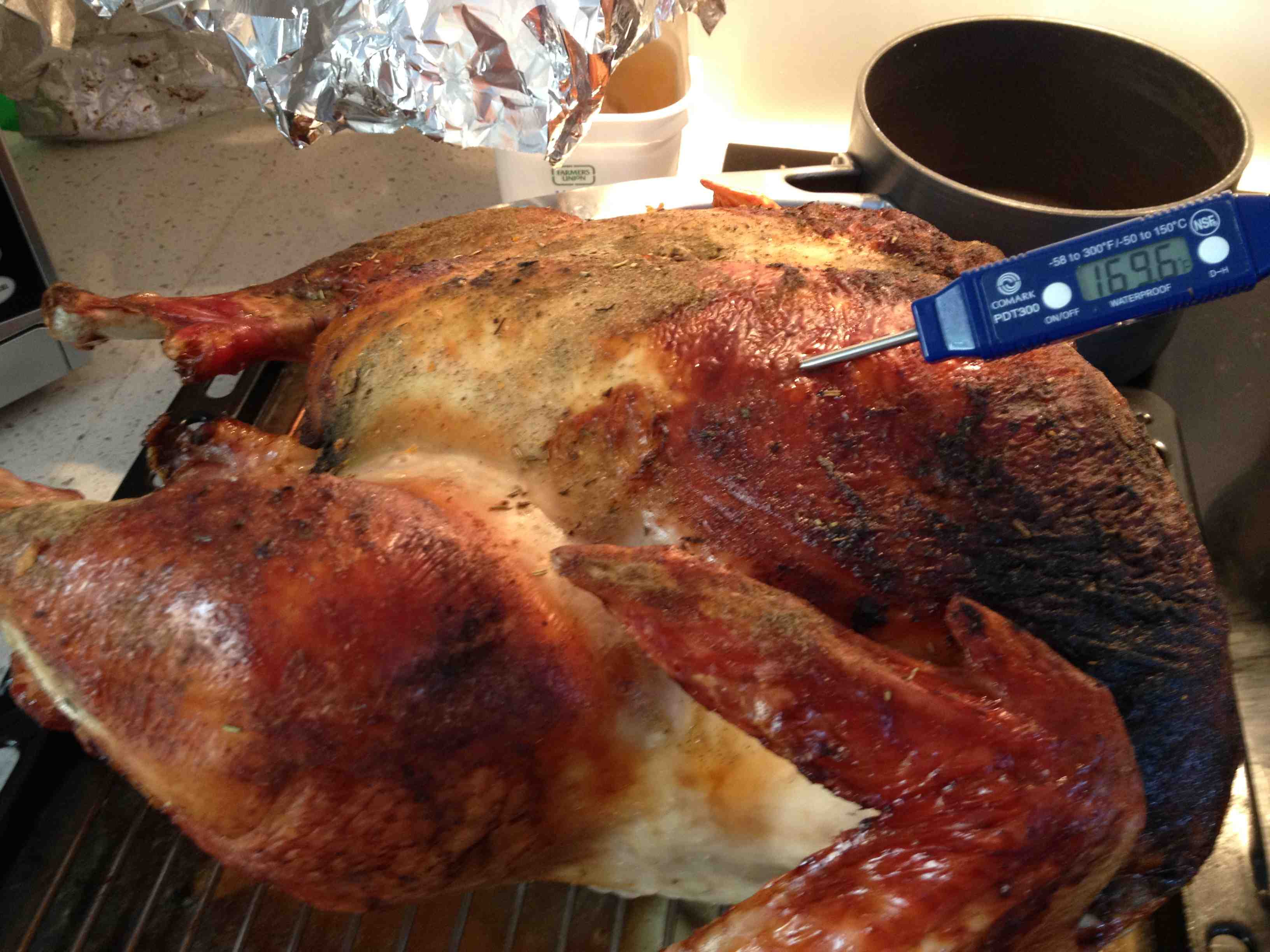
turkey.thanksgiving.oct.12Two of three local outbreak investigations undertaken by affected countries in 2012 identified turkey meat as a vehicle of infection. Furthermore, routine EU monitoring of animal sources showed that over 95% (n=298) of the 311 S. Stanley isolates reported from animal sampling in 2011 originated from the turkey food production chain. In 2004–10, none had this origin. Pulsed-field gel electrophoresis (PFGE) profile analysis of outbreak isolates and historical S. Stanley human isolates revealed that the outbreak isolates had a novel PFGE profile that emerged in Europe in 2011. An indistinguishable PFGE profile was identified in 346 of 464 human, food, feed, environmental and animal isolates from 16 EU countries: 102 of 112 non-human isolates tested were from the turkey production chain. On the basis of epidemiological and microbiological evidence, turkey meat was considered the primary source of human infection, following contamination early in the animal production chain.

Multidisciplinary investigation of a multicountry outbreak of Salmonella Stanley infections associated with turkey meat in the European Union, August 2011 to January 2013

Euro Surveill. 2014;19(19)

http://www.eurosurveillance.org/ViewArticle.aspx?ArticleId=20801

Kinross P, van Alphen L, Martinez Urtaza J, Struelens M, Takkinen J, Coulombier D, Mäkelä P, Bertrand S, Mattheus W, Schmid D, Kanitz E, Rücker V, Krisztalovics K, Pászti J, Szögyényi Z, Lancz Z, Rabsch W, Pfefferkorn B, Hiller P, Mooijman K, Gossner C.

A bucket with a Styrofoam cup is not a handwashing station: dirty dining: Taqueria El Palenque

How can a restaurant operate with no running water? Not in a safe or sanitary way.

Darcy Spears of KTNV ABC Channel 13 writes that one restaurant in Las Vegas tried to do it anyway, and that landed them at the top of the health district’s demerit list in this week’s Dirty Dining report.

Taqueria El PalenqueThe health district shut the place down on April 30 and it is still closed. 

When inspectors were there, they found the restaurant had been operating for nearly a week with no running water. That got us to wondering what they did to keep things clean. How could employees wash their hands? How could they wash dishes? They couldn’t even flush a toilet.

The health district’s pictures show the bathroom sink was a bucket with a Styrofoam cup. There was another bucket next to the toilet. Employees were washing their hands with room temperature water in large pots and a trashcan.

Inspectors didn’t know where the water came from.

100 laborers hospitalised in Abu Dhabi with food poisoning

More than 100 laborers in Abu Dhabi have been hospitalized after suspected food poisoning.

The workers were reported to have eaten bad food at their accommodation camp in Musaffah during Tuesday night, causing them discomfort.

The men were taken to Al Ahalia Hospital in Musaffah on Wednesday in three company buses while others were taken by ambulance. Officials at the hospital told 7DAYS that they started admitting dozens of Asian workers in batches at around 12.30pm due to suspected food poisoning.

“All the workers were admitted at the emergency department. They complained of stomach pains, loose motions, headaches and some felt exhaustion. They were all given treatment,” said an official at the hospital.

(Daughter Braunwynn’s favorite video when she was 2-years-old.)


Smartphones lead to smarter outbreak investigations: Clostridium perfringens, London, March 2013

On 22 March 2013, 150 of 1,255 students (13–17 years) and staff at a school in London reported gastrointestinal symptoms; onset peaked 8 to 12 hours after a lunch served in the school on 21 March. We performed a retrospective cohort study of all students and staff. We defined cases as school attenders on 20 and 21 March with onset of gastrointestinal symptoms between 20 and 23 March.

carpet-vomit-stainsWe tested food, environmental and stool samples of cases for common pathogens and bacterial toxins. We administered an online questionnaire via email, encouraging the use of smartphones to respond, to measure risk of illness for food items eaten at school on 20 and 21 March. Survey response was 45%. Adjusted risk ratios were generated in a multivariable analysis. Those who ate chicken balti on 21 March were 19.3 times more likely to become ill (95% confidence interval: 7.3–50.9). Clostridium perfringens was detected in all 19 stool samples collected. Within eight school hours of its launch, 412 of 561 (73%) responders had completed the survey. Hygienic standards in the kitchen were satisfactory. The investigation was done rapidly due to smartphone technology and we recommend considering this technology in future outbreaks.

Euro Surveill. 2014;19(19)

Simone B, Atchison C, Ruiz B, Greenop P, Dave J, Ready D, Maguire H, Walsh B, Anderson S.

£4K fine for UK Indian restaurant

A director of an Indian restaurant has been fined £4,000 for breaching food hygiene regulations.

Saravanan Kirubanandam, 37, manager at Cafe Madras, in Whitley Street, Katesgrove, admitted eight offences when he appeared at Reading Magistrates Court on Monday.

Cafe Madras, in Whitley Street, KatesgroveThe court heard the breaches over two visits by environmental health officers included poor cleaning of walls, floors, equipment and hand-contact surfaces, lack of training and failure to control the access of pests – particularly flies.

There was no documented food safety management system in place during a second visit and there was no towel at the hand basin.

Officers from Reading Borough Council first visited the restaurant, which specialises in South Indian cuisine, in September 2012 and found there to be poor standards.

Although there was some improvement after follow-up visits, standards were not sustained when a visit was made on February, 19, 2013, and a hygiene improvement notice was served on the premises, instructing them to carry out a deep clean.

17K fine; UK hog roast company fined over smelly slime covered decaying meat at Boardmasters

A hog roast company from London has pleaded guilty at Truro Magistrates Court to selling unfit meat at the Boardmasters event in August 2012 and has been ordered to pay a fine of £6,750, costs of £10,418.40 and £120 victim surcharge.

pig-ready-on-spitOfficers from Cornwall Council’s food and safety team discovered five pig carcasses in the trailer belonging to Rainha Santa Portuguese Foods Ltd, a company based at 39 Mahatma Gandhi Industrial Estate, Milkwood Road, London SE24 0JF, that were in a “state of decay”.

A further carcass was being cooked on the spit at the time of the inspection. It later transpired that the pigs had been transported to Cornwall without adequate refrigeration and this is likely to have been an influencing factor to the smell and slime observed when the officers inspected the carcasses and immediately removed them from sale.

Dear deer

Ashley Chaifetz, a PhD student studying public policy at UNC-Chapel Hill writes,

Government sharpshooters in Washington, DC shot 106 white-tailed deer in an effort to cull the population in Rock Creek Park to no more than 20 per square mile. The culled deer amounted to 3,300 pounds of hyper-local venison and was donated to homeless shelters and other emergency food providers in the area.2014-04-03 13.33.57

The National Park Service has the meat inspected and processed and then gives it to D.C. Central Kitchen. Using donated ingredients, the kitchen cooks and distributes 5,000 meals a day to community centers and shelters. “It would be really sad if the National Park Service had to kill all these deer and throw the meat away,” said Paul Day, a spokesman for D.C. Central Kitchen. In all, the National Park Service donated about 3,900 pounds of venison this year and last to D.C. Central Kitchen, which used the lean protein to make not only meatloaf and burgers but breakfast casseroles and chili.

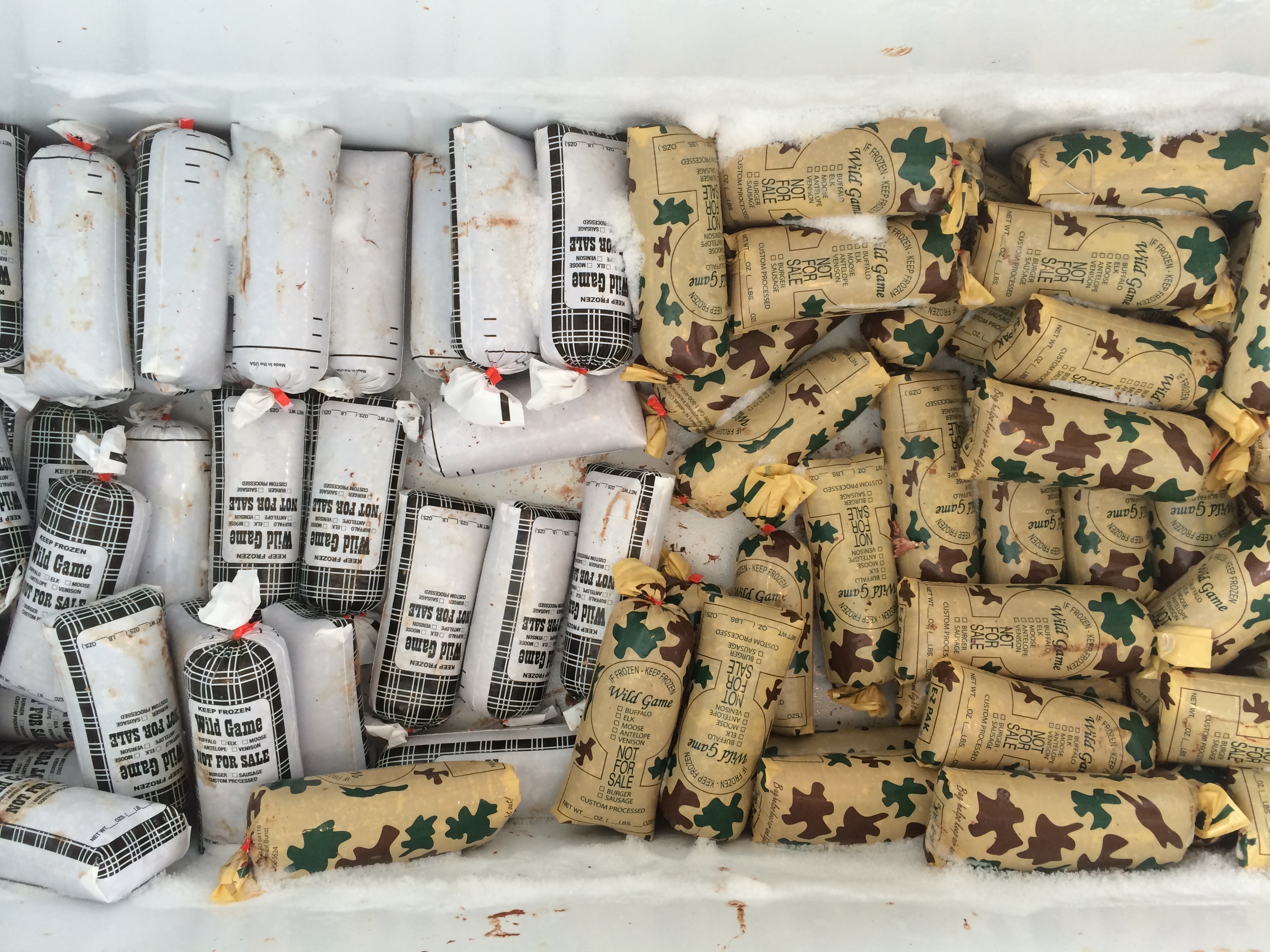
Charities, like Farmers and Hunters Feeding the Hungry and Backyard Bow Pro, accept extra donated venison (as well as legally-hunted elk, antelope, and moose) from hunters. The organizations, in turn, process the carcass and have the meat inspected. While venison can carry Trichina, pathogenic E. coli and Salmonella, USDA’s Food Safety and Inspection Service requires that all meat slaughter plants conduct microbial tests for generic E. coli and Salmonella.

While venison might be a move away from the typical meat served in a homeless shelter, the hunted game aided in maintaining the park, feeding hungry families, and preventing food waste, all while ensuring the safety of the venison.

Another spice, another Salmonella positive; US trading company voluntary recall of crushed chili powder because of possible health risk

US Trading Company of Hayward, CA is recalling its Dragonfly Brand Crushed Chili Powder in 6.3 ounce plastic tubs with lot code 359XP, because it has the potential to be contaminated withSalmonella, an organism which can cause serious and sometimes fatal infections in young children, frail or elderly people, and others with weakened immune systems. Healthy persons infected with Salmonella often experience fever, diarrhea (which may be bloody), nausea, vomiting and abdominal pain.

salm.chili.powderThe product was distributed nationwide in retail stores and food wholesale.

The Crushed Chili Powder comes in a 6.3 ounce clear plastic tub. The bar code 7 21557 53317 8 is printed on the front of the tub. The code 359XP is affixed to the bottom of container. This is a Product of Thailand

No illnesses have been reported to date.

This recall is a result of a routine sampling done by FDA

The problem was noted only in code 359XP. Production and distribution of the product has been suspended while FDA, California Dept of Public Health and firm continue the investigation.

Consumers who have purchased this product are urged to return them to the place of purchase for a full refund. Consumers with questions may contact the company at 510-781-1818 Monday-Friday between 8:30am through 5:00pm

It’s a culture thing; New Zealand restaurant’s Filipino delicacy prompts SPCA probe

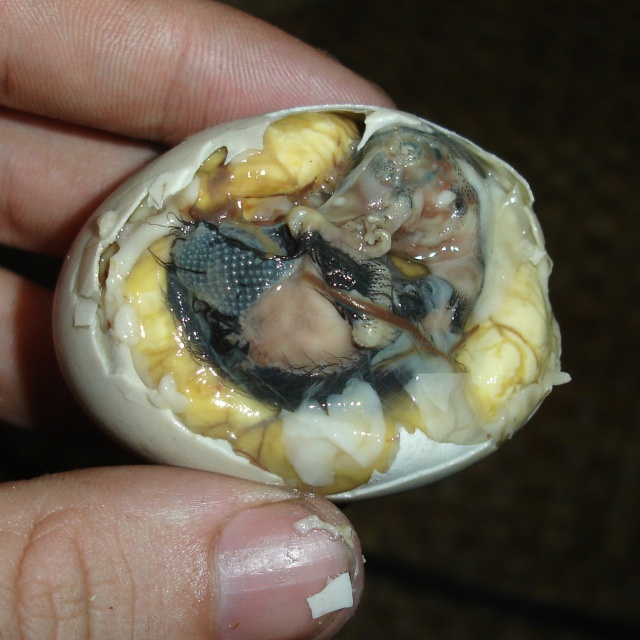
Before Viagra, there was duck embryos, with feathers and a beak, and considered a Filipino delicacy believed to boost male fertility and libido.

An Auckland, New Zealand restaurant serving duck eggs with developing embryo has been cleared by the SPCA for possible cruelty against unhatched ducklings but its suppliers are now being investigated.

balutThe society said it received complaints following a Herald report that Island Joe’s Hawaiian Barbecue in Onehunga had put balut on the menu, and an investigator was sent to the premises.

The restaurant said that with the ongoing investigation, it would be serving balut as just a “blackboard special”.

Ms Kalin said the restaurant had not breached the Animal Welfare Act and the society was satisfied with the practices employed there, and was now turning its investigation to the suppliers. The fertilized duck egg is boiled and served hot, and diners consume the broth, yolk and young chick with salt or a chilli, garlic and vinegar sauce.

“The eggs arrive at the restaurant in a chilled state and are placed in the refrigerator and accordingly the embryos would not be alive at the time of boiling,” she said.

Island Joe’s owner Cecilia Tan said staff had also received calls accusing the restaurant of being “cruel” and “heartless”, with some using profanities. She said the SPCA investigator had thought that “maybe we drop the egg with a live duck squirming in boiling water”.

Massey University sociologist Paul Spoonley, who has done studies on food introduced by migrant communities, believed the complaints were due to “a lack of cultural understanding”.

Park Service culls deer in DC, helps fill bellies

Amy ate a lot of deer growing up in Minnesota, Montana and Missouri.

I never developed much of a taste for it.

Bambi1Here, they cull kangeroos.

According to the N.Y. Times, the government sharpshooters worked so efficiently in the dead of the night in Rock Creek Park that by the end of this year’s short killing season, they had shot 106 white-tailed deer.

Make that 3,300 pounds of local venison turned into meatloaf, burgers and more for the surprised directors of homeless shelters and other charities across the capital.

Despite local protesters who say the killings are cruel, the goal remains culling the deer population down to no more than 20 deer per square mile from 77 per square mile counted last fall. Armed with small-caliber rifles, professional sharpshooters from the Department of Agriculture first started killing deer in a one-night operation in March last year. The herd thinning quietly picked up again over five nights from January to March this year.

Now, to help the homeless and to make sure that the dead deer are not simply discarded — an action that would further outrage local residents — the National Park Service has the meat inspected and processed and then gives it to D.C. Central Kitchen. Using donated ingredients, the kitchen cooks and distributes 5,000 meals a day to community centers and shelters.

“It would be really sad if the National Park Service had to kill all these deer and throw the meat away,” said Paul Day, a spokesman for D.C. Central Kitchen.