Another Mother’s Day outbreak in Australia

Mother’s Day is ripe for food poisoning in Australia.

Last year, over 140 dinners got sick with Salmonella from some raw egg dip in Canberra.

celebrity.chefsThis year, a Melbourne restaurant co-owned by George Calombaris is under investigation over a food poisoning outbreak following a Mother’s Day luncheon.

And this dude is a judge on the Australian TV crap show, MasterChef.

The Greek restaurant reportedly welcomed 600 diners through its doors on Mother’s Day.

“It’s completely put us through the wringer,” an unnamed victim told Fairfax Media.

“My wife was vomiting all day yesterday and most of Sunday night. This stuff shouldn’t happen at a restaurant like this.”

But fancy food doesn’t mean safe food; and celebrity chefs can be food safety morons.

A spokeswoman for Calombaris’ company, Made Establishment, said there was “no evidence as to the cause of this,” but confirmed they had received a call on Tuesday from a customer who had felt unwell after dining at Hellenic Republic on Sunday.

The spokeswoman added: “We are working closely together with Boroondara Council and health authorities to discover the cause.

“The welfare and enjoyment of our guests is of utmost importance to us and we are committed to resolving this as our highest priority.”

Missouri caterer’s gravy linked to over 300 illnesses at a wedding reception

Reaching into the annals of foodborne illness history, there’s a quote in a paper by Rob Tauxe on traditional outbreak scenario:

[It] often follows a church supper, family picnic, wedding reception, or other social event. This scenario involves an acute and highly local outbreak, with a high inoculum dose and a high attack rate. The outbreak is typically immediately apparent to those in the local group, who promptly involve medical and public health authorities. The investigation identifies a food-handling error in a small kitchen that occurs shortly before consumption.Unknown-3

Congratulations unnamed Missouri caterer: you’re a traditional throwback.

According to the eMissourian, about 300 people got from Clostridium perfringens poisoning from gravy served at a wedding reception held at the Eagles Hall in Sullivan, Missouri.

C. perfringens spores often survive cooking but are not a problem until the food, like a big vat of gravy, is held at an improper temperature, or cooled improperly. The spores can germinate into cells which then can multiply to food poisoning levels if food is held between 41°F and 135°F for more than four hours.

Tests of food and stool samples came back positive for Clostridium perfringens, said Tony Buel, epidemiology specialist with the Franklin County Health Department.

About 100 people made reports to the county health department concerning the food poisoning. Some said they were aware of others who got sick, and it was estimated that more than 300 were affected.

About 750 people attended the April 5 wedding event at the Sullivan Eagles Hall, Buel said.

Hours after the wedding event people woke up experiencing symptoms of abdominal cramps and diarrhea, Buel said. Symptoms can last 24 hours.

Buel said the problem occurred when it took too long to cool the gravy down. That can cause bacteria growth and put toxins in food, he added.

Health officials inspected the catering facility, which, Buel said, was clean. The caterer handled another event the same day and no food poisoning happened.

The caterer was not penalized but was educated about the proper cooking process (maybe they should focus on cooling/hot holding? -ben), Buel said.

Buel said he did not want to release the name of the caterer because it could harm the business.

I guess the risk of hurting a business that doesn’t know how to handle foods for large crowds outweighs other event planners making an informed choice. If I was organizing a banquet or a wedding I’d want to know whether a caterer made 300 people sick before I hired them.

But I’m a bit of a weirdo.

Manitoba reviewing cottage food regulations

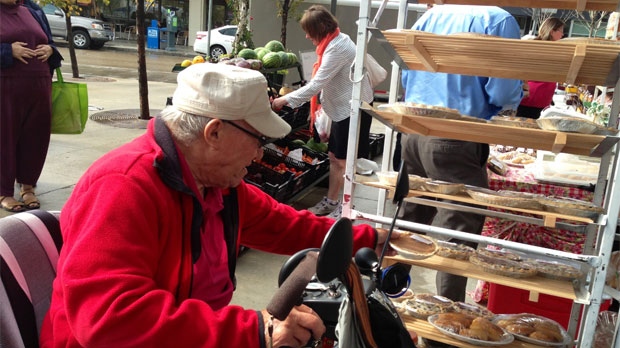
Folks who want to make food in their home or garage and sell it are part of a growing business segment. By many accounts, the cottage food industry is growing in North America. Twenty U.S. states allow certain foods to be processed in the home and sold for consumption – but it’s a patchwork of regulatory approaches. In some states, the entire process is deregulated for certain exempt products. These products usually are limited to direct-selling (at a farmers’ market or roadside stand) of baked goods, jams and jellies.image

The county extension agents I support are fielding an increased number of questions of how to break into the food industry in the past year. The situation in Canada apparently similar. According to CTV, Manitoba (that’s in Canada) is entering the cottage food fray and will explore how to ensure food safety while supporting the niche industry.

A Manitoba working group will look at how to cut red tape preventing some farmers from selling their products directly to consumers.

Agriculture Minister Ron Kostyshyn says more residents want local food and the province wants to help this growing market.

He says the group will also ensure any changes don’t jeopardize food safety and quality.

The move comes after the province came under fire for restricting how farmers can sell their eggs, poultry and homemade jams.

In response to cottage food excitement, our friends at the Association of Food and Drug Officials (AFDO) have released a guidance document defining the types of foods that should fall under cottage food exemptions, and those, like cut fruits and vegetables, which should require some sort of commercial facility.

The scope of these guidelines is comparable to those accepted practices currently recognized in several states and represents a consensus opinion of AFDO members. AFDO believes that adopting and implementing these guidelines, where there is little or no oversight of such activities, can eliminate a void in the national goal of a seamless food safety and security system

The guidance document can be found at http://www.afdo.org/publications.

Ryne Sandberg says he got food poisoning from Citi Field

I collected baseball cards when I was a kid and once had a Ryne Sandberg rookie card. Growing up in an American League market, the Cubs shortstop was sort of a mythical figure – seen only in cards and on SportsCentre (that’s the Canadian version of SportsCenter).Unknown-2

Currently the Philadelphia Phillies’ manager, Sandberg is saying that he got food poisoning from Citi Field, while on a road trip to play the Mets. According to NJ.com, Sandberg lost six lbs in two days after eating at Shake Shack.

Shake Shack is trying to get a hold of Sandberg to smooth things over or make it right.

Later in the day, Mets first baseman Lucas Duda told ESPN New York that an undercooked burger from the same place left him feeling ill Friday night.

Wonder if Sandberg will go to Mama’s next time.

“A couple of coaches took a bite and didn’t like what they saw and threw the rest away,” Sandberg told reporters before Tuesday’s game. “I was in a rush, so I ended up putting it away. I had one piece of toast in two days, and I’m feeling fine about that. I don’t want anything in my stomach.”

 A couple of years ago ESPN’s Outside the Lines ran an expose about food safety at sports stadiums but Citi Field wasn’t included.

5 sick: Michigan investigating E. coli O157 illnesses

The Michigan Department of Community Health and Agriculture & Rural Development, along with several local health departments, are investigating a cluster of recent illnesses due to E.coli.

hamburger.thermometerAt least 5 illnesses have been confirmed and three people have been hospitalized.

Early information suggests undercooked ground beef eaten at several different restaurants in multiple locations is most likely the source. The state is working with the health departments and the USDA to determine the source of the ground beef and how widely it was distributed.

“E. coli O157 illnesses can be very serious or life-threatening, especially for young children, older adults, and people who are immunocompromised,” said Dr. Matthew Davis, Chief Medical Executive at the MDCH. “Whether you cook at home or order in a restaurant, ground meats, including ground beef, should always be cooked thoroughly to the proper temperature.”

Fresh herbs and bagged salads can pose food safety risks

While the Canadian Food Inspection Agency was playing statistical silliness and gushing that 98 per cent of fresh leafy herbs sampled in 2009/2010 were not contaminated with bacterial pathogens or generic E. coli, researchers in Tennessee and the U.S. Centers for Disease Control published a more rigorous analysis of a multistate outbreak of Escherichia coli O157:H7 associated with bagged salad.

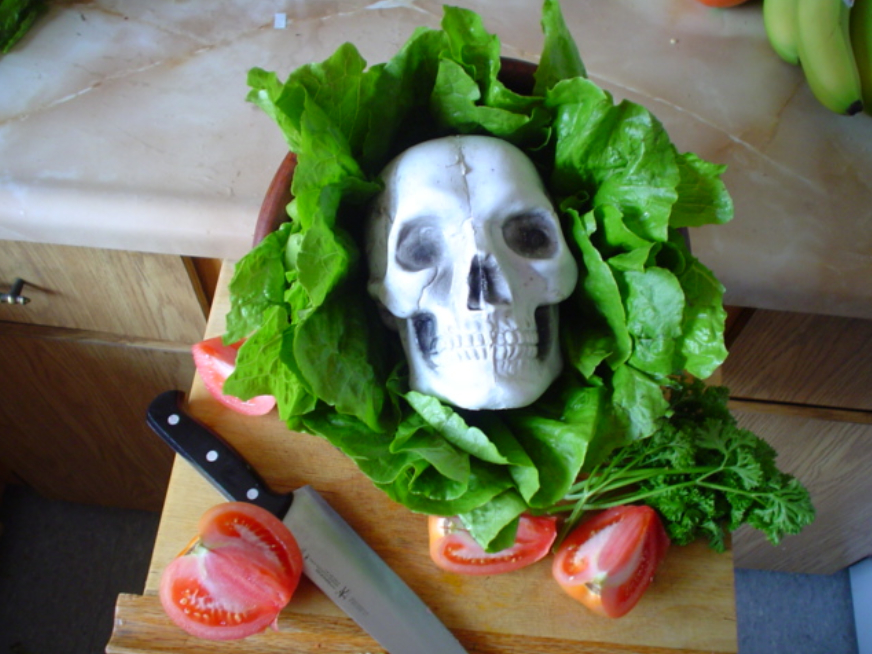
lettuce-skullI know; salad is not herbs. But they both have the potential to be contaminated.

Shiga toxin–producing Escherichia coli O157:H7 (STEC O157) is the most commonly identified serotype of STEC in the United States. An estimated 63,000 STEC O157 infections occur annually. Infection typically results in diarrhea, bloody stool, abdominal cramps, and, in some cases, hemolytic uremic syndrome. Recent outbreaks of STEC O157 have increasingly been associated with consumption of leafy greens such as lettuce and spinach. We investigated an outbreak of STEC O157 associated with the consumption of bagged salad with cases clustered in various institutional settings. A case–control study was conducted among cases from selected schools with controls matched by school and grade. Seventeen cases from three U.S. states were identified. The median age of cases was 23 years (range: 3–88) and 13 (76%) were female. Six cases were hospitalized and two died. Onset dates ranged from April 29 to May 12, 2012.

The matched case–control analysis identified a single significant food service exposure: consumption of lettuce provided by a school cafeteria (median odds ratio=9.4, 95% confidence interval: 1.4–∞, p=0.0469). The implicated bagged salad product was traced back to a single production facility. Implicated growing areas were scheduled for heightened inspection for the upcoming growing season. A combination of analytical epidemiologic studies among subclusters of cases, surveillance, and traceback implicated bagged salad in this outbreak investigation.

Foodborne Pathogens and Disease

Marder Ellyn P., Garman Katie N., Ingram Lily Amanda, and Dunn John R.

Food safety in China: hunting dogs with poisonous arrows, then selling the meat

Amy has crazy crossbow skills, growing up in Minnesota and Montana. If we had to go off the grid, she’d be the providerer. Like Chapman’s mom, camping to me is a hotel room without air conditioning.

A court in central China sentenced 11 members of a gang to jail for selling meat from dogs they had hunted with crossbows using bolts dipped in poison, state media said on Wednesday.

The gang killed around 1,000 dogs last year using bolts dipped in a highly poisonous chemical, called succinylcholine chloride, and stored their meat in a freezer, the official Xinhua news agency reported, citing a court in Hunan province.

Police busted the ring last December, and seized 12 tonnes of frozen dog meat, but the meat from about ten dogs had already been sold.

The eleven defendants were convicted for the sale of toxic and hazardous food, and received prison sentences of one to seven years, along with fines ranging from 3,000 to 350,000 yuan ($480 to $56,200), according to an article in a court newspaper.

TV kitchen crimes more about ratings than risk

Rob Mancini, the best–looking food inspector in Canada, writes:

The use of media in relaying food safety information can be a powerful tool. Food safety reality shows seem to be the fad these days as consumers are increasingly becoming aware of what actually occurs behind the scenes in restaurants. Truthfully, the more disgusting a restaurant is the better the ratings.

Rob_Mancini_001That’s reality I discovered when we shot Kitchen Crimes in Canada.

A well run, clean and sanitary restaurant will not draw in the ratings, but cockroaches and over-the-top chefs (Gordon Ramseys) will, so take what you see with a grain of salt. Either way, it gets people talking about food safety, which is a good thing. The BBC will be airing a new series of Food Inspectors that will focus on restaurant inspections, complaints, foodborne outbreaks, and providing food safety information to the public.

Toronto: what went wrong? Chefs into raw pork

Toronto has a crack-smoking mayor, the Leafs haven’t won the Cup since 1967 (I’m too embarrassed to wear my Leafs hoodie to the Brisbane arena), and now they’re pushing raw pork.

toronto.maple.leafs.67.cupJon Sufrin of Munchies writes that raw beef, commonly served in Toronto, is great. Raw pork is even better. Europeans eat it all the time, but in North America, the idea of eating raw pork can freak people out. According to Ontario’s Health Protection and Promotion Act, pork must be served well-done in restaurants, which means the meat has to reach an internal temperature of 160 degrees Fahrenheit. Like a good steak, a pork chop is ruined when it’s cooked that much. It becomes tough as wood, and Ontario chefs are bound by law to serve it that way.

“The reason why people cook pork until it’s black is because in the old days, trichinella was a lot more widespread,” says Dr. Keith Warriner, a professor of food safety at the University of Guelph. “A lot of our food safety practices are historic.”

It’s not all hysteria, though. Pork is susceptible to pathogens like salmonella and listeria, more so than beef. But while some pathogens—such as Hepatitis E—can reside inside the meat, most hang out on the surface, easily killed with the help of a quick hot sear. Warriner doesn’t recommend eating raw meat of any kind, but he admits that even undercooked pork is not necessarily hazardous, if proper precautions are taken.

“You can eat a rare pork chop,” he says. “As long as chefs take some mitigating effort, such as searing on the outside, then it’s the consumer’s choice.”

Jen Agg, owner of The Black Hoof, knows that people can be reticent about eating raw pork. That’s partly why she decided to partake in a bit of civil disobedience and serve it at her restaurant.

“It’s about educating the diner,” Agg says. “People think you have to overcook your chicken or your pork or you will die. It’s ridiculous. It took a long time to educate people about off-cuts in Toronto, and raw pork was really the next logical step for us. … The Japanese eat raw chicken. That’s the final frontier.”

As soon as someone says someone else must be educated, the discussion ceases and arrogance prevails. I’ll stick to science with my tip-sensitive digital thermometer. And I’ll eat raw pork when the Leafs win the Cup.

E. coli O178 a clear and present danger

In recent years STEC strains belonging to serogroup O178 have been commonly isolated from cattle and food of bovine origin in South America and Europe.

clearandpresentdanger-jackryanIn order to explore the significance of these STEC strains as potential human pathogens, 74 German and Argentinean E. coli O178 strains from animals, food and humans were characterized phenotypically and investigated for their serotypes, stx-genotypes and forty-three virulence-associated markers by a real-time PCR-microarray.

The majority (n=66) of the O178 strains belonged to serotype O178:H19. The remaining strains divided into O178:H7 (n=7), O178:H10 (n=1) and O178:H16 (n=1). STEC O178:H19 strains were mainly isolated from cattle and food of bovine origin, but one strain was from a patient with hemolytic uremic syndrome (HUS). Genotyping of the STEC O178:H19 strains by pulsed-field gel electrophoresis revealed two major clusters of genetically highly related strains which differ in their stx-genotypes and non-Stx putative virulence traits, including adhesins, toxins and serine-proteases. Cluster A-strains including the HUS-strain (n=35) carried genes associated with severe disease in humans (stx2a, stx2d, ehxA, saa, subAB1, lpfAO113, terE combined with stx1a, espP, iha). Cluster B-strains (n=26) showed a limited repertoire of virulence genes (stx2c, pagC, lpfAO113, espP, iha). Among O178:H7 strains isolated from deer meat and patients with uncomplicated disease a new STEC type was detected that is associated with the genotype stx1c/stx2b/ehxA/subAB2/espI/[terE]/espP/iha. None of the STEC O178 strains was positive for locus of enterocyte effacement (LEE)- and nle-genes. Results indicate that STEC O178:H19 strains belong to the growing group of LEE-negative STEC that should be considered with respect to their potential to cause diseases in humans.

Frontiers in Cellular and Infection Biology

Miko A, Rivas M, Bentancor A, Delannoy S, Fach P and Beutin L