A former professor of food safety and the publisher of barfblog.com, Powell is passionate about food, has five daughters, and is an OK goaltender in pickup hockey. Download Doug’s CV here.
Dr. Douglas Powell
editor, barfblog.com
retired professor, food safety
3/289 Annerley Rd
Annerley, Queensland
4103
dpowell29@gmail.com
61478222221
I am based in Brisbane, Australia, 15 hours ahead of Eastern Standard Time
The head coach of the Australian state of Queensland , a fellow Canadian, told us parents and coaches earlier this year, anyone can play defense, it’s easy, offense is hard.
I disagree.
But that’s just my opinion.
Defense wins Stanley Cups and Super Bowls.
Defense takes discipline.
Defense is hard.
I played four years as a linebacker in football and would crush anybody who tried to cross the line.
Any food company knows this, because they do not want to be tomorrow’s headline, just because someone messed up.
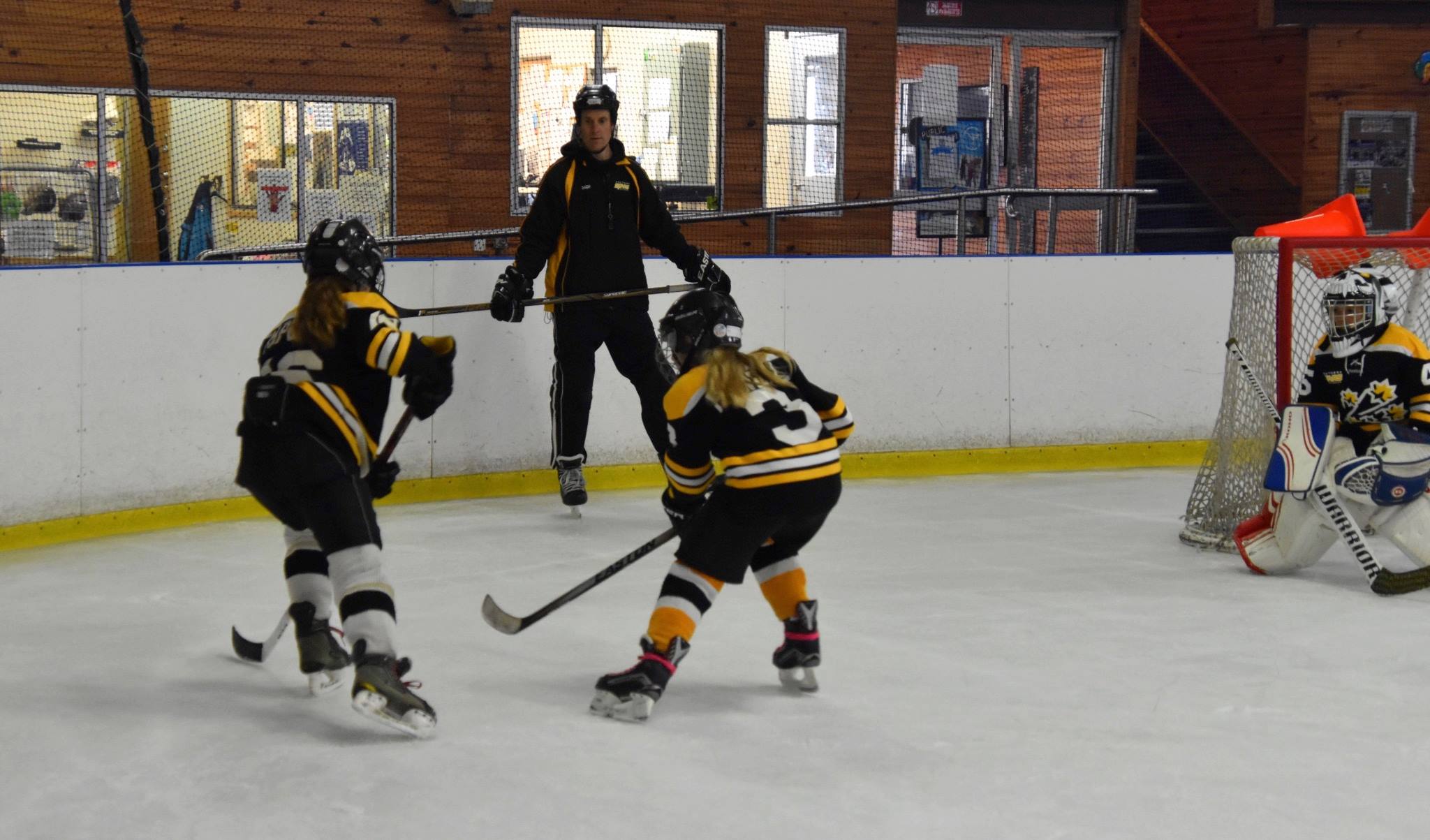
This is a picture of my daughter playing defense in practice (thanks Julie). Look at how the goalie is ideally placed, with his foot up against the post and his stick outside the post. Look at the angling Sorenne is using on her teammate.
Those are boring things but they win games.
And help people not barf from food.
This is Sorenne protecting the blue-line last week (thanks again, Julie).
Chapman bailed me out of jail on a bogus charge, and all grad students should go through the hell that must feel like: Oh, and because you’ve got a key, I can find a bright kid to pick the lock. It’s the basis of cryptography.
So me and Chapman and this student had a chat this morning about how she wants to do more work for us over the summer.
Don’t know if she’ll work out, I always figured the kids are moldable until about 5, after that it’s a crap shoot (mine have all turned out exceedingly well, despite their despicable parents).
For the first year Chapman worked in my lab, I didn’t know he existed, and now he’s the golden ginger boy of food safety.
The university may shut this idea down, so wat?
I always thought being a uni prof was to come up with novel ideas and be at home while raising kids.
Now it’s lotsa talk about research excellence, while spending your time on bureaucrat bullshit.
If I had to spend another weekly faculty meeting with 30 or more profs making 6 figures arguing the merits of a 25K per year admin type , I wouldn’t go postal, I’d turn the gun on myself.
I’m still an optimist, despite all my bullshit negativity to the contrary, and will always be there for a student, or anyone else who wants to learn.
We report on two Austrian petting zoos, one in Tyrol (2015) and one in Vorarlberg (2016), which were identified as highly likely infection sources of STEC infections. The petting zoo related cases involved a case of hemolytic uremic syndrome (HUS) due to STEC O157:HNM in 2015 and an outbreak of STEC O157:H7 infections affecting five young children and two adults in 2016. The HUS case accounted for 2.8% of the 36 STEC O157:HNM/H7 infections notified in Austria in 2015 (5,9% of 17 HUS cases). The seven cases described for 2016 accounted for 4.0% of the 177 human STEC infections documented for Austria in 2016, and for 19% of the 36 STEC O157:HNM/H7 infections notified that year.
The evaluation of the STEC infections described here clearly underlines the potential of sequence-based typing methods to offer suitable resolutions for public health applications. Furthermore, we give a state-of-the-art mini-review on the risks of petting zoos concerning exposure to the zoonotic hazard STEC and on proper measures of risk-prevention.
Erdozain G, Kukanich K, Chapman B, Powell D. 2012. Observation of public health risk behaviours, risk communication and hand hygiene at Kansas and Missouri petting zoos – 2010-2011. Zoonoses Public Health. 2012 Jul 30. doi: 10.1111/j.1863-2378.2012.01531.x. [Epub ahead of print]
Outbreaks of human illness have been linked to visiting settings with animal contact throughout developed countries. This paper details an observational study of hand hygiene tool availability and recommendations; frequency of risky behavior; and, handwashing attempts by visitors in Kansas (9) and Missouri (4), U.S., petting zoos.
Handwashing signs and hand hygiene stations were available at the exit of animal-contact areas in 10/13 and 8/13 petting zoos respectively. Risky behaviors were observed being performed at all petting zoos by at least one visitor. Frequently observed behaviors were: children (10/13 petting zoos) and adults (9/13 petting zoos) touching hands to face within animal-contact areas; animals licking children’s and adults’ hands (7/13 and 4/13 petting zoos, respectively); and children and adults drinking within animal-contact areas (5/13 petting zoos each). Of 574 visitors observed for hand hygiene when exiting animal-contact areas, 37% (n=214) of individuals attempted some type of hand hygiene, with male adults, female adults, and children attempting at similar rates (32%, 40%, and 37% respectively). Visitors were 4.8x more likely to wash their hands when a staff member was present within or at the exit to the animal-contact area (136/231, 59%) than when no staff member was present (78/343, 23%; p<0.001, OR=4.863, 95% C.I.=3.380-6.998). Visitors at zoos with a fence as a partial barrier to human-animal contact were 2.3x more likely to wash their hands (188/460, 40.9%) than visitors allowed to enter the animals’ yard for contact (26/114, 22.8%; p<0.001, OR= 2.339, 95% CI= 1.454-3.763). Inconsistencies existed in tool availability, signage, and supervision of animal-contact.
Risk communication was poor, with few petting zoos outlining risks associated with animal-contact, or providing recommendations for precautions to be taken to reduce these risks.
Petting zoos as sources of shiga toxin-producing Escherichia coli (STEC) infections
The recall affects 11 German states and comes after thousands of Dutch eggs were recalled in Germany because of renewed fipronil contamination.
Some 73,000 Dutch eggs were withdrawn from sale in Germany after more fipronil contamination was found in eggs from the Netherlands – a year after the original scandal.
Fipronil has been found on two Dutch farms in the latest scare and the authorities expect that it will be confirmed on a third.
According to the German Government site, the salmonella contamination has affected the states of Baden-Wurttemburg, Bavaria, Berlin, Brandenburg, Bremen, Hamburg, Hesse, Mecklenburg-Vorpommern, Lower Saxony, North Rhine-Westphalia, Saxony and Schleswig-Holstein. The infections were reportedly discovered during a routine testing procedure.
The infected organic eggs were stocked by several major German retailers, including Penny, Kaufland, Aldi Nord, Aldi Sued, Real, Lidl and Netto.
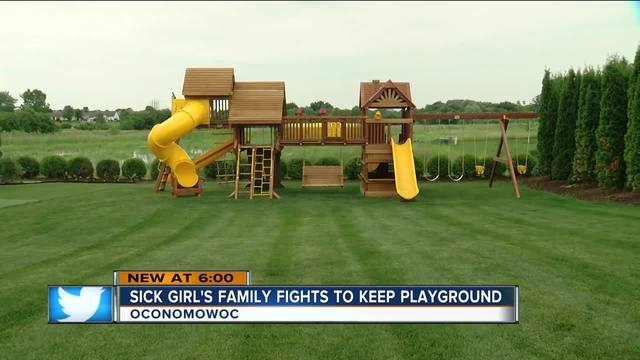
“It’s important to have this playground when my daughter gets home from the hospital, because it’s hope,” Sanders said. E. coli led to kidney failure for 6-year-old Ashlin three years ago.
The Sanders family moved to Oconomowoc to be closer to family and Ashlin’s doctors in Madison.
She had a kidney transplant on Father’s Day and is expected to return home soon.
“Today they pulled out a pic-line in her chest where they administer fluids and things of that nature,” Sanders said.
Sanders says the former neighborhood president approved the playground and trees. An email says “permission was granted for the rainbow playground set.” It goes on to say trees were also allowed.
“We are not breaking codes. Everything was permitted,” Sanders said.
Sanders said the new HOA board wants him to take everything down “in order to obtain and maintain harmony in appearance,” according to a letter.
Organizations dedicated to hunger relief have grown in recent years to increase their capacity to reach more food insecure populations for example, Feeding America served 11% more meals in 2016 than in 2015.
One barrier to ensuring food safety during the diversion and donation of food is lack of effective training for volunteers. Some programs are affiliated with universities and as such rely on student volunteers. Students have been shown to have risky practices in food-handling environments and can create situations in which food distributed by hunger-relief organizations can be at risk for unintentional contamination.
Using a food recovery program at a large, land-grant university, food-handling behaviors of student volunteers were observed in-person and compared to self-reported behaviors and self-identified training needs gathered via a survey.
Commonly observe behaviors were improper handwashing, inconsistent record keeping, and the use of unclean or contaminated equipment for example, during deliveries only 13% of volunteers were observed washing their hands at least once, while 69% self-reported doing so.
Training volunteers is necessary in view of the vulnerability to foodborne illness of those receiving recovered food. Trainings specifically for this audience should include unique handling scenarios adapted to food handler best practices.
Food-handling behaviors of student volunteers in a university food recovery program

 I disagree.
 This is a picture of my daughter playing defense in practice (thanks Julie). Look at how the goalie is ideally placed, with his foot up against the post and his stick outside the post. Look at the angling Sorenne is using on her teammate.