Calif. man convicted of attacking moviegoer with digital thermometer

In light of breaking news from the L.A. Times, the barfblog.com editors have decided to alter the thermometer use message to ‘Stick it In – Food, not People.’

A Lancaster man was convicted of attempted murder Thursday and faces up to life in prison for attacking a moviegoer with a digital thermometer.

A jury convicted Landry Boullard, 40, of premeditated attempted murder in the February assault, which attracted widespread attention because of the motive and the weapon. The victim had asked Boullard’s female companion to stop talking on a cellphone during the movie.

The digital thermometer punctured the neck of the victim, a 27-year-old man who was accompanied by his fiancee. The victim also sustained blows to the head, causing bleeding in the brain that resulted in a coma. He nearly died and remained hospitalized for five weeks. He continues to suffer from blurred vision in his right eye and other medical problems.

Hamilton, Ontario Druxy’s linked to catered lunch illnesses; new food safety infosheet details Thanksgiving dinner outbreak

My grandmother worked in retail in downtown Toronto (that’s in Canada) for 30+ years. She used to manage the women’s clothing department at Simpson’s (a department store at the corner of Queen and Yonge – which is now a Hudson’s Bay Company store). Every year around Christmas she’d take me on the streetcar to Simpson’s to see the holiday set-up in the windows (Santa, trains, snow etc.), we’d go toy shopping, and then she’d take me to Druxy’s (a deli-type restaurant) for a hot dog. It was sort of our thing.

This week, a Druxy’s in Hamilton, Ontario (also in Canada) has been linked to an outbreak of what the health department is calling a “stomach flu.”
According to the City of Hamilton Public Health, all 33 people who attended a Druxy’s-catered event on December 13 have been suffering from gastrointestinal distress symptoms. No one has been hospitalized.
 
Druxy’s was ordered closed on Thursday as the health department investigated the outbreak.
 
Dr. Chris Mackie, associate medical officer of health, says it appears the catered food was handled by two workers who were sick, since all party participants became sick. He said if the problem had been an item of food, not all the partiers would have been hit with gastrointestinal illness or stomach flu.
“The office was decimated for this poor company,” said Mackie. “They are all off.”
The department says Druxy’s has catered three other events since Monday. It would like to hear from participants at those parties and is asking people to dispose of Druxy’s food kept as leftovers.
 
The newest food safety infosheet focuses on a large gathering-linked outbreak as well, resulting in tragedy as one of the attendees has died. The outbreak, connected to pathogenic E. coli, is connected to a family Thanksgiving gathering in Missouri. Click here to download the food safety infosheet.
 

Scientific American: Reach kitchen staff with safety stories

Cynthia Graber of Scientific American highlights our British Food Journal paper in today’s 60 Second Science episode. You can check out the text here and download the podcast here.

‘Tis the season when we’re eating. And we want to be sure that the kitchen staff are following protocols that keep us from getting sick. So how best to help them learn those rules? The answer, it turns out, is to spin a good yarn.

Food workers were more likely to read the reports, discuss them and retain their lessons. Just shows that even if it’s just about cleaning the cutting board, everyone likes a good tale.

You can subscribe to 60 Second Science via RSS here.
 

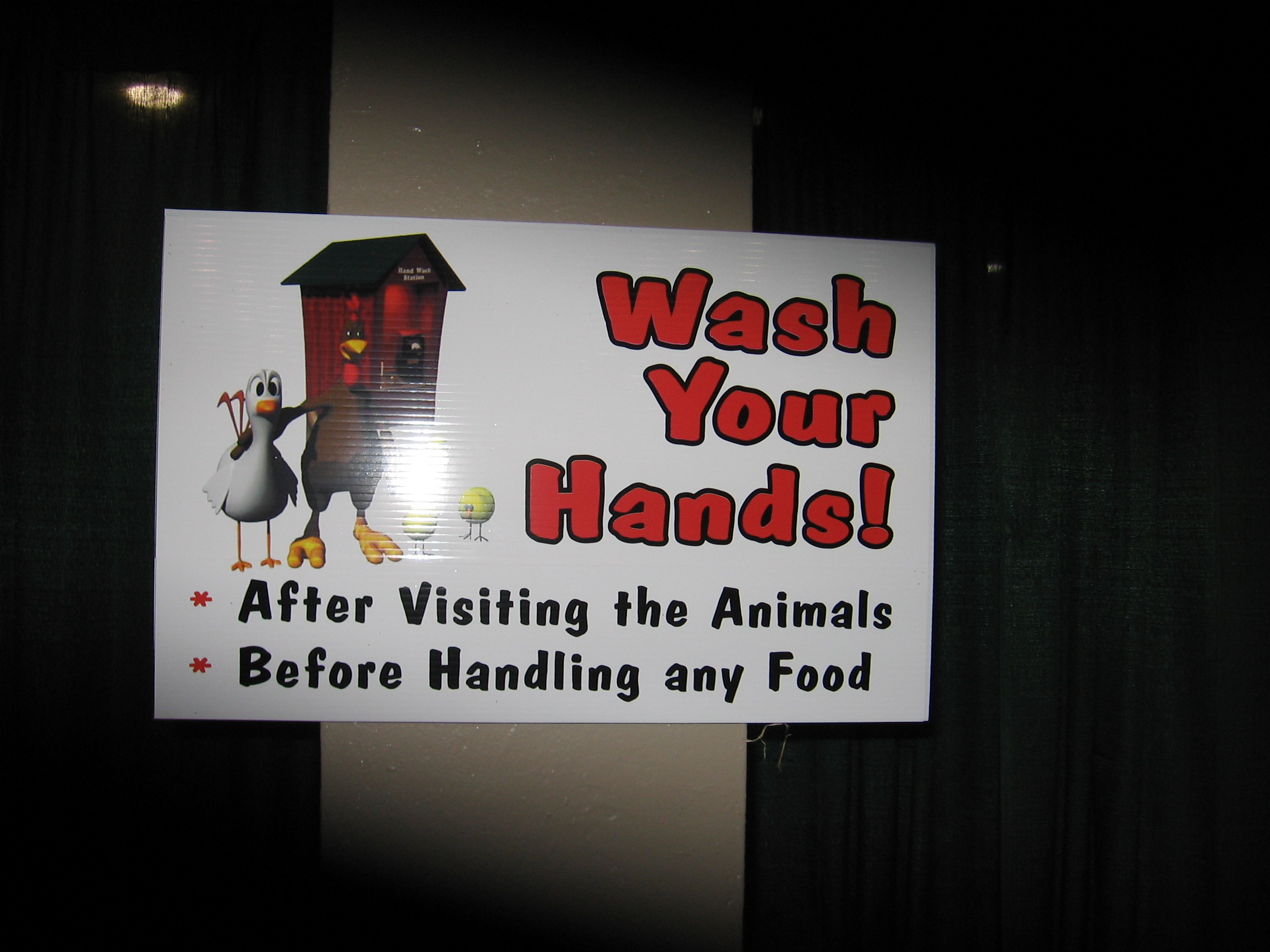
Promote handwashing at petting zoos and farms or no school visits

In the fall of 1998, I accompanied one of my five daughters on a kindergarten trip to the farm. After petting the animals and touring the crops — I questioned the fresh manure on the strawberries –we were assured that all the food produced was natural. We then returned for unpasteurized apple cider.

The host served the cider in a coffee urn, heated, so my concern about it being unpasteurized was abated. I asked: "Did you serve the cider heated because you heard about other outbreaks and were concerned about liability?" She responded, "No. The stuff starts to smell when it’s a few weeks old and heating removes the smell."??

I’m all for farm visits, local markets, petting zoos, but I want the operators to have a clue about the dangerous bugs that make people – especially little kids – sick.

What I haven’t written about before is that I called the local board of education after the farm visit and insisted the specific farm be removed from future school visits because it was obvious the operators were clueless about the dangerous microorganisms that can sicken kids.

And it happens a lot.

The U.K. Health Protection Agency reported today in Emerging Infectious Disease that it recorded 55 outbreaks of gastrointestinal diseases, such as E.coli and cryptosporidium between 1992 and 2009.

Lead author Dr Fraser Gormley, a HPA epidemiologist, said,

"Handwashing is the single most important prevention step in reducing transmission of gastrointestinal infections after handling animals and it’s crucial that handwashing in young children should be supervised, especially after touching or petting animals or their surroundings on a visit to a farm."

Those ‘Visitors Must Wash Hands’ signs are not enough. Operators need to take this seriously. So do education officials who send kids to substandard farms. If farms and petting zoos want to make money off school visits, they should actively promote handwashing and microbial awareness; if not, no school visits.

The report is available here.

People need to poop, but if by yogurt, prove it

That Jamie Lee Curtis yogurt that makes people poop has been hit with hefty fines for nonsense health claims.

USA Today reports the Dannon Company will pay a $21 million fine and stop making exaggerated health claims for two very popular Dannon products under an agreement with the federal government and attorneys general from 39 states.

Dannon will stop claiming that one daily serving of Activia yogurt relieves irregularity and that its DanActive dairy drink helps people avoid catching colds or flu, the Federal Trade Commission announced on Wednesday.

The FTC charged that Dannon’s ads were deceptive because it did not have substantiation for its claims. The commission also charged that Dannon’s claims that Activia and DanActive were clinically proven were false.

In one TV spot for Activia, actress Jamie Lee Curtis reassures viewers that eating Activia can help people who suffer from irregularity.

CDC: what’s with blaming consumers

As an agency that prides itself on data – I guess that’s why it took 11 years to update the incidence of foodborne illness – I’m wondering, why did the U.S. Centers for Disease Control find it necessary to specifically finger consumers when it comes to food safety.

“CDC continues to encourage consumers to take an active role in preventing foodborne infection by following safe food-handling and preparation tips of separating meats and produce while preparing foods, cooking meat and poultry to the right temperatures, promptly chilling leftovers, and avoiding unpasteurized milk and cheese and raw oysters.”

Why didn’t the CDC press release also say,

“CDC continues to encourage spinach farmers to keep cow poop off the produce.”

“CDC continues to encourage egg farmers to keep piles of poop away from fresh-market eggs.”

“CDC continues to encourage processors to cook the crap out of pot pies, pizzas and pet food that may sicken consumers (and their pets).”

“CDC continues to encourage retailers to sell food from sources that are known to manage food safety.”

“CDC continues to encourage restaurant-types to not let employees work while sick and to wash the damn poop off their hands before preparing salad.”

Consumers have a role. But the amount of cross-contamination that goes on in a home or food service kitchen means the contaminants have to be reduced before entering the next environment in the system, beginning on the farm.

Does CDC have meaningful data on where foodborne illness happens and whose fault it? We’ve published a paper on the silliness of blaming any particular group; the numbers simply aren’t there, and there are so many opportunities for contamination from farm-to-fork.

The FoodNet surveillance system was established within the U.S. Centers for Disease Control in 1995 to determine more precisely and to monitor better the burden of foodborne diseases and to determine the proportion of foodborne diseases which are attributable to specific foods and pathogens. Whatever criticisms and uncertainties exist, the establishment of FoodNet was revolutionary in better understanding the impact of foodborne illness.

For every known case of foodborne illness, there are 10 -300 other cases, depending on the severity of the bug. Most foodborne illness is never detected. It’s almost never the last meal someone ate or whatever other mythologies are out there. A stool sample linked with some epidemiology or food testing is required to make associations with specific foods.

Foodborne illness is vastly underreported – it’s known as the burden of reporting foodborne illness, or the burden of illness pyramid (left), a model for understanding foodborne disease reporting. Someone has to get sick enough to go to a doctor, go to a doctor that is bright enough to order the right test, live in a State that has the known foodborne illnesses as a reportable disease, and then it gets registered by the feds.

The World Health Organization (WHO) estimated that up to 30 per cent of individuals in developed countries acquire illnesses from the food and water they consume each year. U.S., Canadian and Australian authorities support this estimate as accurate, or did, (Majowicz et al., 2006; Mead et al., 1999; OzFoodNet Working Group, 2003) through estimations from available data, active disease surveillance and adjustments for underreporting. WHO has identified five factors of food handling that contribute to these illnesses: improper cooking procedures; temperature abuse during storage; lack of hygiene and sanitation by food handlers; cross-contamination between raw and fresh ready to eat foods; and, acquiring food from unsafe sources.

Food safety is much more than consumers.

Majowicz, S.E., McNab, W.B., Sockett, P., Henson, S., Dore, K., Edge, V.L., Buffett, M.C., Fazil, A., Read, S. McEwen, S., Stacey, D. and Wilson, J.B. (2006), “Burden and cost of gastroenteritis in a Canadian community”, Journal of Food Protection, Vol. 69, pp. 651-659.

Mead, P.S., Slutsjer, L., Dietz, V., McCaig, L.F., Breeses, J.S., Shapiro, C., Griffin, P.M. and Tauxe, R.V. (1999), “Food-related illness and death in the United States”, Emerging Infectious Diseases, Vol. 5, pp. 607-625.

OzFoodNet Working Group. (2003), “Foodborne disease in Australia: Incidence, notifications and outbreaks: Annual report of the OzFoodNet Network, 2002”, Communicable Diseases Intelligence, Vol. 27, pp. 209-243.

Check yourself: CDC re-estimates burden of foodborne illness, now thought to be 48 million annually in U.S.

(note – original title was incorrect — should read 48 million not 42 -bc)

The much anticipated new estimates of the burden of foodborne illness in the US are now available from CDC. For the past 10+ years the common calculation estimate was 76 million illnesses/year (about 1-in-4 individuals annually). The new report, released today, points to an estimate of 1-in-6 (or 48 million) illnesses annually.

You can read all about it here, http://cdc.gov/foodborneburden/ (it’s a really nice site, with open, transparent calculations).

I’m sure that there will be lots of folks trying to make comparsions between the two estimates (arguing that there has been major progress) or complaining about how poor the 1999 estimates were, but CDC is clear in providing how they made the estimations and says:

The 2011 estimates reflect innovations in data and methodology that have occurred in the past decade. As with the current study, the 1999 study used the best data and methods available at the time.

Better comparisons for progress can be made with the foodnet data (where increases and decreases, depending on pathogen and year, have been seen). The new estimates provide a more precise look at how many sick folks there are every year. 48 million is still a lot.

Foodborne illness really down by 37%; or is it

The U.S. Centers for Disease Control and Prevention finally published an update to the 1999 Mead, et al. figures estimating the burden of foodborne illness – and the numbers are down.

The new, much-to-be-quoted figure is 1-in-6 Americans get sick from the food and water they consume each year, down from the 1-in-4 figure of 1999. That’s 47.8 million sickies instead of 76 million.

It’s still too high. And doesn’t seem to account for active surveillance work done in Australia and Canada, which, along with the World Health Organization, has pegged the incidence of foodborne illness as high as 1-in-3.

According to press releases, the U.S. numbers are down because:

•CDC officials no longer include people who were only vomiting for a day or who only had one or two episodes of diarrhea because they know that real foodborne illnesses cause symptoms that last longer.

•CDC’s surveillance data is much more comprehensive than it was in 1999.

• Most norovirus is not spread by the foodborne route, which has reduced the estimate of foodborne norovirus from 9.2 to approximately 5.5 million cases per year. Because of data and method improvements, the 1999 and current estimates cannot be compared to measure trends.

CDC’s FoodNet surveillance system data, which tracks trends among common foodborne pathogens, has documented a decrease of 20 percent in illnesses from key pathogens during the past 10 years. However, these FoodNet pathogens make up only a small proportion of the illnesses included in the new estimates.

Among the additional findings for foodborne illness due to known pathogens:

• Salmonella was the leading cause of estimated hospitalizations and deaths, responsible for about 28 percent of deaths and 35 percent of hospitalizations due to known pathogens transmitted by food.

• About 90 percent of estimated illnesses, hospitalizations, and deaths were due to seven pathogens: Salmonella, norovirus, Campylobacter, Toxoplasma, E.coli O157, Listeria and Clostridium perfringens.

• Nearly 60 percent of estimated illnesses, but a much smaller proportion of severe illness, was caused by norovirus.

The full report is available online at http://www.cdc.gov/eid. For more detailed information on the estimates and methods, visit http://www.cdc.gov/foodborneburden.

72-year-old Brit stricken with E. coli in Dubai

U.K. pensioner Dorothy Wilson (right, photo from Chronicle Live) had to wait four weeks before medics identified the source of her ailment as E.coli in Dubai.

Chronicle Live reports that after medics repeatedly missed the bug, the pensioner had to be moved to a private hospital so she could get the treatment to save her life.

Doctors at the first hospital, where she had spent almost a month, in the United Arab Emirates, couldn’t work out what was wrong with her.

Charles Wilson, 75, has also thanked the private medics who came to their rescue when others had failed.

No thermometers in UK holiday turkey advice

CBS Sunday Morning had a bit on 85-year-old Dick Van Dyke, still singing and dancing and acting his way into our hearts.

And all I could think of was piping hot.

The Brits, not ones to disappoint, issued their annual holiday turkey advice today, with nary a mention of thermometers.

“The Food Standards Agency is reminding people to follow some simple safety steps this Christmas when preparing their turkeys, to help keep the festive period free from the misery of food poisoning.”

If it was only so simple.

FSA gets it right when they say,

* Don’t wash your turkey before cooking. Washing is more likely to splash food bugs on to worktops, dishes and other foods. Proper cooking will kill bugs.

And they get it wrong when they say,

* Check the turkey is cooked properly by cutting into the thickest part of the meat. None of the meat should still be pink and any juices that run out should be clear. Finally, the meat should be steaming hot all the way through.

That’s what the gravy is for. Use a tip-sensitive digital thermometer, and stick it in. 165F is sufficient.