
Communication: the basics are sometime the best

With all the fancy iPhone apps and text notifications and Intertube what-have-youse, sometimes the basics work better.

CBC News reports fishermen in P.E.I. (that’s in Canada) say government emails and web postings don’t compare to flags in the water when it comes to warning them about high bacteria levels in shellfish.

The shellfishery in Charlottetown Harbour was closed on several occasions this summer when heavy rains caused the sewer system to overflow, creating high bacteria levels. Fishermen complained they weren’t getting adequate warning of the closures, which would enable them to harvest oysters and mussels ahead of the storm.

As Hurricane Earl made its way toward the Maritimes last month, the Canadian Food Inspection Agency emailed people in the shellfish industry. It warned the storm could bring heavy rains and lead to closures.

John White, a policy officer with CFIA, told CBC News this was the last time such a warning would be issued. CFIA is opting for posting a notice on its website telling the industry that fishers are responsible for checking the forecast.
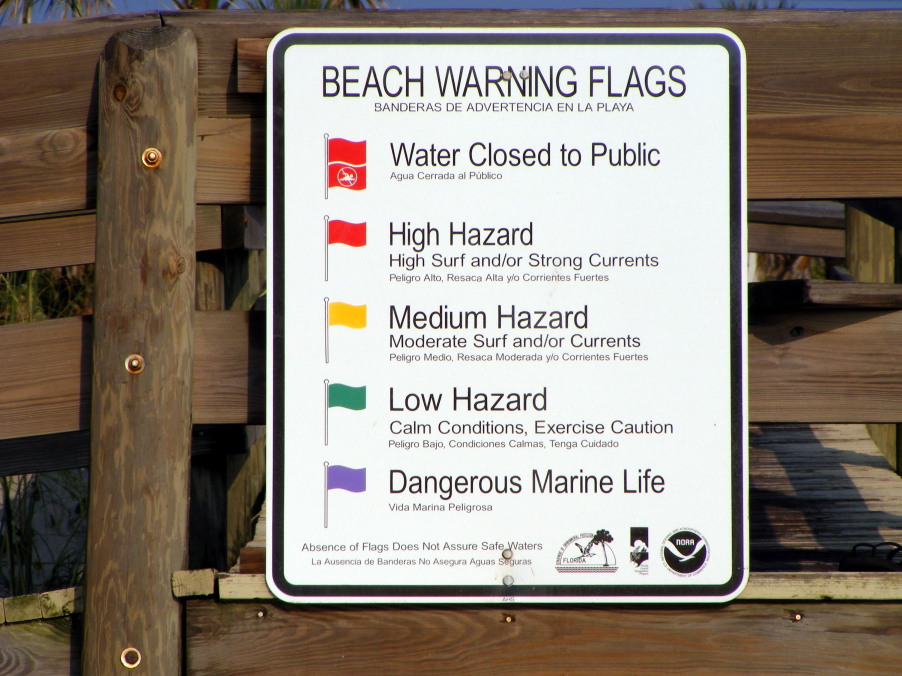
The P.E.I. Shellfish Association suggests putting yellow warning flags in the water when there’s a possible closure and a red one when the fishery is shut down.

Just like a red or yellow or green sign on a restaurant. Because who wants to check a web site when you just want to grab a meal?
 

7 more sickened after drinking raw milk in Minn

Illnesses in seven more people have been tied by the Minnesota Department of Health to the consumption of raw milk from a farm in Sibley County.

The department said Thursday that three people were infected with campylobacter and four more with cryptosporidium.

The patients told Health Department investigators they had consumed raw milk.

The department says those that named a source named the Hartmann dairy farm near Gibbon.

The department say laboratory tests found the bacteria and the virus in most of the ill people was genetically identical to samples taken from the farm this summer.

Hartmann’s farm was implicated in an outbreak of E. coli infections in May and June.
 

Crayfish cross-contamination sickens four with Vibrio in Spokane

Live or boiled crayfish is not anywhere near my list of food favorites. But if it’s yours, then keep raw and cooked foods separate, or people can barf.

CDC’s Morbidity and Mortality Weekly Report today contains a report of two people who were hospitalized on June 24, 2010, in Spokane, Washington with severe dehydration whose stool specimens yielded Vibrio mimicus.

“Investigators learned that both persons had consumed crayfish on June 20, 2010. The previous day, live crayfish obtained from an online seafood company had been boiled and served warm at a party. The chef reported that the boiled crayfish were served out of a cooler that had contained live crayfish, and the cooler had not been cleaned before being used to serve the cooked crayfish. After the party, the remaining crayfish were refrigerated overnight in different containers and served cold as leftovers the following evening on June 20.

“Questionnaires were administered to 21 (95%) of 22 persons who had attended either the party on June 19 or the meal of leftovers on June 20. A case was defined as an illness in any person who had attended the party or the meal and experienced acute, watery diarrhea during June 19–25. Four cases were identified. Consuming leftover crayfish was associated with illness. Of eight persons who consumed leftover crayfish, four (50%) became ill compared with zero of the 13 persons who did not consume leftover crayfish (relative risk = 14; Fisher’s exact test p value = 0.007). No other food items or environmental exposures were associated with illness. V. mimicus was isolated from cultures of stool specimens, and genes encoding cholera toxin were identified by polymerase chain reaction (PCR) in all three ill persons who submitted specimens."

Charlie Sheen take note: Former England star Gazza trashes hotel room with vomit and chicken curry

Forget Charlie Sheen; the Brits know how to properly trash a hotel room

Former England football legend Paul Gascoigne has booked himself into a Dorset rehab clinic after trashing a hotel room. According to a source at Gateshead’s Newcastle South Premier Inn, staff were horrified to find Gazza’s room covered in vomit and chicken curry. The former Newcastle and Spurs player drunkenly wrecked the room just two days after an arrest for suspected cocaine possession.

As well as curry and vomit on the room’s desk, television, floor and walls, staff found cigarette butts in the bed and ash piled in a corner. Allegedly, Gascoigne had been drinking in a pub before he called a taxi to take him back to the Premier Inn. On the way he asked the driver if he could borrow money to purchase more drink at a supermarket.

Another hotel guest reportedly saw Gazza at 8.30 on the Saturday morning still inebriated. The guest described the fallen football hero staggering into the fire exit and hitting his head on a window. Hotel staff then alleviated Gazza of his room key and dialled 999 for an ambulance.

Hubbell writes: Business French in a Communicative Context

While it may not get the gushing reviews of Keith Richards’ Life, Amy Hubbell the French professor published a business French textbook the other day.

Entitled, Fou da fa fa, the book promo proclaims, “Finally an ‘extraordinary and refreshing’ French Business Textbook!”

With no tales of heroin addiction, the origin of killer guitar riffs or taking a couple of years to figure out who that Johnny Depp dude was hanging out at the house, Dr. Hubbell’s book — À la recherche d’un emploi is designed for students at the intermediate, or third year-level of French, who are seeking to develop their vocabulary and cultural knowledge in preparation for working in an international environment. This text focuses on communicative and contextualized activities, and uses authentic materials and examples to prepare students for their careers.

It’s not known whether William Thompson , an associate professor of French and assistant dean, College of Arts and Sciences, The University of Memphis, is a Rolling Stones fan or not, but he did say,

"[This text] definitely fills a tremendous void in the field of business French. With a wealth of information and activities, this textbook provides students and instructors with an engaging and in-depth introduction to the major aspects of using French in a professional context. Of particular interest is the incorporation of la Francophonie and the European Union, two critical topics rarely presented in other business French textbooks. Anyone intending to seek employment in a French-speaking country or region will benefit greatly from the content and guidance that this text provides."

As a Keith Richards fan (especially the riffs from 1968-1972), I have to say, Hubbell’s book rocks.

And so does she.

Do you need food insurance insurance

Colbert and Stewart (Colbert Report and Daily Show) are paying too much attention to loonies like Glenn Beck. Real satire takes effort and this focus on Beck and Fox News just provides attention they don’t deserve.

So ignore the Glenn Beck endorsement of foodinsurance.com, and instead have fun with Colbert’s food insurance insurance, which, based on my understanding of foodborne illness and liability, is about exactly how the American food system functions when people barf.

Foodinsurance.com has designed an emergency pack and emergency kits to give people at least two weeks of great food and clean water until more permanent solutions can be obtained. Many of the meals are freeze-dried, which means they will last up to 10 years and retain their nutritional value. Also, unlike other survival food solutions that require you to grind wheat or employ some other 18th century skill, Food Insurance meals come prepackaged as lasagna, beef stroganoff, and a host of other great entrees. And to top it off, this food comes packaged in a high quality backpack so you can grab it and go."

The Colbert Report Mon – Thurs 11:30pm / 10:30c
Food Insurance Insurance
www.colbertnation.com
Colbert Report Full Episodes 2010 Election March to Keep Fear Alive

Manhattan, famous for sushi?

One of my great laments about Manhattan (Kansas) has been the lack of sushi. In the past few years, however, sushi has appeared on campus, in grocery stores and a Japanese restaurant is expected to open in Aggieville. Today during our regular pilgrimage to a Dillon’s grocery store (owned by Kroger), the "Sushi" sign was prominently displayed out front. While thinking to myself, "that might make a nice lunch today,"once inside the store I changed my mind. I snapped this picture (right) of an unattended rice container and decided not to buy sushi there because of the potential risk.

While most people presume that the greatest risk for foodborne illness in sushi comes from the raw fish, I’ve learned from living with Doug that rice is too often the culprit. When held at improper temperatures or temperature abused, Bacillus cereus, a soil dwelling bacterium, can germinate in the rice and create toxins. Although only responsible for 2-5% of foodborne illness, B. cereus can result in nausea, vomiting and diarrhea. Diarrhea onset usually occurs between 8 and 16 hours after consumption but nausea and vomiting can occur from 1 to 5 hours after consumption. This is one of the few foodborne illnesses with symptom onset soon after consumption.

Last year when one of my students told me he got sick from eating sushi on campus, he blamed himself for eating raw fish. He was rather surprised when I told him the rice was more likely to blame.

Grown in greenhouse or garden, produce must be safe to serve

Ariz.-based Eurofresh Farms has, according to The Packer, developed a new food safety system, EnviroLock, that requires workers, and anyone entering produce-producing greenhouses, to pass through a sanitation facility before entering, wash and disinfect their hands and forearms, and don color-coded hospital-style scrubs, shoes, hairnets and gloves through the duration of their shift of stay.

That’s because anything that comes into contact with fresh produce has the potential to contaminate, is difficult to wash off, and outbreaks of foodborne illness are disastrous.

In Chicago, the Public School gardens are full of chubby tomatoes, heavy squash and fragrant basil but none of the produce ever finds its way into CPS lunchrooms. Instead, because of rules set by the district and its meal provider, the food is sold or given away.

The Chicago Tribune reports that the policies are in place despite the high obesity rate among Illinois children and experts’ concerns that young people are eating few fresh vegetables.

And that’s the problem with these stories, playing safety off against local and little kids.

Why not teach kids about food safety; instead of complaining that local is magically immune to microorganisms, embrace and market the food safety advantages of local markets – but only if it can be backed up with data.

Put the rhetoric aside and combine microbiologically safe with local – that means answering the same questions the big, controlled access greenhouses have to answer to sell their produce to Walmart and Costco and others: know and test the source of irrigation water, pay attention to the quality of soil amendments, let kids know the importance of handwashing and how dangerous bugs move around.

Big or small, be the bug, and be safe.
 

Bulgarian holiday from hell for UK family

In July 2008, Amanda Lakin took her 12 and 13-year-old sons and her 75-year-old mother, who had battled cancer, on an all-inclusive trip from the U.K. to the Royal Park Hotel, Bulgaria.

The family faced dead flies on food in the buffet, which staff seemed reluctant to throw away, and birds sat feeding off the buffet.

“I also saw staff filling the water bottles, which we all took drinks from, with the hose they used to water the garden. There was the most appalling lack of hygiene everywhere.”

After several days Miss Lakin made it down to the reception where she was stunned by what she found.

“It was like a film, there was so many sick people. There was little kids being carried by parents with drips coming out of their arms. I’ve never seen anything like it. Everyone was trying to get help.”

Law firm Irwin Mitchell is taking legal action on behalf of 276 clients against First Choice after it denied responsibility for the outbreak of illness suffered by guests between June and October 2008.

The firm has already successfully recovered a substantial settlement for 95 holidaymakers who fell ill at the resort in 2004, 2005 and 2007.

The Bulgarian currency is the lev. Amy’s got a bunch for sale on craigslist.

Bon Appetit and simplistic food safety

Bon Appetit is a food porn magazine meant to titillate (it’s even in it’s name) and stimulate rather than inform, like most of what passes for food journalism.

This month, the so-called Conscious Cook has a brief piece, 5 Reasons You Shouldn’t Hate On Microwaves.

Hate is a strong word. I like my microwave, especially for reheating, not cooking.

The author maintains that microwave defrosting reduces the risk of foodborne illness and that “defrosting frozen food by using hot water or leaving it in the sink can increase bad bacteria. To defrost fast, microwave food on low heat, then cook immediately. Stir contents halfway through heating for even warming.”

I cook a whole chicken about once a week. It’s inexpensive, and provides leftovers and stock for subsequent meals. If I’m defrosting a whole chicken in a microwave, I’m not going to stir it “halfway through heating for even warming.”

The U.S. Department of Agriculture and Health Canada recommend thawing poultry by sealing in a waterproof bag and immersing in cold water. These same groups also used to recommend washing chicken bits, but decided the microbiological splash fest created by running water over raw poultry was a bad idea. To me, immersing in cold water and changing that water every 30 minutes is an additional route to microbial cross-contamination. The Aussies and the Brits agree, and do not recommend water immersion.

Depending on my planning, I use a combination of the counter and the refrigerator for thawing the bird. American and Canadian science-types say this is awful, and I’ll make everyone barf. The Aussies and Brits say counter-top thawing is fine, as long as it’s monitored – a week may be too long.

We have previously reviewed various thawing techniques and government recommendations. Whatever technique is used, be the bug, thinking in terms of cross contamination and growth, and use a damn thermometer to ensure the food has reached a safe internal temperature. Color is a lousy indicator and piping hot is just weird (so is Canada’s Mrs. Cookwell).