Some New Zealand cafes have no handwashing facilities

Surveying toilets is valid social and academic exercise. People can say, dude, wash your hands, in as many clever, hilarious and gross ways, but proper handwashing requires proper access to proper tools.

Five, fourth-year University of Otago pharmacy students in Dunedin, New Zealand, visited 92 publicly available toilets, 43 of them in cafes, in their research into the adequacy of handwashing facilities in the community setting.

More than 90 per cent of the cafes had available taps, soap and means of drying hands, but while the 25 public toilets surveyed all had taps, only 17 had soap and drying facilities.

The 24 toilets in other locations, such as shopping areas, met all these requirements.

The water provided in the public toilets was cold in most instances, although 4 per cent of these surveyed had no water.

Microbiologically, water temperature doesn’t matter, but the students pointed out that the colder the water the more likely it was to reduce the frequency and time spent on washing hands.

Public toilets scored the worst on the provision of hand-drying mechanisms, with almost a third having nothing, compared with the overall result of 12 per cent in this category.

Council environmental health team leader Ros MacGill confirmed that the council inspectors did not normally check customer toilets as their brief was to look at the hygiene practices of food-handlers.

You can’t overcook turkey that’s what the gravy is for: failures in food safety policy

Is today Thanksgiving in Canada, or is it tomorrow? Either way, Monday’s a holiday up there, bring on the turkey and side dishes.

But questions remain: what is the safest way to cook a turkey or chicken?

Thawing and preparing the bird to minimize cross-contamination present their own microbiological issues. Today, however, the big, really big news is that the Canadian government has spoken: poultry should be cooked to an end-temperature of 82C of 180F, not the 85C or 185F previously recommended (maybe they’ll change the advice). The U.S. says 165F or 74C.

I’m not so concerned about the specifics – there are lots of microbiologists who can make those arguments. I am concerned about taxpayer-funded public health organizations and rather spectacular failings in accountability.

For those who want to follow the British advice and cook their birds until they are piping hot, I refer you to Martin Mull’s History of White People, where it was concluded, “You can’t overcook turkey. That’s what the gravy is for.”

Color is also a lousy indicator. The only way to tell a bird has reached a microbiologically temperature is using a tip-sensitive digital thermometer. But at what temperature is poultry microbiologically safe? Should I make extra gravy?

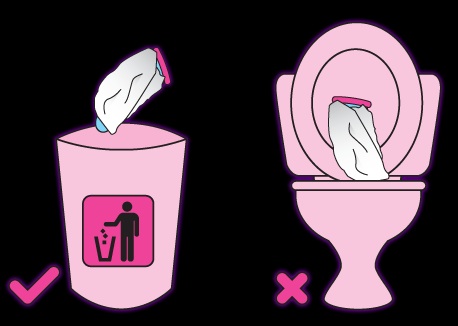
Health Canada and government agencies in many countries issue all kinds of consumer advice: don’t smoke; wear condoms (but don’t flush them down the toilet); floss.

There are reams of consumer food safety advice, but sometimes, the PhDs from different countries disagree on the recommendation. That’s normal, scientists disagree all the time. But to ensure confidence in those consumer recommendations, it’s best to have a process that says, “Look, you may not agree with what we decided, but here’s how we came to that conclusion, and here are the assumptions we made, so you take a shot at it and see if you can do better.” That’s the fancy way to describe the role of value assumptions in risk assessments and overall risk analysis.

For over a decade I have been politely asking Health Canada how they determine consumer recommendations for preparing poultry. What is the best way to thaw poultry? How do they determine the safe end-point internal temperature? What references do they use? (This discussion is specific to consumer practices in the home, not in food service).

I’ve never received an answer.

At one point I was less polite, and wrote a piece entitled, Health Canada pulls holiday recommendations from its ass. One of my favorites.

Either Health Canada media and science types I talked to didn’t know, or weren’t telling.

The process inspired no confidence.

In the U.S. in 2006, the recommended end-point cooking temperature for all poultry was lowered to 165F from the previous 180F. This was based on recommendations by the National Advisory Committee on Microbiological Criteria for Foods. Where the 180F recommendation came from , no one really knows. Diane Van, manager of the U.S. Dept. of Agriculture Meat and Poultry Hotline, was quoted as saying in a Nov. 2006 L.A. Times story about the old 180F advice, "I’ve looked all over and I really have no idea. I think it happened sometime back in the 1980s, but I don’t know what it was based on."

At least that’s honest.

In Canada, the Health Canada recommendation for whole poultry is 185F. How was that temperature decided? Are there peer-reviewed journal articles that were used to develop that recommendation? Do bacteria behave differently north of the 49th parallel?

Given such inconsistencies, and the utter lack of accountability, why would consumers be expected to blindly follow what some governmental agency proclaims?

On Thursday, Oct. 7, 2010, seven Health Canada types had a paper published in the journal, Food Protection Trends, outlining Health Canada’s recommendation for the safe endpoint temperature when cooking whole raw poultry. The abstract is at the end of this post.

The curtain has been pulled back. Being in Kansas, I could use some Wizard of Oz metaphors, but won’t. And I wouldn’t say the three studies were “recently performed” as they were conducted in 2003-2007, 2000, and 1994.

Now, what is the process within Health Canada to translate scientific evidence into public policy recommendations? I expect that answer in another 10 years.

Safe endpoint temperature for cooking whole raw poultry: Health Canada recommendation
01.oct.10
Food ProtectionTrends,Vol.30, No.9, Pages 580–587
Gosia K. Kozak, Helene Couture, Thomas Gleeson, Kim Hopkins, Pauiett Maikie, Thuy Phan and Jeffrey M. Farber
ABSTRACT
Poultry is a known carrier of Salmonella. however, it can be safely consumed when cooked to an appropriate internal temperature. The United States Department of agriculture and some Canadian provinces recommend 74°C, whereas health Canada currently recommends 85°C, as a safe internal temperature for cooking raw whole poultry, a difference that can potentially create consumer confusion. To address this, health Canada evaluated three studies recently performed in Canada to examine the survival of Salmonella in raw inoculated whole poultry (stuffed and unstuffed whole chicken and turkey), at six different endpoint temperatures. It was found that 82°C was a safe endpoint cooking temperature for whole unstuffed and stuffed poultry. The studies found that variability exists between and within ovens, and that shorter cooking times typically resulted in positive Salmonella tests in poultry. The thickest part of the breast was determined to be the optimum location for temperature measurement, as it was the last to reach the desired endpoint temperature. Thigh readings were often inaccurate and difficult to perform. As a result of the evaluation of these studies, Health Canada will likely be recommending changing its endpoint temperature recommendation for raw whole poultry to 82C, as measured in the thickest part of the breast.


Dirty Dining and Blue Ribbon Dining Vegas-style

KTNV reports that Las Vegas’ Yun Nan Garden on Schiff Drive off of Valley View regularly serves Chinese Szechuan cuisine to patrons. But a total of 46 demerits caused the Southern Nevada Health District to force the restaurant to close its doors.

The restaurant’s walk-in cooler registered at 46 degrees, too warm for properly storing food. Beef, chicken, and pork sitting out at an unsafe temperature created what inspectors called a "potentially hazardous" situation.

Then, inspectors found a large cooking pot covered with food debris sitting with clean dishware. A food handler was also observed sticking their finger into a wok to taste the food before they resumed cooking – without washing their hands.

Also, two different employees were found to be working without health cards, which are required paperwork for anyone with a restaurant job.

Now that Yun Nan Garden has re-opened after re-inspection, Channel 13 stopped by to speak with the owner about what changes had been made. He assured us everything was once again up to code.

And, when media outlets do the dirty dining stuff, they usually get business pressure to praise the worthy as well. If I owned a restaurant and was doing everything right, I’d market my excellent food safety any way I could – but only if I was sure I was doing everything right.

KTNV also reported the Florida Cafe Cuban Bar and Grill is on Las Vegas Boulevard just south of Charleston has been open since 1998 and is a restaurant with a good record. The latest visit by the Southern Nevada Health District was to inspect the new buffet now serving up Cuban dishes on the weekends. The results were zero demerits with food at the right temperatures and a clean set up, safe for waiters and customers enjoying the food.

The Florida Cafe Cuban Bar and Grill has consistently earned an A grade with the exception of one C grade in 2001.

The Florida Cafe wasn’t the only recent restaurant to receive zero demerits. The Dive Bar on East Tropicana and the Michael Mina Restaurant at the Bellagio did as well.

Iowa Scarecrow Fest food safety

The Scarecrow Fest in Akron, Iowa, has one of the better names for the various fall festivals.

Michelle Clausen Rosendahl, of the Siouxland District Health told

Le Mars Daily Sentinel, "In Iowa for the most part, if you’re selling food, you have to have a license to do that.”

For short events like the Akron Scarecrow Festival, vendors can purchase a temporary food license. Vendors buy the licenses the day of the event if a district health representative is present to sell them.

They cost $33.50.

Rosendahl said the district health office doesn’t always know when food vendors are going to be at an event, and health officials request that event organizers notify them.

Glenn Eckert, an environmental specialist with Siouxland District Health said, "If we know there is a festival going on, we’ll stop in and check the vendors. There’s lots of things that go on during weekends in smaller towns we don’t even know about."

Things going on in small towns like in a David Lynch movie?

One of the biggest things district health officials see is food vendors that don’t have a place to wash hands right where they are working.

"If they have any kind of food or beverages that are not prepackaged, they would have to have a handwashing station," Rosendahl said. "It doesn’t have to be a sink with actual running water."

Using hand sanitizer is not enough to take the place of washing hands, Eckert said.

The district health website gives instructions as to how to set up a temporary handwashing station.

The health inspectors also will want to know where the food being sold came from.

"It has to come from a licensed or approved source. If they have meat we would look at if it’s inspected meat," Rosendahl said.

Inspectors also want to know where food was prepared.

"In this situation, it’s not allowed for food to be prepared at home and brought to a temporary food stand and sold, with a couple exception of some non-potentially-hazardous baked goods," Rosendahl said. "We don’t know what issues may be in the home. It’s not an inspected kitchen."

A non-profit organization can serve food one day per week on its premises without a temporary license.

That means, for example, at a church potluck, people can bring food prepared at home, and no temporary food license is needed.
 

NYCs Cake Man Raven closed again

Some New York City eateries suck at this food safety thing.

GrubStreet reports that Cake Man Raven was closed by the Health Department a couple of years ago for using an unpermitted commercial kitchen for some of its cakes (mice droppings were also found), and on Wednesday, it was closed again.

This time, the inspection report cites “food from unapproved or unknown source or home canned” and/or “ROP foods prepared on premises transported to another site,” which indicates that proprietor Raven Patrick De’Sean Dennis III is likely once again in trouble for transporting slices from off site (no one is picking up at the store). Add to that, the Cake Man apparently couldn’t produce a food protection certificate or an operating permit.

Meanwhile in Manhattan, Market Table and BLT Steak recently racked up even more demerits than the Cake Man’s 78 (they scored a whopping 94 and 91, respectively), but both remain open for business, with grades still pending. Everyone’s favorite wedding-proposal spot, One if by Land, also rang up a surprising 64 demerits.

GrubStreet has a full list of the food safety infractions from the reports. Fine dining.
 

Working with animals at petting zoo and then working in café in same clothes is bad idea

The owners of a U.K. petting zoo accused of animal welfare offences and bad food safety have withdrawn their application for a zoo licence.

Northern Echo reports that Tweddle Children’s Animal Farm, in Blackhall Colliery, County Durham, has also removed some of its more exotic animals.

Earlier this year, the council’s environmental health officers and the Department for the Environment, Food and Rural Affairs visited the farm following an undercover investigation by the Captive Animals Protection Society. The charity said it had found traces of E coli and dead animals decomposing near a children’s play area.

It also said the bodies of dead animals, including a meerkat and tortoise, had been stored in a freezer on top of food for animals, while staff working with animals were working in the cafe wearing the same clothes.

Tweedle also did not have the required licence for a zoo.

The council said no traces of E coli were reported but head teachers who may have been planning school visits were warned about its investigation.
 

Florida food safety inspections shift again

Tampa Bay Online reports that changes in state laws on food safety inspections has led to mass confusion about jurisdiction, so much that health departments are now regaining powers to conduct kitchen hygiene inspections at child care facilities, at least for an interim period.

Marc Yacht, the retired former director of the Pasco County Health Department said he remains concerned about the "most vulnerable population" at nursing homes not having a regular food and hygiene inspection program.

Unintended consequences seem to have plagued the new law from the start, Yacht and other critics say.

Most Department of Children and Family inspectors have bachelor’s degrees in social sciences, but they lack the training and experience for food inspections. The Department of Health inspectors have degrees in science or health and training in food safety.
 

Relying on a friend

A new study from the University of Veterinary Medicine in Vienna has shown that Campylobacter jejuni is protected and dependent upon the presence of spoilage bacteria on meat, in particular Pseudomonas for survival.
 
 
It is known that C. jejuni cannot grow under normal atmospheric conditions – the levels of oxygen are too high for it – so how it survives was until recently unknown. The mystery has now been solved by Friederike Hilbert and colleagues at the Institute of Meat Hygiene, Meat Technology and Food Science of the University of Veterinary Medicine, Vienna.
The surface of meat harbours a number of species of bacteria that – fortunately – are rarely harmful to humans, although they are associated with spoilage. It seems possible that the various species interact and Hilbert hypothesized that such interactions might help bacteria such as Campylobacter jejuni survive under hostile, oxygen-rich conditions. She thus tested the survival of C. jejuni in the presence of various meat-spoiling bacteria. When incubated alone or together with bacteria such as Proteus mirabilis or Enterococcus faecalis, Campylobacter survived atmospheric oxygen levels for no longer than 18 hours. However, when incubated together with various strains of Pseudomonas, Campylobacter were found to survive for much longer, in some cases over 48 hours, which would be easily long enough to cause infection.
 
Campylobacter jejuni is a bacterium found primarily in the intestinal gut of animals and birds and shed primarily through the feces.  Poultry feces have been found to contain up to 106 cells or more per gram.  The infective dose for campylobacteriosis (disease acquired from the bacterium) can be as low as 500 cells. This makes it very easy for people to get sick from food contaminated with Campylobacter jejuni.  Symptoms commonly associated with campylobacteriosis are enteric in nature, that is abdominal cramps, diarrhea, in some cases bloody diarrhea, nausea, and vomiting. Keep poop away from food.


 Friederike Hilbert, Manuela Scherwitzel, Peter Paulsen and Michael P. Szostak. Survival of Campylobacter jejuni under Conditions of Atmospheric Oxygen Tension with the Support of Pseudomonas spp.
September issue of the Journal Applied and Environmental Microbiology (Vol. 76, 5911-5917).

Swimmers barfing, condoms clogging toilets at Commonwealth Games

The British swim squad at the Commonwealth games has been decimated by Delhi belly since arriving in India.

Rob Mancini wrote a couple of days ago about two instances; the number of sick British swimmers has now risen to 40.

The Telegraph reported that it later emerged that the Australian swimming team are testing the water quality at the aquatics complex. The problem could even stem from pigeon droppings which can swell contagious diseases. Pigeons have been nesting in the rafters since competition began here.

Whatever is causing swimmers to barf, toilets in the athletes’ village are clogged with condoms.

Plumbers sent to unblock toilets said used condoms were the problem, with an un-named health official quoted as saying 2,000 of the 8,000 free contraceptives had been used so far.

Commonwealth Games Federation president Mike Fennell said the report was a positive, adding,

"I am not quite sure what the point is, if that is happening it shows that there is use of condoms and I think that is a very positive story, that athletes are being responsible."
 

Melbourne ex-mayor faces food safety charges

The lord mayor of Melbourne from 2001-2008, John So, has been charged with running a dirty restaurant by the council he used to lead.

Melbourne City Council has filed charges against Mr So and a company he is a director of, Doshay Pty Ltd, over food safety breaches at the Dragon Boat on the Yarra restaurant.

The case was adjourned in Melbourne Magistrates’ Court yesterday because Mr So’s barrister was unavailable to represent him, so details of the allegedly unhygienic practices could not be read out in the court.

But this is not the first time one of Mr So’s restaurants has come under the glare of Melbourne Council for breaching food regulations.

The Herald Sun reports that on its website, the Dragon Boat on the Yarra claims to specialize in live seafood with "a team consisting of the best chefs in Melbourne."