It’s all fun and games and molecular gastronomy sounds cool – until someone loses their hands

I played lots with liquid nitrogen as a graduate student in molecular biology and genetics back in the mid-1980s (the music was so bad I listened to baseball games on the radio during evening lab sessions).

A 24-year-old man from Stahnsdorf near Berlin was poised to try out a new recipe from the school of molecular cooking, which aims to apply scientific processes to gastronomy.

There was an "enormous explosion", according to the Berliner Morgenpost daily.

The man lost one hand in the explosion and the other was so badly injured it had to be amputated.
 

Do you like safefood Ireland’s new advert?

The Don’t Take Risks campaign focuses on food hygiene in the domestic kitchen. To help minimise the risks of food poisoning in the home, the  advertising combines dramatic kitchen images and an ominous voiceover with a journey into the microscopic world of food poisoning bacteria to deliver powerful messages to consumers.

Most people think they wash their hands and utensils properly while preparing food and that they cook meat and chicken thoroughly. The truth is, all too often, they don’t. This campaign is a powerful, visual reminder to consumers of the dangers of poor food safety behaviour, as they may often be unaware of how their day to day food preparation habits can cause themselves and others harm.
By following some simple food hygiene practices, consumers can help prevent the spread of food poisoning bacteria around the kitchen.

A recent safefood study recorded the food hygiene practices of 120 participants to look at the way in which people prepare meals in their homes. The participants, who were recruited from throughout the island of Ireland, prepared two meals: a homemade beef burger and a warm chicken salad.

There were two phases of the study:

* phase 1 – conducted in test kitchen and
* phase 2 – conducted in participants’ own homes.

Each phase involved 60 participants and there were equal numbers in Northern Ireland and the Republic of Ireland.

In the test kitchen study, participants were asked to prepare the meals as they would normally at home and swabs were taken at various points in the kitchen and samples were taken of the salad and cooked meat. The swabs and samples were analysed for the presence of raw meat bacteria. Throughout the session, the participants’ food handling practices were observed via web-cams.

In the domestic kitchen study, arrangements were made for the researchers to visit at a suitable time for the participants to prepare the required meals.

Participants’ food handling practices were observed via web-cams. Swabs were taken from four kitchen areas as well as participants’ hands and from samples of the prepared meals to test for the presence of bacteria.

The research findings highlighted real food safety issues in the kitchen relating to food preparation and hygiene, with highly risky behaviours around handwashing, preventing cross-contamination via kitchen utensils such as knives and chopping boards, and inadequate care taken to ensure that the chicken and mince were properly cooked.

For example:
* 84% of people did not wash hands properly after handling raw chicken
* 72% did not properly wash the knife used in preparing raw chicken before reusing it on salad vegetables
* more than a third of what participants considered to be ‘cooked’ beef burgers were contaminated with raw meat bacteria
* more than half of consumers did not thoroughly wash the chopping board used to prepare raw mince before reusing it to prepare salad
* one third of participants still had raw meat bacteria contamination on their hands after preparing the meals.

San Francisco: Consumers want food safety information in reviews and at the door

“If you’re going to San Francisco…” don’t expect to find restaurant inspection results easily. SF Gate Online acknowledges a reader’s frustration with restaurant reviews published in the San Francisco Chronicle.

The reader writes about a recent food critic review,

I am concerned about food safety. Often before I go to a restaurant I check its health department inspection results. The recent health department inspection reports for this [reviewed] restaurant indicated many unsafe food practices. I decided not to go to the restaurant after reading the inspection reports.

What due diligence does a restaurant reviewer perform before finalizing his or her review of a restaurant? I do not believe it’s in the best interest of the reader for a newspaper to write a review without including information as to whether it is safe to eat at that particular restaurant.

As intriguing are the comments following this story, with a few examples below:

whatnext         7/13/2009 6:06:39 AM
Correct me if I’m wrong, but, I seem to remember a time when the Chronicle actually posted the results of health inspections for restaurants. We should have a grading system like the one they have in L.A..

ringu    7/13/2009 6:18:41 AM
I agree I always liked the grading system that is used down south and wondered why we don’t use it here. Around here you have to ask the establishment owner for the inspection results since they aren’t posted for public viewing. I like seeing that grade when I go south it means alot for piece of mind and makes it easier to avoid places that are suspect.

signed_a_b     7/13/2009 7:18:03 AM
…The system we have in SF, where a yellow piece of paper (which may or may not be posted visibly) has health notes scribbled on it, is useless and absurd.

citizenkarma   7/13/2009 8:01:18 AM
Whatnext is right. I would add that health inspection information is much more valuable and actionable for cnsumers than the biased opinions of a food critic, usually recognized by owner and staff the minute they walk in, and who are treated royally accordingly. Think this does not influence the review? Think again.

Consumers in San Francisco, CA desire inspection information, and as the story and comments suggest, they want it easily accessible. The neighbouring cities of San Diego and Los Angeles have public disclosure systems in place — letter grades in the windows and reports online – why not San Francisco?

Do Master Gardeners know food safety?

This is why we go to Florida in summer. The heat and humidity – especially this year – is ridiculous in Kansas and the closest beach may as well be Florida.

Amy, Sorenne and I wandered the grounds earlier this evening to view the overgrowth, eat a few fresh blackberries, let the dogs tear around the yard and for me to once again observe how much I suck at gardening. I’m better at taking care of the seven-month-old.

Maybe I need to call one of them there U.S. Department of Agriculture Master Gardeners, a cadre of volunteers who provide free gardening tips and have a wealth of science-based research to answer questions

USDA Secretary Tom Vilsack, said the other day,

“Growing fruits and vegetables in your own garden not only promotes a healthier lifestyle, but helps communities develop a safe, nutritious and sustainable source of food."

Safety is one of those words that gets thrown around a lot, like sustainable. I didn’t see anything about microbial food safety in this release, nor have I seen any evidence that local is safer, more nutritious or more sustainable. It’s a fun hobby. But as Vilsack should know, farming isn’t a hobby, it’s a skill. Society needs professional farmers. And parents.
 

Jaw Wired Shut blog

I had a broken jaw once – wired shut for six weeks. Filled up on soup, shakes and various forms of slop.

That was a long time ago. Today, people with broken jaws can go to the Jaw Wired Shut blog.

Frank Bruni writes in the New York Times,

Jaw Wired Shut is one of those when-God-gives-you-lemons things, and it really does capture the glory of the Internet, which allows people in very particular situations, with very particular needs, to find guidance and company. To connect.

But it also has an amusing dimension, with a cultural-commentary side. As the blog’s author approaches her latest appointment with the blender, she muses on flavors and food rituals much the way any other recipe writer or tester would, never mind that her end result will invariably be … mush.

The posts play as a simultaneous homage to, and parody of, food porn today.

“Fresh lettuce reminds me of childhood summers,” begins one recent post. “I loved going next door to play in the dirt in our neighbor’s garden.”

Florida: Franchised restaurants safer than mom and pop’s places?

Whenever I venture home to Sault Ste. Marie, ON my friends and I hit Muio’s (pictured right), a local mom and pop’s place, for a delicious hangover breakfast.

Not without risk, reports Southwest Florida Online. The Sunday Morning News reviewed inspection reports for franchised restaurants in LaBelle, FL, finding these establishments to have fewer violations than mom and pop’s restaurants in the area.

Compared to traditional restaurants in LaBelle, all the fast food outlets have dramatically better state food safety inspection reports. While other restaurants reviewed so far have shown a dozen violations of food safety regulations, including many health critical violations for each, the franchise fast food restaurants come up with only a few violations during the most recent state inspections, with one exception. Hungry Howie’s Pizza remains after many years with its historic poor record of many more than average food violations after each state inspection.

Regardless of Muio’s inspection history I will likely still eat there every Christmas break back home –I love the food too much to resist.

Beware of pizza in Halmsted, Sweden

The pizza in Halmstad, Sweden apparently sucks.

Food safety inspections allegedly found that almost 90 per cent of establishments that serve pizza failed to meet the minimum levels of hygiene.

The Hallands-Posten reported that just nine of the 70 restaurants in town that serve pizza made the grade. Food safety inspectors were genuinely shocked when they tallied the results of their unannounced checks on restaurants in the coastal town of Halmstad this spring. With the vast majority of the town’s restaurants miserably failing basic hygiene, the inspectors were left wondering what went wrong.

Food safety inspector Ulrika Cederberg told the Hallands-Posten,

“We’re quite shocked. We actually didn’t think it would be this bad. There were nineteen places that didn’t have access to a functioning washbasin with soap and paper towels.”

Among the most appalling findings was one restaurant that was infested with a species of beetle that lives off dried fish, meat and cheese. Inspectors shut the place down immediately.

Another restaurant was given a temporary reprieve when the staff stayed up all night to try and clean up the many failures given out by inspectors. Storing food in toilets and no washbasins were major failings at that restaurant.

Camel burgers on the menu in Saudi Arabia

Amy is forever telling me she wants a llama. I figure she saw it in the movie, Napolean Dynamite, and that maybe it would be cool in a retro sorta way. She also grew up with deer, so there’s some validity to it.

Amy also talks of the farm on Interstate-70 between Manhattan (Kansas) and Topeka where she would see a camel on the hill. I never saw the camel. But Amy told the story to enough people that she finally ran into one who knew of the Kansas camel, and said the farmer got rid of it.

Maybe it was made into camel burgers? Cause that’s what they’re doing in Saudi Arabia, where a fast food restaurant is offering baby camel burgers as the latest way for the camel-crazed country to enjoy one of their favorite delicacies.

Saleh Quwaisi, one of the owners of the Local Hashi Meals restaurant in the capital Riyadh which plans to open a second branch soon and considers to expand further, said,

"The idea…was to invent something new. It is about the love of Saudi people for camel meat.”

Walid Sanchez, managing director of sufraiti.com, a popular Saudi online dining directory, sees a huge market for camel burgers as Saudis like to try out new menus and appreciate the quality of locally made meat.

"People like camel meat but no one experimented with camel burgers before…I think it will be a popular thing, it will definitely take off.”

Ahmad al-Okaili, ordering "Hashi" burgers — Arabic for baby camel — for him and his children, agreed: "I like their idea and enthusiasm, they’re the first to do this and they’ve become famous with it, which is well-deserved."


E. coli O157:H7 and cattle diet – it’s messy

“If only” is often how statements begin by food safety wannabes who are sure they have stumbled upon a vast conspiracy meant to subjugate society.
If only Monsanto didn’t genetically-engineer seeds …

If only products like milk were served raw and natural …

If only cattle were fed grass, there would be no E. coli O157:H7.

When someone makes such proclamations, or says they speak fact, usually with an air of authority, I immediately think that person is full of it. People who say “trust me” are immediately untrustworthy.

Megan Jacob, Todd Callaway, and T.G. Nagaraja of Kansas State University write about the dietary interactions and interventions affecting Escherichia coli O157 colonization and shedding in cattle in an upcoming issue of Foodborne Pathogens and Disease. It’s not a movie, not a blog, not a pulp fiction, so they sorta have to get it right. And they do, when they write:

“The specific mechanisms responsible for increased or decreased E. coli O157 shedding or survival are not known … results of studies are conflicting or not repeatable, which speaks to the complexity of the hindgut ecosystem, variation in animal feed utilization, and variation within feed products.”

The complete abstract is below.

Escherichia coli O157 is an important foodborne pathogen affecting human health and the beef cattle industry. Contamination of carcasses at slaughter is correlated to the prevalence of E. coli O157 in cattle feces. Many associations have been made between dietary factors and E. coli O157 prevalence in cattle feces. Preharvest interventions, such as diet management, could reduce the fecal prevalence and diminish the impact of this adulterant. Dietary influences, including grain type and processing method, forage quality, and distillers grains have all been associated with E. coli O157 prevalence. In addition, several plant compounds, including phenolic acids and essential oils, have been proposed as in-feed intervention strategies. The specific mechanisms responsible for increased or decreased E. coli O157 shedding or survival are not known but are often attributed to changes in hindgut ecology induced by diet types. Some interventions may have a direct bacterial effect. Frequently, results of studies are conflicting or not repeatable, which speaks to the complexity of the hindgut ecosystem, variation in animal feed utilization, and variation within feed products. Still, understanding specific mechanisms, driven by diet influences, responsible for E. coli O157 shedding will aid in the development and implementation of better and practical preharvest intervention strategies.

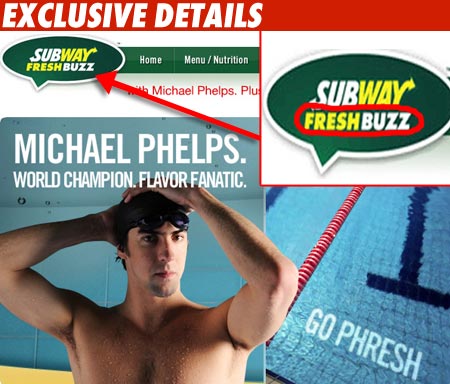
FreshBuzz at Subway with stoner Phelps

Subway has figured out that people who partake of marijuana get the munchies.

Kellogg’s, at the height of the Salmonella-in-peanut-thingies outbreak caused by the recklessness of Peanut Corporation of America, dropped Phelps cause of his bong-using ways. For a company that has a talking tiger pushing sugar-coated flakes of corn, hires the Rolling Stones in 1963 to write a jingle about three elves that push rice, and a talking toucan to peddle Froot Loops, such a move seems, uh, narrow-minded.

This picture, below, is from the website, TMZ. Subway says it’s pure coincidence and the FreshBuzz campaign has been around for three years. Subway knows its customers.