The new, much-to-be-quoted figure is 1-in-6 Americans get sick from the food and water they consume each year, down from the 1-in-4 figure of 1999. That’s 47.8 million sickies instead of 76 million.
It’s still too high. And doesn’t seem to account for active surveillance work done in Australia and Canada, which, along with the World Health Organization, has pegged the incidence of foodborne illness as high as 1-in-3.
According to press releases, the U.S. numbers are down because:
•CDC officials no longer include people who were only vomiting for a day or who only had one or two episodes of diarrhea because they know that real foodborne illnesses cause symptoms that last longer.
•CDC’s surveillance data is much more comprehensive than it was in 1999.
• Most norovirus is not spread by the foodborne route, which has reduced the estimate of foodborne norovirus from 9.2 to approximately 5.5 million cases per year. Because of data and method improvements, the 1999 and current estimates cannot be compared to measure trends.
CDC’s FoodNet surveillance system data, which tracks trends among common foodborne pathogens, has documented a decrease of 20 percent in illnesses from key pathogens during the past 10 years. However, these FoodNet pathogens make up only a small proportion of the illnesses included in the new estimates.
Among the additional findings for foodborne illness due to known pathogens:
• Salmonella was the leading cause of estimated hospitalizations and deaths, responsible for about 28 percent of deaths and 35 percent of hospitalizations due to known pathogens transmitted by food.
• About 90 percent of estimated illnesses, hospitalizations, and deaths were due to seven pathogens: Salmonella, norovirus, Campylobacter, Toxoplasma, E.coli O157, Listeria and Clostridium perfringens.
• Nearly 60 percent of estimated illnesses, but a much smaller proportion of severe illness, was caused by norovirus.
Leslie Nielsen is still dead, but the food safety wonks in Washington are keeping the fans in stiches.
The U.S. Senate’s slapstick effort to pass food safety legislation is not going to result in fewer sick people. But it does set a tone, like restaurant inspection grades, that food safety is important, that elected officials may, sorta, be paying attention. And if it gets food safety on The Daily Show, then great.
For those who need reminding, food safety is not at the top of the legislative agenda.
“A food safety bill that has burned up precious days of the Senate’s lame-duck session appears headed back to the chamber because Democrats violated a constitutional provision requiring that tax provisions originate in the House. … The debacle could prove to be a major embarrassment for Senate Democrats, who sought Tuesday to make the relatively unknown bill a major political issue by sending out numerous news releases trumpeting its passage.” John Stanton, Roll Call
"The bipartisan bill, which would overhaul the nation’s food safety system, still has to go back to the House, so there’s plenty of time to screw it up. … staff members for the leading Democratic and Republican senators on the health committee actually got together and worked things out the way they used to do in olden days. Most of the negotiators were women, and while I am certainly not saying that made a difference, I am, sort of, just saying.
“Oh, my gosh! It’s so important,” said Senator Scott Brown of Massachusetts, his voice dripping with sarcasm. “I’m glad I rushed back from our break to work on food safety.” Gail Collins, The New York Times
Health Commissioner Ken Pearce said in seven of the nine known cases, the same bacteria typing was found. After the health department contacted the Centers for Disease Control earlier this week, it was determined that the Clearview cases might be part of a common outbreak in other areas, Pearce said.??
A spokesperson for the CDC said the case is still under investigation and they are not aware of links to cases in any other states.??
The bacteria, Pearce said, is likely tied to a football team dinner served before a game three weeks ago.
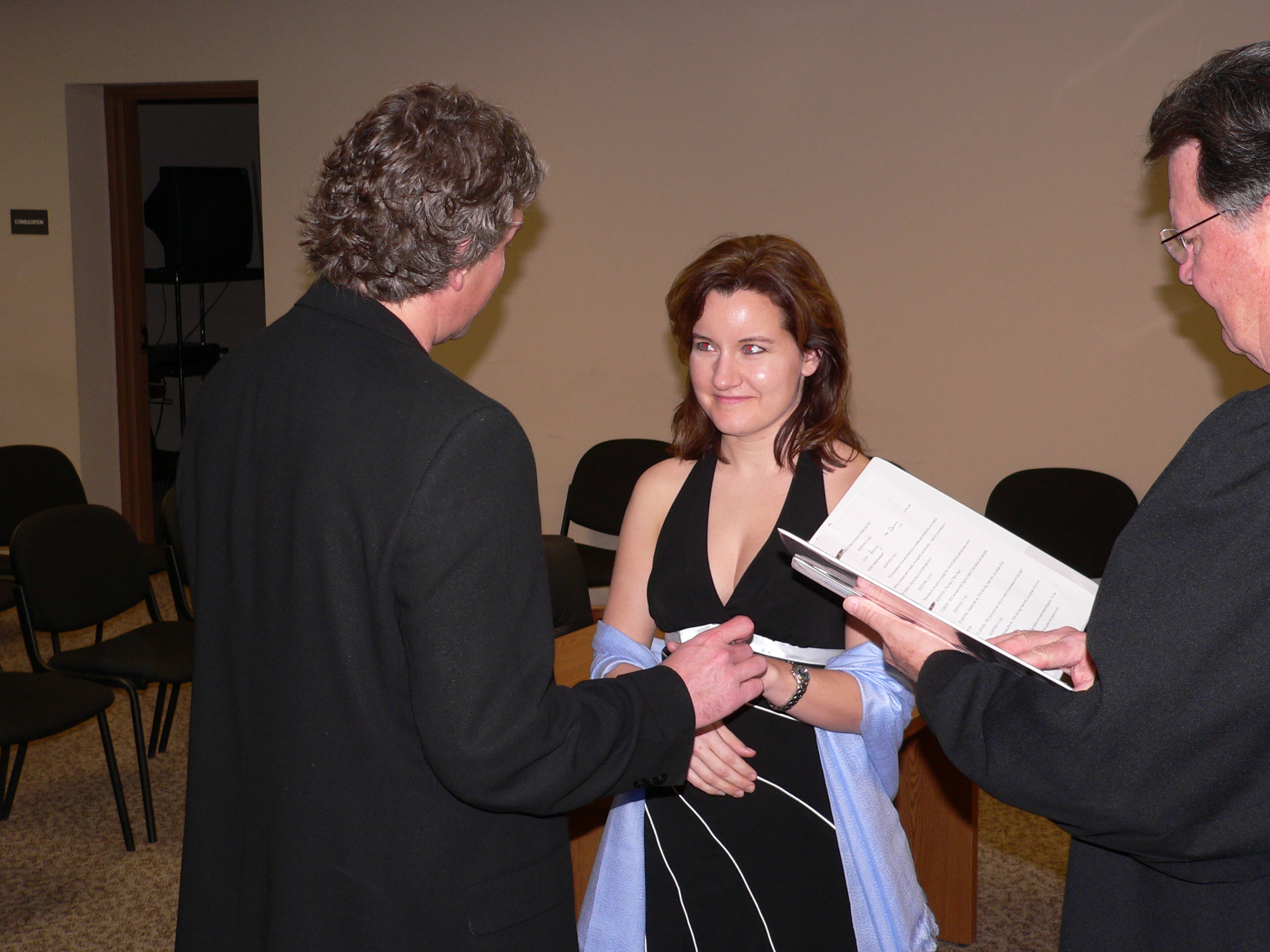
It wasn’t the food, it wasn’t the realization she had married me, it was thought to be her gall bladder.
Six people at a Roseville (California) wedding on the weekend ended up in the hospital, part of about 30 people who were sickened by food after the nuptials.
A new report says more than 60 per cent of restaurant employees choose to show up for work instead of staying home when they’re sick because they have no insurance and no paid sick time.
Kim Severson of the New York Times writes the report, called “Serving While Sick,” is based on more than 4,000 surveys and hundreds of interviews with employers and employees. It is intended to put pressure on the restaurant industry to improve conditions for its workers. The Restaurant Opportunities Centers United is one of two groups presenting the report at a Congressional briefing today.
If someone’s going to barf, why does it always seem to be at the beginning of a road trip?
Less than an hour into our final 13-hour leg to return to Manhattan (Kansas), Sorenne hurled up waffles and curdled milk from the Sleep Inn breakfast earlier that morning (but do like the Sleep Inn, friendly and good value) all over herself and car seat. It had been a barf-free five weeks on the road, so perhaps it was inevitable.
The Lysol spray we got at a truck stop seemed to mask the odors, but with 90 minutes remaining, it was strawberry barf.
The case involved a lawsuit brought by a taxi driver in the Bavarian capital following a nasty 2009 incident in his vehicle, a court statement said.
After picking up a Munich couple on their way home from the city’s annual beer festival, the driver said the man threw up in his vehicle, which cost a combined €241 for cleanup and missed work.
The taxi driver attempted to charge the passenger, but he alleged that the driver had not obliged his request to pull over, and had berated him instead.
The ruling, made on September 2, is effective immediately, meaning drunken revelers at this year’s ongoing 200th Anniversary Oktoberfest celebration should think twice before they stumble into a cab.
The U.K. Food Standards Agency had a busy day reminding consumers they are the critical control point when it comes to food safety and everything would be fine as long as they cooked things.
There’s some innovation going on in crafting those food safety messages.
The real news is later.
An investigation into an outbreak of salmonella by the Health Protection Agency and Health Protection Scotland has identified possible links to raw bean sprouts. There have been 58 cases reported in England since the start of August and 15 cases in Scotland.
An investigation by the Health Protection Agency (HPA) into an outbreak of Salmonella Typhimurium DT8 indicates that from 1 January 2010 to date, 63 cases of Salmonella Typhimurium DT8 infection have been reported in the UK.Two cases are known to have resulted in people being hospitalised and one death has been reported (although at present it is uncertain whether the death is directly related to the Salmonella infection). Evidence from investigations carried out by the HPA and FSA supports a link between the consumption of duck eggs and this outbreak.
How do British taxpayers feel funding a government agency that seems to spend most of its communications efforts telling taxpayers to do more in a piping-hot-sorta manner?
Consumers have a role; so do the producers, processors and distributors not mentioned in these taxpayer-funded reminders.
Celebrity chef Heston Blumenthal’s latest attempt at PR salvation in this morning’s Daily Mail is another crass and superficial effort to blame others for the March 2009 norovirus outbreak that sickened 529 at The Fat Duck restaurant. Heston has a memory of convenience in yet another quest for salvation and, sympathy while pushing a new fancy restaurant and cookbook. Here’s a reminder.
“I thought my world was caving in.”
So did the 529 people barfing and confirmed as having norovirus from your Fat Duck.
“I’m just a chef who likes asking lots of questions.”
Not enough questions – like where those oysters came from, and if I’m going to use them in dishes such as jelly oyster with passion fruit and lavender, should they be cooked so people don’t barf?
“Blumenthal is still seething about the report into the incident published 12 months ago by the Health Protection Agency (HPA), which he believes maligns his £150-a-head establishment and his business methods. ‘The report insinuated things that I found very frustrating. For example, that staff were back at work while they were physically ill. Our staff training manual very clearly lays out a 48-hour return-to-work policy – you don’t come back until 48 hours after you feel better.’”
At the time of the outbreak, Blumethal reported conducting his own testing of staff and customers, and stated “so far it is categorically not food poisoning." Wrong.
The HPA report did state ongoing transmission at the restaurant—leading to illnesses from January 6 to February 22—was thought to have occurred through continuous contamination of foods prepared in the restaurant or by person-to-person spread between staff and diners or a mixture of both. Investigators identified several weaknesses in procedures at the restaurant may have contributed to ongoing transmission including: delayed response to the incident, the use of inappropriate environmental cleaning products, and staff working when ill. Up to 16 of the restaurant’s food handlers were reportedly working with norovirus symptoms before it was voluntarily closed.
“I took the decision to close the restaurant within 24 hours, as a precautionary measure. It was a financial blow but I couldn’t consider money at the time. … I felt desperately sorry for all the people who suffered. My instincts were to contact everyone personally and apologise but I was advised against this by my lawyers, insurers and official bodies conducting investigations. It was extremely frustrating, but my hands were tied.”
Blumenthal is arguing he took a financial blow, but wouldn’t risk a financial blow and say I’m sorry, which was the decent human thing to do instead of hiding behind barristers and bureaucrats.
When Blumenthal did finally issue an apology on September 25, 2009—seven months after the outbreak was discovered and more than two weeks after the Health Protection Agency report was released—it suggested that he viewed an empathetic apology as an admission of guilt.
"I am relieved to be able to finally offer my fullest apologies to all those who were affected by the outbreak at the Fat Duck,” said Blumenthal, “It was extremely frustrating to not be allowed to personally apologise (sic) to my guests until now. It was devastating to me and my whole team, as it was to many of our guests and I wish to invite them all to return to the Fat Duck at their convenience [for a free meal]." The apology was too late and again failed to accept responsibility for the aspects of the outbreak that were under the chef’s control—namely, acquiring seafood from unsafe sources and allowing sick employees to handle food.
“He has basically attempted to re-write the HPA report and its conclusions in his favour. It is pathetic and a complete PR disaster. There isn’t even a hint of apology.??“ At first I was extremely sympathetic to Heston Blumenthal, but the way this has been mishandled beggars belief. I could not believe what I was reading in this email – it was like we had been sent different reports. I am taking them to court and a lot of other people are too. A simple apology might have ended all this a long time ago.”
Another diner blogged, “I’m appalled because I was so entranced by Heston Blumenthal and he comes across as being very decent and clever. We had been so ill and, at the very least, we expected some kind of acknowledgment. We really thought they would be interested in what had happened to us.”
Boxing promoter Frank Warren commented, "Everything was fabulous about the evening – the food, the setting, the service, it was unbelievably good but unfortunately, afterwards, all of us were ill. … Since then we have not heard anything from the restaurant at all. I am very disappointed and I know that the people I went with are very disappointed with the feedback"
Blumenthal is now gearing up for the opening of a lavish new restaurant, Dinner, at London’s Mandarin Oriental Hotel in December. He is also working on a new, simpler cookbook, Heston At Home, which will be out in a year’s time.
Heston, you need to get a lot better at this PR thing if you expect either to sell.
My “mind went to dark places.”
We’ve all been to dark places; grow a pair and admit what went wrong rather than incessantly whining while promoting. Then maybe you’ll get some sympathy.
Norovirus denier Heston Blumenthal was praised by the Sydney Morning Herald for his television show, Heston’s Feasts, and his scientific approach to food prep, including exploding duck and edible eyeball.
“… believe it or not, watching half a dozen B-grade British celebrities get slowly shickered as plate upon plate of outlandish meals is piled before them and they try to describe the experience in their own words is classic, thesaurus-less, comedy gold. When they’re gobsmacked, they admit it. ‘I’m gobsmacked.’” Similarly, if they’re amazed, they’ll get straight to the point. ‘’That’s amazing!’ an amazed TV presenter screeches, before adding: ‘I’m totally amazed!’
Three of those taken to hospital recovered and were discharged but Mrs Kwartz died last week.
Lawyers representing the guests at the wedding of Stephen Wicks and Jennifer Harris on August 8 are taking legal action against the outside caterers to the function.

(9).jpg) 1999. That’s 47.8 million sickies instead of 76 million.
1999. That’s 47.8 million sickies instead of 76 million..jpg) important, that elected officials may, sorta, be paying attention. And if it gets food safety on The Daily Show, then great.
important, that elected officials may, sorta, be paying attention. And if it gets food safety on The Daily Show, then great. contacted the Centers for Disease Control earlier this week, it was determined that the Clearview cases might be part of a common outbreak in other areas, Pearce said.??
 Then Amy barfed.
.jpg) employers and employees. It is intended to put pressure on the restaurant industry to improve conditions for its workers. The Restaurant Opportunities Centers United is one of two groups presenting the report at a Congressional briefing today.
employers and employees. It is intended to put pressure on the restaurant industry to improve conditions for its workers. The Restaurant Opportunities Centers United is one of two groups presenting the report at a Congressional briefing today. good value) all over herself and car seat. It had been a barf-free five weeks on the road, so perhaps it was inevitable.
.story.jpg)
(1).jpg) Just cook it don’t cut it.
Just cook it don’t cut it..jpg) restaurant. Heston has a memory of convenience in yet another quest for salvation and, sympathy while pushing a new fancy restaurant and cookbook. Here’s a reminder.
restaurant. Heston has a memory of convenience in yet another quest for salvation and, sympathy while pushing a new fancy restaurant and cookbook. Here’s a reminder. suffered. My instincts were to contact everyone personally and apologise but I was advised against this by my lawyers, insurers and official bodies conducting investigations. It was extremely frustrating, but my hands were tied.”
.jpeg) Blumenthal is now gearing up for the opening of a lavish new restaurant, Dinner, at London’s Mandarin Oriental Hotel in December. He is also working on a new, simpler cookbook, Heston At Home, which will be out in a year’s time.
Blumenthal is now gearing up for the opening of a lavish new restaurant, Dinner, at London’s Mandarin Oriental Hotel in December. He is also working on a new, simpler cookbook, Heston At Home, which will be out in a year’s time.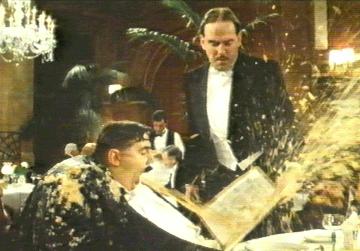 “… believe it or not, watching half a dozen B-grade British celebrities get slowly shickered as plate upon plate of outlandish meals is piled before them and they try to describe the experience in their own words is classic, thesaurus-less, comedy gold. When they’re gobsmacked, they admit it. ‘I’m gobsmacked.’” Similarly, if they’re amazed, they’ll get straight to the point. ‘’That’s amazing!’ an amazed TV presenter screeches, before adding: ‘I’m totally amazed!’
 Rene Kwartz, 82, was one of four guests who needed hospital treatment