Denver health officials evaluating marijuana edibles like other foods

It was only a matter of time until the pot brownie industry parroted the timeless line of “we’ve been doing this for x number of years and have never made anyone sick.” The Denver Post  home of a pot reviewer, reports that Denver health folks have some real concerns about the storage of THC-infused /extracted oil which is used as an ingredient in many edibles.cd66a7a18d37d7e5dd969c249e9a1ecb_L

City officials said that since January 2013, inspectors have made at least 340 visits to edibles manufacturers and the medical dispensaries and recreational pot shops that sell their products.

Scott Henderson, food program supervisor for the Denver Department of Environmental Health, said the city began applying existing food regulations to edibles because of rising safety concerns. Plant-infused oils can support the growth of dangerous bacteria (or spore germination, outgrowth, multiplication and botulinum toxin formation -ben) that can cause illness if eaten, Henderson said.

The city’s food safety regulations classify plant-infused oils as “potentially hazardous foods,” meaning they must be stored refrigerated to prevent bacterial growth unless otherwise approved. The oils are used as the active ingredient in many infused foods.

At Home Baked, operating under a license held by Advanced Medical Alternatives, was instructed to stop selling and destroy its marijuana-infused baking mixes and oil pouches. The company used a cold-water hash extraction in oil stored in reduced oxygen packaging at room temperature, which is conducive to spore germination and toxin formation, a report says.

Co-owner James Ashkar said he understands the city’s concerns. But he said the botulism threat is virtually nonexistent, no one has ever gotten sick from his products and the city is overstepping its bounds in a “witch hunt on edibles.”

Marisa Bunning, associate professor and extension specialist in food science and human nutrition at Colorado State University, said time and temperature abuses have long been shown to make food unsafe.

“The system we have in place — with health departments maintaining the standards that have been set and citing establishments that don’t follow those — that is a very good system that prevents illness,” Bunning said. “This is a new industry, so it’s probably going to take some time to learn the safe handling practices that are necessary.”

Holding an herbs in oil mixture at room temperature allows for cell formation and growth. Garlic-in-oil mixtures, have been the source of multiple illnesses. U.S. Food and Drug Administration-mandated microbial inhibitors or acidifying agents for commercially available (and non-pot-containing) infused oils.

Pot brownies might be a nice treat for Denverites, botulism is not.

Pennsylvania farm opens doors to mock audit

A lot of fresh produce safety verification was established in the absence of regulations. After dealing with fallout following outbreaks, food service and retail buyers started setting and enforcing standards for their suppliers. Between self-audits or declarations, regulatory inspections, buyer visits and third-party audits there’s a lot of data gathered on many factors – some risky, some not so much. wizard

Putting it all together is an exercise in exploring jurisdiction, laws, industry standards and vendor requirements. It’s a confusing patchwork, even for those in the supply chain. One of the standards, increasingly pointed to as a cost-effective option for small and medium-sized farmers, is found in the USDA GAPs audit.

In an attempt to pull back the curtain on the auditing process, Lancaster Online details a mock USDA GAPs audit at a Pennsylvania farm.

Most people, farmers included, do not like being held up to scrutiny. But the Woerner family in Adams County offered their operation up to just that last week. They allowed Brenda Sheaffer, a state Department of Agriculture inspector, to conduct a public mock audit at their packing house. The walk-through, organized by Penn State Extension, was designed to help growers see an operation through an inspector’s eyes.

No birds were nesting in the rafters, and the roof did not have any glass skylights that could break and fall into the food when packing time comes around. So far, so good.

“Wood cannot be sanitized,” she said. “You can clean it, but you can’t sanitize it.” Instead, the surfaces should be metal or plastic, or they could be coated with food-grade paint, she said. Wood is a touchy subject because many farmers transport their fruit in wooden crates. Even though it is a common practice, those wooden crates can lead to a deduction on the audit, though the crates by themselves will not cause the farm to fail the inspection, Sheaffer said.

Actually, it is hard to automatically fail.

Audits are a tool – but only really matter if buyers make decisions on them. We wrote in Audits and inspections are never enough: A critique to enhance food safety (Food Control, Volume 30, Issue 2, April 2013, Pages 686–691):

Auditing can be helpful, in theory. Audit reports, are only useful if the purchaser or food producer them reviews the results, understands the risks addressed by the standards and makes risk-reduction decisions based on the results. From past examples, there appears to be a disconnect between what auditors provide (a snapshot) and what buyers believe they are doing (a full verification of product and process).

Canada’s largest retailer sucks at food safety

Canadian Tire is best known to university students of my advanced age as the source of Canadian Tire money, which could be used to buy beer on campus back in the day, or maybe that was just meal cards, or maybe both.

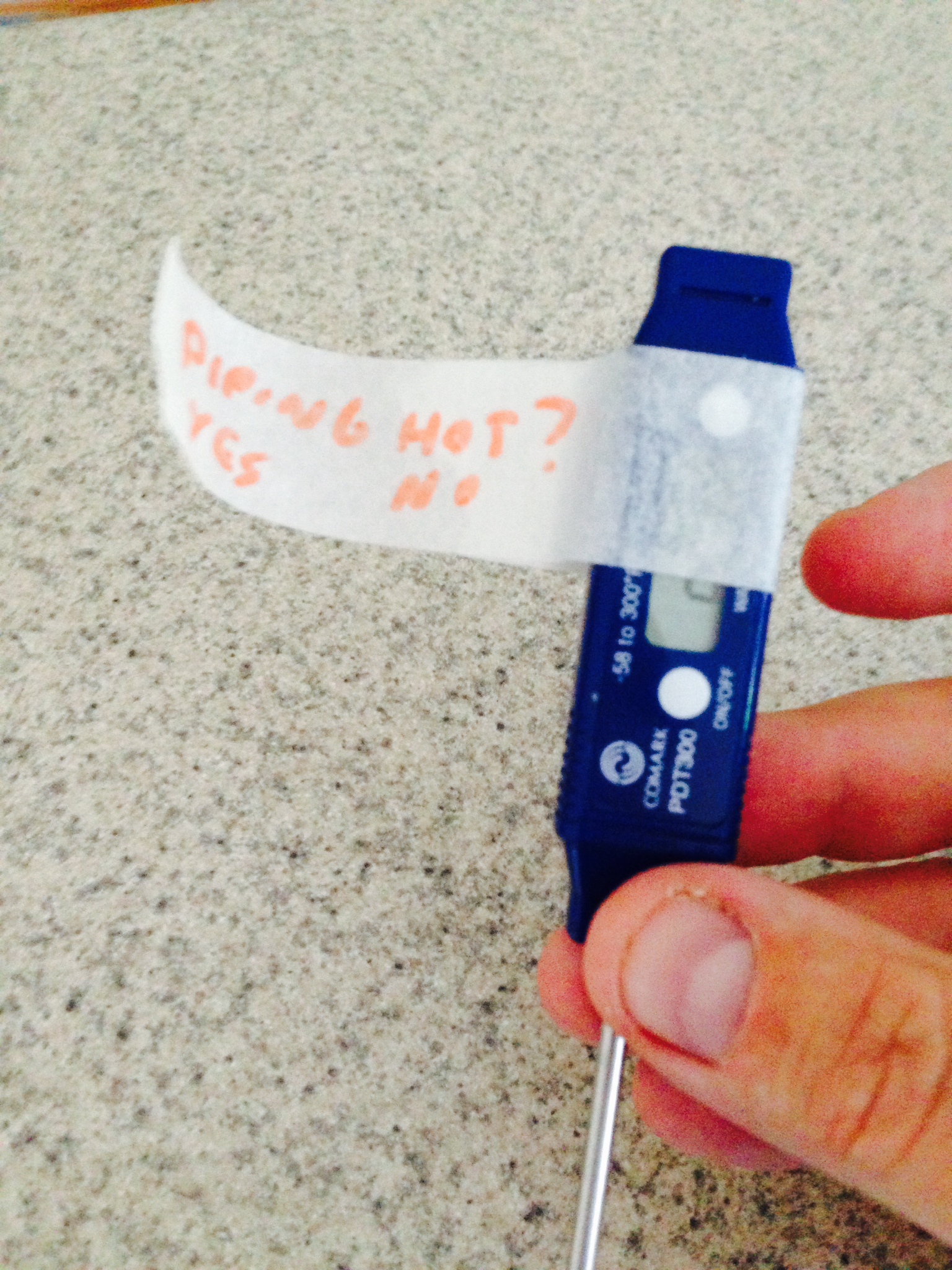
piping.hot I’m getting too old to remember.

As Canada’s largest retailer, it is said that 90 per cent of all Canadians live within a 15-minute drive of a Canadian Tire store; that nine-out-of-10 adult Canadians shop at one at least twice a year; and that 40 per cent of Canadians shop at Canadian Tire every week

There are 490 stores across Canada, the majority of which operate in distinct categories of automotive parts, automotive service, tools and hardware, sporting goods, housewares, and seasonal.

They also sell a lot of barbecues; not a lot of thermometers.

New levels of doneness demand a new simple hand test. Check out the changes we’re proposing to see if your steak’s Mauve, Routine or Swell.

It’s probably all a witty play on the finger test to determine if meat is cooked, but it would be better if a thermometer was involved. Chapman jail broke his and made a UK version.

Norovirus fells over a hundred at New York school function

“For about 5 hours, I wanted to die.”

That sums up my experiences with norovirus, but this quote comes from Jennifer Schadt, a mom who attended a Harrison, NY awards banquet with her son on April 30. According to the Journal News, at least 110 Rye High School  teachers, parents and students were barfing and had the runs after eating at the Willow Ridge Country Club.1399675963000-GetContentCA2G9NJE

Nanami Kanno, 17, a junior at the school, said she and her mother became sick two days after the dinner, suffering stomach pains for a couple of days before feeling better.

“It was horrible,” she said. “It was suppose to be a good night for students who got awards but it turned out to be a bad night because of the food.”

The Westchester Department of Health, which takes the lead investigating disease outbreaks, said its policy is not to inform the general public when there is a norovirus outbreak, only the people it believes to be affected, spokeswoman Caren Halbfinger said.

Willow Ridge manager Scott Garvin said the facility was cleaned and has been allowed to reopen. It appeared to be closed Friday night.

Both Rye High School and Rye Middle School were sanitized to try to stem spread of the disease, Superintendent Frank Alvarez told parents.


Hygiene problems at Jamie Oliver’s London butcher?

Jamie Oliver’s exclusive butcher’s shop in London was closed for several hours in Jan. after inspectors found serious hygiene problems including mouse droppings, mold on carcasses and out-of-date meat.

Barbecoa Butchers, located near St Paul’s Cathedral, closed its doors after public health officers scored it one out of five in January, although a Jamie Oliver Restaurant Group spokeswoman said the closure was voluntary and not enforced.

Jamie OliverIt reopened within 24 hours after the issue was addressed.

Carcasses hanging in basement chillers were found to have mold growing on them, slicers and vacuum packers were left dirty and expensive wagyu beef, marrow bone, oxtail, onglet, and lomo de cana, a Spanish-style pork, was found to be out of date, The Times reported.

In one case chicken breasts which had been deboned were removed from their box, vacuum packed and relabelled with a date set for a week later, City of London inspectors said. There was no safety management system in place.

The butcher’s shop, which supplies meat for the restaurant upstairs of the same name, was found to have dirty fridge door handles, inadequate washing facilities for staff, poor lighting, damaged flooring and a “heavy presence” of mouse droppings.

The Times said it used a freedom of information request to obtain details of the extent of the hygiene problems.

However, a spokeswoman for the Jamie Oliver Group said mold on ageing meat carcasses is normal, and is always removed before it is served to the customer.

That doesn’t address all the other issues in the report.

KFC restaurant in UK prosecuted for selling undercooked food

It wasn’t piping hot.

A fast food restaurant in Northwich has been prosecuted for selling undercooked food which was eaten by a three-year-old child.

Queensway Hospitality Limited, which operates the KFC premises at Chesterway under franchise, admitted placing an unsafe mini chicken fillet burger on the market.

kfc.ukCheshire West and Chester Council prosecuted the company following a complaint to food safety officers concerning an incident on February 2, 2013.

Last Thursday (May 1), Chester Magistrates Court heard that a customer bought a mini chicken fillet burger meal from the restaurant’s drive-thru as a treat for his three-year-old son to eat at home a short distance away.

After starting to eat the mini chicken fillet burger the child spat the food out,

commenting that “it tasted funny”.

The child’s parents reported the matter to Cheshire West and Chester Council Food Safety, who sent the item for analysis by the Public Analyst who found conclusively that part of the burger had not been adequately cooked.

Food Safety Inspectors subsequently conducted an inspection of the KFC premises and gathered items of food safety documentation such as temperature and defrost control records.

They found evidence to suggest that in some instances chicken was being under-defrosted and that additional items were added to the defrosting cabinet during a defrosting cycle.

The company accepted that this was a serious incident, to which they reacted promptly, conducting their own internal investigation and undertaking a thorough review of procedures, recognising that fortunately on this occasion there was no harm caused as the child who ate the chicken spat it out.

The company was fined £500 and ordered to pay £2500 towards the council’s costs and a victim surcharge of £50.

5 Vegas Chinatown restaurants shut

There’s an old saying that originated with the Los Angeles restaurant inspection disclosure system: C is for Chinese.

In Las Vegas, health inspectors have shut down Chinatown restaurants, most with more than 50 demerits, in five of the last six weeks.

ChinaGittesCloseUpDarcy Spears of KTNV ABC 13 reports that one, Sam Woo BBQ kicked the reporters out as soon as they walked in. But they couldn’t keep inspectors or their cameras out.

The health district’s pictures show heavy grease build-up at the wok station. Dirty appliances, shelving, racks, bulk bins and kitchen floor.

A hand sink was a murky mess. Inspectors found handwashing wasn’t happening as it should.

As for the food, the list of things at unsafe temperatures is long, starting with par-cooked pigs. Chicken, egg noodles, cooked rice, cooked Chinese broccoli and cut lettuce all had to be thrown away because they were in the temperature danger zone. Same for cooked ducks, some from the day before.

Preserved duck eggs that were supposed to be refrigerated, were not. Plastic bags from a clothing store were being re-used to store spices.

The person in charge couldn’t list any symptoms of foodborne illness.

87 Greater Manchester restaurants scored ‘zero’ ratings for food hygiene

Almost 90 restaurants in Greater Manchester have a zero out of five rating from the Food Standards Agency including restaurants near Piccadilly and the Trafford Centre.

Both Swadesh, a swanky Indian restaurant on Portland Street, and Rice Flame and Grill in the Trafford Centre, were among the 87 businesses receiving the lowest possible score.

Bullet-With-Butterfly-Wings-smashing-pumpkins-4349111-990-756-640x488The Manchester Evening News reports the borough with the highest number of zero star restaurants was Bolton, with 26 establishments receiving the low food hygiene score, while Salford came second with 13 restaurants being given no stars for food hygeine.

‘Not real communicative’ Health dept. in Penn. to test new letter grading system for restaurants

In the on-going saga that is restaurant inspection disclosure for Pittsburgh-area restaurants, things proceed, um, not fast.

The Allegheny County Health Department board has approved plans to move forward requesting public comment on plans to implement a restaurant grading system and a pilot program by summer.

toronto.red.yellow.green.grades.may.11But the board made changes to its original proposal.

Glenda Christy, from the Health Department’s Food Safety Division explained that restaurant owners, at least early on, will get a chance to improve before a lower grade is posted on their establishment.

“There will not be a grade posted on the facility the first time unless it’s an A,” she said. “The inspection, however, will be posted online. And if the facility is not an A, there will be a scheduled re-inspection. At the time of the re-inspection, they will then make the inspection and post the appropriate grade.”

But John Graf, a former president of the Pennsylvania Restaurant and Lodging Association, is concerned that plans are moving forward too quickly.

“There is a taste in my mouth that there’s a train moving along here that they don’t want to stop,” he said. “And I think it is moving along a little fast. … It’s just all kind of picked out of a barrel and that’s the concern we have with the grading system as a process, that it’s arbitrary. It’s a snapshot in time, it stays around for a year and it’s not really communicative of the safety of a restaurant throughout the year because it’s just one little slice of time.”

I’ve heard that in every town that has developed some sort of grading program for going on 20 years.

Doesn’t cut it.

Restaurant inspection disclosure? Don’t send Washington Post memos to the press

The Washington Post has done lots of stories about restaurant inspection, and disclosure of those results.

So it’s sorta weird that after the employee cafeteria at the Washington Post’s office downtown was closed by health inspectors last week, Post editorial writer Charles Lane, sent an email to newsroom staffers.

double-facepalm1According to the Washington City Paper, Lane wrote:

For us, the closure of the cafeteria due to cleanliness issues is a minor inconvenience, a bit of an institutional embarrassment, a modest health issue and, of course, fodder for the usual newsroom snark.

For the cheerful, hard-working father of four who wakes up every day before dawn to make our coffee and spread out our salad bar, however, it is a serious matter, entailing loss of income, reputational damage, additional expenses, etc. – even though it’s entirely unclear how much this decent, honest man, or the employees who assist him, are actually at fault, or how much harm anyone actually suffered.

So it would be nice if he did not also have to contend with being mentioned, and indeed implicitly mocked, by name, in the press, before he’s even had a chance to remedy the situation and submit to follow-up inspection.