Expired liver, pork lungs leads to closure of Goldilocks Bake Shop and restaurant in Vegas

Goldilocks Bake Shop and Restaurant on Maryland Parkway near Karen Avenue, Las Vegas, was shut down with 50 demerits.

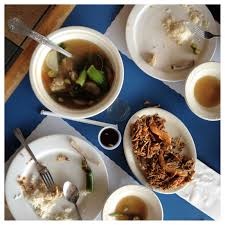
Darcy Spears of KTNV reports Goldilocks serves traditional Filipino dishes such as cured meat, liver, and sauteed pork lungs and heart. But Goldilocksinspectors found all of those were expired and had to be thrown away.

Goldilocks’ supervisor Bebe Illustre says they were having problems with their chiller.

Darcy: But a broken chiller doesn’t explain why stuff was expired.
Bebe: Yeah, definitely, but we were really having a problem, because when it was delivered, I know it was not delivered long ago.  Maybe it was our fault that we did not check immediately the date.

Inspectors also found several containers of potentially hazardous foods weren’t date labeled, and the person in charge wasn’t knowledgeable about proper temperatures or food storage.

In fact, egg, chicken, rice, cooked eggplant, pork and cut lettuce were all at unsafe temperatures.

Darcy: That’s the kind of thing that can be dangerous for bacteria to grow.  So why would that have been allowed to happen, do you think?
Bebe: It was… as I said, we were having a problem with the freezer/chiller at that time.

But again, you can’t blame the freezer for pork being improperly thawed, or food being stored on the floor in the walk-in fridge.

Darcy: And food doesn’t belong on the floor.
Bebe: Um, you know what?  I was not really very sure about that.

She says the employees know better, and that proper food storage should be standard operating procedure.

Goldilocks was storing raw fish over cooked chicken and pork.

Employees weren’t washing their hands properly.

The can opener blade was crusty with dried food.

And then, there’s the moldy ice machine.

Goldilocks didn’t stay dirty for long.  They re-opened in less than 24 hours with a zero-demerit A grade.

Firefighters answer call, find sewage in kitchen, restaurant shut

A west St. Louis Mexican restaurant closed its doors on Thursday after learning of a possible food contamination.

KMOV reports firefighters and a fire marshal noticed sewage was backing up in the food preparation area of El Maguey on Manchester, Tuesday.  

The crew was called to the restaurant on an unrelated fire alarm but later El Magueydiscovered a pipe dripping sewage in the kitchen.

The owner tells News 4, a plumber that was brought in by the restaurant say the pipe was clear and ready to use earlier in the day.

El Maguey shut down immediately and began the cleaning process. The staff threw away food, any open liquor bottles and will be sanitizing the restaurant. The owner says he is also planning to steam clean the floors.

He hopes to finish the clean-up and gain permission to re-open by early next week.
                  

Worst areas for hygiene scores in UK restaurants

In a rating of restaurant hygiene based on public inspection scores in the UK, the SE25 area of Croydon has been listed as one of the “worst areas,” as a takeaway in Selhurst area, just outside of the SE25 postcode, received the highest food safety fine ever levied by Croydon Magistrates — £30,000 after failing to meet standards since 2005.

Consumer group Which? Magazine collected data from thousands of local authorities across England, Wales and Northern Ireland from 2011 onwards.

East London Lines reports the results come from individual councils’ food and safety inspections carried out in accordance with guidelines set by the rest.inspection.disclosure.ukFood Standards Agency.

The guidelines provide a 0-6 scale, scoring food outlets from 0 meaning “urgent improvement necessary,” to 5 meaning ‘very good.’

Although the subheading of the “Which?” article uses the word “eateries,” the data includes food outlets such as takeaways and restaurants, but also schools and hospitals.

“Which?” reported that 44 per cent of the 85 inspected outlets in the SE25 area of Croydon scored less than 3. The average score for Croydon was 2.65.

The worst in the country was Bexley with an average score of 2.62.

East London Lines spoke to the Food Safety Team at Croydon Council who said that “there are many reasons why the average ratings vary from place to place”.

One of the suggested reasons is that there may be variation in the way in which people are grading. The spokesman said that some people may be “tougher than others.”

Croydon Council stressed that “whilst those premises with low scores do have things that they should improve they are not considered to be an immediate health risk.”

When asked about the high percentage of low scores, The Food Safety Team commented that a low score does not necessarily reflect the hygiene larry.the.cable.guy.health.inspectorof premises.

Lots of smaller businesses and owners who do not have English as their first language often do not have a proper written health and safety system and “this prevents them scoring over one on the hygiene rating system, regardless of how good they are.”

Croydon Council said that they are working with these businesses to improve their grading.

East London Lines found that the claims published by “Which?” do not correlate with information on “Scores On the Doors,” although both use council’s FSA data as their source.

294 sick; new Firefly restaurant opens in Vegas after Salmonella outbreak

A new Firefly Tapas Kitchen & Bar opened over the weekend at 3824 Paradise Road, a few doors down from the old Firefly, home to a salmonella firefly.salm.puppet.videooutbreak last month that sickened 294 people from 27 states and two foreign countries.

Tabitha Simmons, John Simmons’ wife and business partner, told the Las Vegas Sun, “I think we were a little apprehensive about opening. We really want to put our best foot forward, and we want to gain people’s trust back. We’re not taking this lightly.”

John Simmons recently said he had no plans to reopen the original Firefly location on Paradise because he would be moving ahead with plans that were already in place to open the new restaurant by the end of the month. He signed a lease for the new space in August.

He said inspectors from the Southern Nevada Health District approved the restaurant to open May 21. Inspectors were not immediately available for comment Friday.

Cooked chorizo collected from the previous Firefly restaurant on Paradise Road tested positive for salmonella, according to Linh Nguyen, an epidemiologist with the Health District.

Though the chorizo arrived at the restaurant raw, it was subsequently cooked by Firefly’s restaurant staff. Nguyen said the genetic fingerprint of firefly1-300x300the salmonella found in the chorizo has not been found anywhere else in the country, suggesting it was contaminated at the restaurant.

Simmons said chorizo will remain on the menu at the new restaurant.

“We still offer it,” Tabitha Simmons said. “All of the additional precautions we’ve put in place allows us to offer it.”

Ethnic restaurant in Sydney fined $85,000

The Crow’s Nest, an Indian and Pakistani cuisine restaurant in North Sydney, has been fined $85,00 for more than 15 different food safety violations that took place between 2011 and the present date.

Mike Stewart of Australian Food Safety News writes this type of fine is considered the worst that could be given, used only when the types of crow's.nestviolation are so serious that they truly put public safety at risk.

Some of the violations that the restaurant was found guilty by the North Sydney Food Council for included:

• serious cockroach infestation;

• no hot water available in kitchen;

• walls, floors, and shelves were covered in grease and grime, creating food safety concerns as well as fire hazards;

• food was being stored in broken containers;

• chopping boards were not being cleaned properly; and,

• refrigerators were not functioning properly or were not sealed to keep cold air in.

The owner of the Crow’s Nest indicates that more than $40,000 have been poured into reconstruction and maintenance to ensure the restaurant is no longer in violation. Additionally, the owner indicated that the exterminators visit every six weeks now to ensure that roaches are completely eradicated from the location.


Oversight of Maine restaurants diminishes, just as complaints rise

Maine’s guidelines for overseeing restaurant safety were quietly scaled back last year, even as the number of health-related complaints about Maine restaurants has been on the rise.

An investigation by the Portland Press Herald/Maine Sunday Telegram has found that restaurant kitchens in Maine are subject to fewer inspections and less transparency than restaurants in much of the country. In addition, the nyc.rest.gradesstate cannot track the most common food code violations or analyze trends and variations from one county to another.

Among the findings:  

• The number of complaints that led to restaurant inspections has increased 87 percent since 2008, including a 35 percent jump after the Legislature doubled the amount of time between mandatory inspections. Key lawmakers were not aware of the increase in complaints when they changed the law.

• Little information is readily accessible to the public about the cleanliness of restaurants, with Maine being one of a small number of states where no local or statewide authority posts inspection information online. If a restaurant fails an inspection or is deemed a health hazard and closed, it is not required to inform its patrons.

The Press Herald created an online database of Portland restaurant inspections, but statewide data provided to the newspaper were too flawed to post online.

• State inspectors could not meet the state’s own mandate to conduct annual inspections, so the Legislature loosened the law to require an inspection once every two years. Other states require annual inspections, while many require multiple inspections each year.

• The state system for tracking restaurant inspections is seriously limited, erroneously listing some restaurants as public health hazards, saddling some new restaurants with the poor performance of a previous restaurant simply barf.o.meter.dec.12because it’s located at the same address, and provides no way for the state to analyze the most common food code violations.

• Inspection failure rates vary greatly from county to county. Restaurants in one county failed 13 percent of all inspections over the last three years, while in another county, virtually none failed.

Filion, K. and Powell, D.A. 2009. The use of restaurant inspection disclosure systems as a means of communicating food safety information. Journal of Foodservice 20: 287-297.

The World Health Organization estimates that up to 30% of individuals in developed countries become ill from food or water each year. Up to 70% of these illnesses are estimated to be linked to food prepared at foodservice establishments. Consumer confidence in the safety of food prepared in restaurants isfragile, varying significantly from year to year, with many consumers attributing foodborne illness to foodservice. One of the key drivers of restaurant choice is consumer perception of the hygiene of a restaurant. Restaurant hygiene information is something consumers desire, and when available, may use to make dining decisions.

Designing a national restaurant inspection disclosure system for New Zealand

Journal of Food Protection 74(11): 1869-1874

Katie Filion and Douglas Powell
 
http://www.ingentaconnect.com/content/iafp/jfp/2011/00000074/00000011/art00010

The World Health Organization estimates that up to 30% of individuals in developed countries become ill from contaminated food or water each year, and up to 70% of these illnesses are estimated to be linked to food service facilities. The aim of restaurant inspections is to reduce foodborne outbreaks restaurant.inspection.la.porn.mar.13and enhance consumer confidence in food service. Inspection disclosure systems have been developed as tools for consumers and incentives for food service operators. Disclosure systems are common in developed countries but are inconsistently used, possibly because previous research has not determined the best format for disclosing inspection results. This study was conducted to develop a consistent, compelling, and trusted inspection disclosure system for New Zealand. Existing international and national disclosure systems were evaluated. Two cards, a letter grade (A, B, C, or F) and a gauge (speedometer style), were designed to represent a restaurant’s inspection result and were provided to 371 premises in six districts for 3 months. Operators (n = 269) and consumers (n = 991) were interviewed to determine which card design best communicated inspection results. Less than half of the consumers noticed cards before entering the premises; these data indicated that the letter attracted more initial attention (78%) than the gauge (45%). Fifty-eight percent (38) of the operators with the gauge preferred the letter; and 79% (47) of the operators with letter preferred the letter. Eighty-eight percent (133) of the consumers in gauge districts preferred the letter, and 72% (161) of those in letter districts preferring the letter. Based on these data, the letter method was recommended for a national disclosure system for New Zealand.

Hundreds sickened: Salmonella behind Al-Azhar food poisoning in Egypt

Egypt’s Health Minister Mohamed Hamed said that salmonella was behind the second mass poisoning incident in Al-Azhar University in Cairo.

Hamed said in a press statement on Friday that the final report on the incident revealed that the bacteria contaminated the food, which left 180 students barf.o.meter.dec.12hospitalized on 29 April after eating in the dormitory.

The minister also stressed the importance of the personal hygiene of staff members involved in food preparation.

Earlier, on 1 April, over 500 students were hospitalized with food poisoning after eating on campus, which sparked protests.

Ahram Online reports that both incidents sparked anger amongst Al-Azhar students who staged demonstrations against what they described as negligence and deteriorating conditions of the university’s dormitories.

Ten officials are currently standing trial on charges of culpability in the 1 April mass outbreak of food poisoning.

Health types investigate report of illness at Vegas Strip restaurant

The Southern Nevada Health District has been called  in to investigate after local teens say they become violently ill after eating at a restaurant on The Strip on their prom night.

A number of local teenagers become sick after eating at the Bucca di Beppo restaurant inside the Excalibur.

The health district says it is still investigating and have not concluded that the holly.madison.Bucca di Bepporestaurant is the cause of the students getting sick.

News 3 has confirmed the health district received reports of illnesses from people who ate at Bucca di Beppo, an Italian restaurant inside the Excalibur.

The health department confirms the restaurant got an “A” rating for their regular inspection on Monday and it got another “A” rating on Tuesday when inspectors showed up in response to the complaints.

The restaurant remains open and the health district says there have been no further complaints.

News 3 received word from Excalibur owner MGM Resorts which says its top food and beverage executives are at the property and they’re working with health inspectors and Buca di Beppo management to look into the situation.

Buca di Beppo released the following statement regarding this investigation:

Buca di Beppo places the utmost importance on the cleanliness, quality and high standards of food preparation in our restaurants. The kitchen at Buca di Beppo Excalibur has held a consistent A-rating from the Southern Nevada Health District ever since the restaurant opened. On Saturday, May 11 a high school group had their prom dinner with us and we have been advised that several became ill.
…  Health and safety in our restaurants is of paramount importance and we stand by our record of cleanliness, high standards of food preparation and our consistent — and current — A-rating from the SNHD.

Restaurant cleanliness: Silicon Valley eateries one step closer to accountability

It’s still mildly ironic that diners in Silicon Valley, the IT creative center for the world, are only now being offered data about restaurant inspections.

But three months after an NBC investigative unit exposed flaws in the system, the department that oversees restaurant inspections reported some progress smiley.faces.denmark.rest.inspectiontowards change.

Restaurants in Silicon Valley don’t have to post their inspection report, but do have to show it to you if you ask to see it. When we first went undercover in February — nine out of ten refused to show us. So the county sent out postcards reminding all restaurants of the law. Did it work? We went undercover again asking the same exact questions to find out.

Half of the Silicon Valley restaurants we went to wouldn’t show us the inspection report — and this was after the county sent reminders in response to our first undercover investigation. 

Even the general manager of a chain restaurant told us the report is private, but then said he would make an exception. We pointed out a sign to him that said inspection reports are available for review. “This is another kind of document,” he said. “That’s the only thing we can show to the customer, not this.”

But that’s not true.

Thursday, the Department of Environmental Health reported making progress with how it communicates inspection results online. Earlier this year, we found it to be essentially useless. Now, you’ll see details of violations cited, making it easier to understand. 

View more videos at: http://nbcbayarea.com.


E. coli victim pushes for public restaurant inspection scores

After being infected with E. coli for the second time in her life, a Seattle woman wants to make restaurant inspection reports in Washington as public as possible, modeling efforts in New York and California. 

Sarah Schacht told KING 5 News she likes what is happening in San Francisco, where health scores and violations for every restaurant are now belgium.rest.inspect.13posted on the popular website Yelp. 
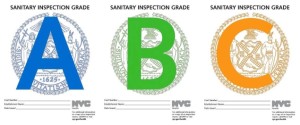
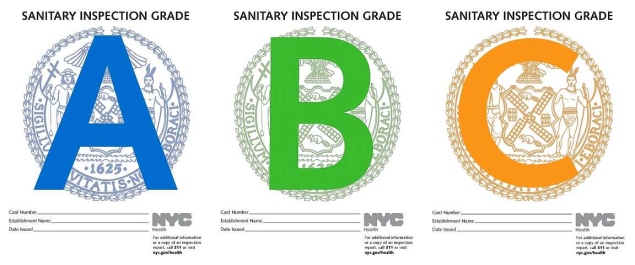
She also likes the approach in New York and some other major cities, where inspection grades of “A,” “B” and “C” are on display in restaurant windows. 

“That’s immediately useful,” she said.  “It’s intuitive, it tells customers what they need to know just by walking by.”

Schacht was 13 years old when she and her family were among the hundreds of people sickened by an E. coli outbreak at Jack in the Box restaurants in 1993. 

Schacht was infected again this February and is now suing the Central District restaurant that she believes is responsible. 

Food-safety attorney Bill Marler represented Schacht in both cases.

“This is the first time I’ve ever had a case of a sort-of repeat customer,” Marler said. 

Schacht and another woman have filed a lawsuit against Ambassel Ethiopian Restaurant. 

Before dining out in February, Schacht did not know that Ambassel had rest.inspection.color.sacramentoearned “unsatisfactory” marks on five out of six previous health inspections.
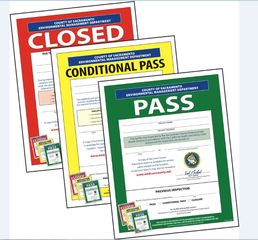
“For me, it would’ve raised some questions and perhaps would’ve influenced the restaurant I would’ve gone to that night,” she said. 

Those restaurant inspections are readily available on the King County website for anyone who seeks them out.  But Schacht, who is an expert in open government, feels the information is not totally intuitive or easy to understand.  She feels users could be confused by the point system because high scores are bad.

“The information is pretty dense and it’s not very user-friendly,” she said. 

That is why she prefers the more public approaches in New York and San Francisco.

She’s right.

Filion, K. and Powell, D.A. 2009. The use of restaurant inspection disclosure systems as a means of communicating food safety information. Journal of Foodservice 20: 287-297.

The World Health Organization estimates that up to 30% of individuals in developed countries become ill from food or water each year. Up to 70% of these illnesses are estimated to be linked to food prepared at foodservice establishments. Consumer confidence in the safety of food prepared in restaurants isfragile, varying significantly from year to year, with many consumers attributing foodborne illness to foodservice. One of the key drivers of restaurant choice is consumer perception of the hygiene of a restaurant. Restaurant hygiene information is something consumers desire, and when available, may use to make dining decisions.

Designing a national restaurant inspection disclosure system for New Zealand
01.nov.11 
Journal of Food Protection 74(11): 1869-1874

The World Health Organization estimates that up to 30% of individuals in developed countries become ill from contaminated food or water each year, and up to 70% of these illnesses are estimated to be linked to food service nyc.rest.gradesfacilities. The aim of restaurant inspections is to reduce foodborne outbreaks and enhance consumer confidence in food service. Inspection disclosure systems have been developed as tools for consumers and incentives for food service operators. Disclosure systems are common in developed countries but are inconsistently used, possibly because previous research has not determined the best format for disclosing inspection results. This study was conducted to develop a consistent, compelling, and trusted inspection disclosure system for New Zealand. Existing international and national disclosure systems were evaluated. Two cards, a letter grade (A, B, C, or F) and a gauge (speedometer style), were designed to represent a restaurant’s inspection result and were provided to 371 premises in six districts for 3 months. Operators (n = 269) and consumers (n = 991) were interviewed to determine which card design best communicated inspection results. Less than half of the consumers noticed cards before entering the premises; these data indicated that the letter attracted more initial attention (78%) than the gauge (45%). Fifty-eight percent (38) of the operators with the gauge preferred the letter; and 79% (47) of the operators with letter preferred the letter. Eighty-eight percent (133) of the consumers in gauge districts preferred the letter, and 72% (161) of those in letter districts preferring the letter. Based on these data, the letter method was recommended for a national disclosure system for New Zealand.