

More on pink and thermometers

Surveys still suck.

Using I-own-a-thermometer as an indicator of thermometer use is as useful as I-own-a-sink therefore I wash my hands. Or, I own a toilet, so I always hit the bowl. Or … use your imagination.

Researchers at the U.S. Food and Drug Administration report in the Journal of Food Protection that the use of a food thermometer is the best way to ensure that meat, poultry, and other foods reach an internal temperature sufficient to destroy foodborne pathogens.

The 1998, 2001, 2006, and 2010 Food Safety Surveys were used to analyze changes in food thermometer ownership and usage for roasts, chicken parts, and hamburgers in the United States.

But surveys still suck.

The paper notes that when E. coli O157:H7 was first associated with ground beef in the 1980s, the U.S. Department of Agriculture (USDA) recommended that consumers cook hamburgers until the meat was ‘‘brown or pinkish brown in the center. However, as a result of research that showed that one out of four hamburgers may be brown in the center before reaching a safe internal temperature, the USDA changed its advice to consumers— instead of using color as an indicator of doneness in hamburgers, consumers should use a food thermometer to ensure that a safe temperature has been reached. In May 2000, the USDA launched the Thermy educational campaign to encourage consumers to use a food thermometer when cooking small cuts of meat, such as hamburgers and chicken parts. The USDA also provided guidance to consumers about the safe temperature for various cuts of meat and poultry.

Ho Phang and Christine Bruhn reported earlier in JFP that in video observation of 199 California consumers making hamburgers and salad in their own kitchens, handwashing was poor, only 4% used a thermometer to check if the burger was safely cooked, and there were an average of 43 cross-contamination events per household. They concluded Thermy had not been successful.

We did our own survey with 40 people brought in to cook a chicken meal in a Kansas State kitchen and videotaped their behaviors. Many participants reported owning a food thermometer (73%) and nearly half (42.5%) of participants reported knowing the suggested end temperature for cooking poultry to ensure doneness. When asked the final recommended internal temperature for chicken, the mean response was 214°F with a range of responses from 140°F to 450°F. (The correct answer is 165F)

Of those participants observed measuring the internal temperature of the product, only three used the thermometer correctly. During observation, two individuals who used the thermometers failed to remove protective casings prior to taking internal temperature readings, and therefore used the instruments incorrectly.

Surveys do not measure behaviors: they give an indication of what people think their behavior is, or what the survey person wants to hear, but that isn’t going to get people to use a thermometer (tip-sensitive, digital).

Good intentions, bad food safety: 40,000 pounds of potentially contaminated chicken mistakenly given away in Texas

KTXS News reports that what started out as a good deed could have potentially bad consequences – after 40,000 pounds of contaminated chicken was mistakenly donated to charities in the Brownwood area two weeks ago.

After a rollover accident in Mills County, Texas, on February 10, 2012, Brown County Health Department received a report that 40,000 pounds of partially thawed and potentially contaminated chicken was being given away in Brown County.

Texas Department of Public Safety worked the accident scene until approximately 9:30pm and condemned the trailer load of chicken due to its partial thawing and possible health risks said Brownwood/Brown County Health Inspector Paul Coghlan. He explained that the chicken posed a hazard with consumption of either salmonella or food poisoning, both of which can be life threatening to anyone with a compromised immune system.

After the insurance company released the contents of the trailer to be disposed of on February 15th, someone from the company decided to take the chicken, not knowing of the health risk that it posed, to non-profit agencies such as Good Samaritan Ministries and the Salvation Army in Brownwood, according to Coghlan. Both of these agencies refused the donation because they are required to only buy or accept raw meats from licensed distributors. The man then went to local churches and donated many cases of chicken which were then passed on to individuals in need, Coghlan said.

As soon as Coghlan received the report about the man possibly donating the contaminated chicken, he and Dr. James Hays began trying to find where the chickens were distributed. They also notified the Brownwood Regional Medical Center emergency room so that cases of food poisoning or salmonella could be tracked. The man who donated the chicken was located and he gladly cooperated, giving officials a list of places he left the chicken, Coghlan said. Brownwood Police were also called in to assist in the search and interview of possible recipients of the tainted meat.

“The man was trying to do a good deed, unfortunately some people don’t know how to handle meat safely,” said Coghlan. “I feel like we would have seen something by now if anyone was going to get sick from the meat; however it does still have potential to be dangerous.”

Coghlan stated that some of the people who received the chicken would not give the meat back; however, they were warned of the possibility that they may become ill if they consumed it. They were also given tips on how to tell if chicken is contaminated, to look for air in the packaging which signals decay, a slimy feel to the meat, or a foul odor when the packaging is opened.

Of the 40,000 pounds of chicken on the trailer, less than 3000 pounds have been accounted for and the public is still urged to dispose of this chicken if received.

The risk of cross-contamination seems grossly underestimated.

16 now sick with salmonella linked to Eat a Pita; staffer says not our food

Hamilton Public Health officials (that’s in Canada) have discovered another 12 cases of salmonella illnesses after asking anyone who has eaten at Eat a Pita on Main Street East since Feb. 1 to call them.

Officials declared a salmonella outbreak connected to Eat a Pita after investigating four salmonella cases linked to the restaurant. Eat a Pita has been closed as a result of improper food handling. During a previously scheduled health inspection on Feb. 1, it was found that cooked chicken wasn’t being kept at a high enough temperature. Similar problems were discovered during a followup inspection on Thursday.

A woman who answered the phone at Eat a Pita on Thursday said, “I don’t believe this is in my food.”

She also said she would like documentation of the cases from public health, and declined to comment further.

Coil in chicken sends man to hospital; restaurant responds it’s BS

A bus driver is blaming a Brooklyn chicken joint for sending him to the hospital with piece of wire lodged in his larynx.

Lajzer Grynsztajn, 50, said he nearly choked to death on a 2-inch coil he claims was cooked in a two-piece order he bought at JFK Fried Chicken near his Sunset Park bus depot.

“The more I think about it, I get angry. I almost died for something stupid like that?” said Grynsztajn, of Bensonhurst.

In a Brooklyn Supreme Court lawsuit, the 11-year Metropolitan Transportation Authority veteran is seeking unspecified damages for the near-fatal food fiasco.

Grynsztajn charges that the clerk who took his order seemed more concerned about him paying for the meal than why he was choking at the counter.

“He asked for $5 before I passed out or something,” said Grynsztajn.

The father of three said the scare happened Jan. 9 when he stopped at the Fifth Ave. eatery on his way to work and ordered two chicken breasts and fries.

“I felt a sharp pain, like I was choking,” he recalled. “I thought I was choking on a bone.”

After leaving the restaurant, he started coughing blood and was taken to Lutheran Medical Center, where a doctor discovered the real culprit, he said.

The wire was stuck so deep in his throat, he had to be put under anesthesia before it could to be dislodged, according to court papers.

A man who answered the phone at JFK Fried Chicken denied the bus driver’s charges.

“I think this guy is bull——-g us,” he said and hung up.

Do you mind sitting at a table with a chicken? Not if it’s cooked to 165F

I used to think Hell was a continuous loop of Entertainment E-News or Leonard Cohen songs.

Now I’m convinced it’s a continuous loop of any show on Bravo.

I go to sleep early; Amy winds down by watching bad TV on the computer, including the Real Housewives of Anywhere, and Millionaire Matchmaker (optimistic bias?).

On a possibly recent episode, Patti the Matchmaker introduces Z-list actress Tori Spelling as a woman who has it all and evidence that women can do it all.

Tori plays faux homemaker for Patti and the douchebag-looing-for-a-mommy woman, baking some stuff, and inviting the guests to sit down, asking, “do you mind sitting at a table with a chicken?”

While the people engage in some horrible banter, the chicken is walking around the table, munching on biscuits, and acting like it owns the place.

T-list Tori has flashed her poultry before, and was involved in a dubious promotion of soft-serve ice-cream for expectant women at Baskin Robbins in 2008.

Nuevo Folleto Informativo: Brote causado por contaminación cruzada y empleados enfermos: Pollo crudo y lechuga fueron lavados en el mismo lavamanos

 Traducido por Gonzalo Erdozain
Resumen del folleto informativo mas reciente:

– 75 enfermos de salmonelosis tras haber comido en Tenth Hole Tea Rooms en Southsea (Reino Unido)
– Pasta precocida, trapos y empleados dieron positivo en el test de Salmonella
– No lave carnes crudas. Salmonella y otros patógenos pueden ser salpicados hasta a 3 pies del lavamanos.

Los folletos informativos son creados semanalmente y puestos en restaurantes, tiendas y granjas, y son usados para entrenar y educar a través del mundo. Si usted quiere proponer un tema o mandar fotos para los folletos, contacte a Ben Chapman a benjamin_chapman@ncsu.edu.
Puede seguir las historias de los folletos informativos y barfblog en twitter
@benjaminchapman y @barfblog.

Follow the bug: 10% of chicken packaging contaminated with campylobacter – on the outside

Just cook it doesn’t cut it.

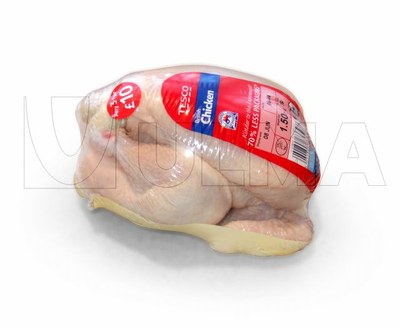
Especially when 10 per cent of 42 samples of packaging on chicken is contaminated with campylobacter on the outside.

(And another reason to wrap any poultry in extra plastic, especially if placing into a reusable bag.)

The Royal Environmental Health Institute of Scotland and other groups said the study confirmed the results of a previous survey by the group that also showed that approximately 10% of samples were contaminated.

The Chairman of the West of Scotland Food Liaison Group (WOSFLG), Mr Leslie Paton said, “We know that it is fairly common to find Campylobacter in raw chicken but we were quite concerned about the extent to which the external surfaces of the packaging were also contaminated. There are implications for anyone handling such packaging and consumers should take care as there is a possibility of cross contamination to other surfaces and foods.”

Careful with that chicken pate; significant source of campylobacter in UK

Campylobacter is usually number 1 or 2 when it comes to causes of foodborne illness, so I’m having trouble with the lede from the BBC that claims over 90 per cent of cases of campy in the U.K. this year were due to people eating undercooked chicken liver pate, often at weddings.

The Daily Mirror specifies that 90 per cent of outbreaks of campylobacter at catering venues in 2011 were linked to people eating chicken pate.

I have no idea what the U.K. Health Protection Agency (HPA) actually said because there is nothing on their website yet, although they apparently analyzed 18 outbreaks of campylobacter in 2011 across England.

In all, 443 people became unwell and one had to be hospitalised.

The Food Standards Agency (FSA) has reminded caterers to cook poultry livers to prevent infection.

Of the 18 outbreaks, 14 occurred in catering venues, and 13 of these were linked to chicken or duck liver pate.

Seven were linked to wedding receptions at hotels, banqueting venues or public houses and six were associated with catering at other functions such as hotels, clubs and restaurants.

The HPA found that livers used to make the parfait or pate were undercooked allowing the liver to remain pink in the center.

The FSA issued updated advice to caterers on the safe handling and cooking of livers twice in 2010, but campylobacter outbreaks associated with the consumption of chicken liver pate have continued to occur.

Last week, some 80 patrons nibbling on hors d’oeuvres during a fundraiser at the fancy Lowry Hotel in Manchester were sickened with campylobacter linked to the chicken pate.

Maybe FSA should try different messages using different media, and perhaps evaluate if any of their advisories actually result in fewer sick people.

PS: The Food Standards Agency subsequently published a statement that says:

“New figures from the Health Protection Agency (HPA) reveal that 90% of campylobacter outbreaks at catering venues were linked to undercooked chicken liver pate. Campylobacter is the most common cause of food poisoning in the UK.”

Nice reporting BBC (state-sponsored jazz and bad pop music).

Fancy food isn’t safe food; luxury Manchester hotel edition; 80 sick with campylobacter in chicken pate after fundraiser

 Who knew Manchester, U.K., had such fancy hotels?

Diners at Salford’s luxury Lowry Hotel reported fever, dizziness and vomiting after attending a fundraiser at what has been dubbed Manchester’s most fashionable hotel.

The outbreak is being linked to chicken pate served at a charity dinner and is now being investigated by the Health Protection Agency (HPA) and officers from Salford council.

The five-star facility gets zero stars for its new addition to the things-not-to-say-after-an-outbreak category: It is the first incident of its kind at the hotel since it opened 10 years ago.

And be careful when lawyers get sick.

Solicitor Alex Speed, 44, from Stockport, told how he fell ill after attending the event. “Based on what our table ate, I know that the people who had the tomato soup as a starter didn’t get ill. It’s reasonable to assume the pate was responsible.”

He has now launched a compensation claim on behalf of seven clients.

Dr Rosemary McCann, a consultant with the HPA, said 80 guests had so far reported symptoms – and a number of cases of campylobacter had now been confirmed by laboratory tests.

Hotel bosses confirmed that the pate dish had been prepared by hotel staff for the dinner on October 8. General manager Peter Kienast said, “We are determined to get to the cause of the issue and the detailed investigation is reviewing every stage of the process from the food source itself to its delivery.”

‘The Lowry Hotel has very stringent procedures and training methods to ensure the highest quality of hygiene in our kitchens.

GM Kienast, you may want to check out those kitchen procedures.