Don’t wash raw chicken, use a thermometer for safety; Australian food safety types catching on

Surveys still suck, but they can give an indication of food safety practices to investigate more rigorously.

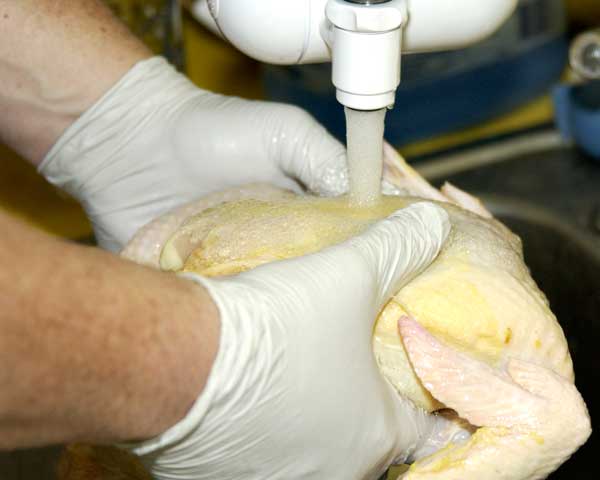
The Australian Food Safety Information Council has released national survey data that shows 60% of home cooks in Australia are putting themselves at additional risk of food poisoning by washing whole poultry before it is cooked which spreads bacteria around the kitchen. A further 16% of those surveyed incorrectly tasted chicken to see if it is cooked properly rather than use a safe and accurate meat thermometer.

Food Safety Information Council Chairman, Dr Michael Eyles, says 6 in 10 home cooks in a national Newspoll survey washed whole chicken before they cooked it, with 5 in 10 washing chicken pieces with skin on and 4 in 10 washing skinless chicken pieces.

“According to a Food Standards Australia New Zealand survey 84% of raw chicken carcasses tested positive to the food poisoning bacteria Campylobacter and 22% to Salmonella. This is similar to the findings of other surveys overseas. Notified cases of illness from Campylobacter and Salmonella in Australia have almost doubled over the last 20 years. OzFoodnet estimates there are approximately 220,000 cases of Campylobacter infection each year with more than 75% transmitted by food and 50,000 cases of Campylobacter infection each year can be attributed either directly or indirectly to chicken meat.

”Home cooks are probably following what their parents or grandparents did in the past by washing poultry, not to mention probably patting it dry with a tea towel. Washing poultry splashes these bacteria around the kitchen cross contaminating sinks, taps, your hands, utensils, chopping boards and foods that aren’t going to be cooked like salads or desserts.

“Cooking poultry right through kills these bacteria, making it safe. However, 16% of those surveyed, rather than using a meat thermometer or checking if juices run clear and are no longer pink, say they eat some chicken to see if tastes cooked, with males significantly more likely to do this than females,’ Dr Eyles concludes.

Color is still a lousy indicator of safety, but at least they mention thermometers.

Any agency that wants to say it’s science-based should provide credible evidence; otherwise it’s just another food huckster hiding behind the impartir of science. Consumers can handle more information, not less, and some credible references would boost, uh, credibility.

Actors don’t know cross-contamination: Christopher Walken, Richard Belzer, and two models cook a chicken dinner together

I expect our Canadian Thanksgiving dinner will go something like this tomorrow for our 25 guests. More about that later.

Except I’m a much more microbiologically conscientious cook than these two.

Meanwhile, enjoy Christopher Walken and Law and Order: SVU’s Richard Belzer as they go shopping with two models (whose presence is never explained), go to a petting zoo, and cook dinner. While they eat the chicken they’ve cooked on Walken’s deck, they’re treated to a mandolin serenade by Richard Belzer’s son-in-law.
And, to top off the natural strangeness of the evening, Walken tells the story of one of his first gigs as an actor, in a commercial for pancake syrup. “I had to spend the whole day eating pancakes,” says Walken, “and it’s not good to eat too many pancakes.” Then he asks Belzer to take an iPhone picture of his nose.


Sometimes, chicken comes raw: KFC Ontario version

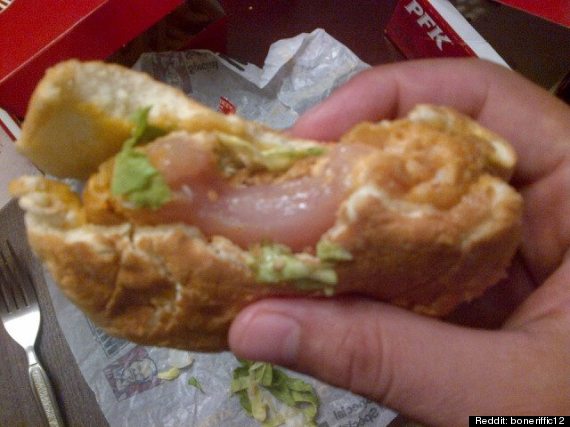
Color is still a lousy indicator to determine whether food has been safely cooked. But sometimes it’s obvious, usually by biting into semi-still-frozen burgers; Amy got to experience that once in Manhattan; I did in New Zealand years ago; and now some dude in Ontario (the one in Canada) whose friend posted this pic to Reddit over the weekend.

“Fried Chicken #FAIL. My friend ordered a chicken burger from KFC & it came back raw. Yes he ate that bite that’s missing.”

In the comments, the user explains that that sandwich in question was purchased in Ontario, Canada, where the information on the packing is written in both French and English. PFK stands for “Poulet frit a la Kentucky.”

Nigeria intercepts chickens stuffed with $150,000 worth of cocaine

I make an OK stuffed chicken but it may be more crowd-pleasing with $150,000 worth of cocaine inside.

Nigerian authorities say a mechanic who struggled in Brazil for more than six years had hoped the drugs would buy him a life of luxury in his native land.

“This was like a retirement plan for him,” said Mitchell Ofoyeju, spokesman for the National Drug Law Enforcement Agency.

The accused was arrested over the weekend at the airport in Lagos after he came in from Sao Paolo with 2.6 kilograms of cocaine, Ofoyeju said. Photos from the agency showed egg-shaped packages wrapped in gold aluminum foil and tucked into the browned chickens.

Authorities have found drugs sandwiched inside the fabric of suitcases, sewn into wigs worn by female passengers, tucked into underwear or hidden in phone chargers and even in a stethoscope, Ofoyeju said.

Cross-contamination: washing chicken or any meat is a bad idea

Michael Formichella is a chef who blogs for Meatingplace.com, sponsored by the American Meat Institute (the views and opinions are strictly those of the author).

This past Friday, Formichella wrote, “Some basic common sense plays a huge role in safe outdoor dining and picnics.”

Except common sense isn’t common unless you’ve thought about it.
“With chicken being one of the popular proteins of choice here in the U.S., some simple precautions can go a long way. Safe temperature, washing and drying any meat before use must be done.”

Washing and drying of raw meat was abandoned as recommended practice years ago.

In a Dec. 24, 2004 article in the National Post, Fergus Clydesdale at the University of Massachusetts at Amherst and who was on the U.S. Agriculture Department’s Dietary Guidelines Advisory Committee, said, "The risk of cross-contamination through washing poultry is far greater than shoving it in the oven without washing it, which makes the risk almost zero.”

Even the Brits agree, stating, ”Washing raw poultry is a common kitchen mistake, and it simply isn’t necessary. … By washing your raw bird, you’re actually more likely to spread the germs around the kitchen than get rid of them.”

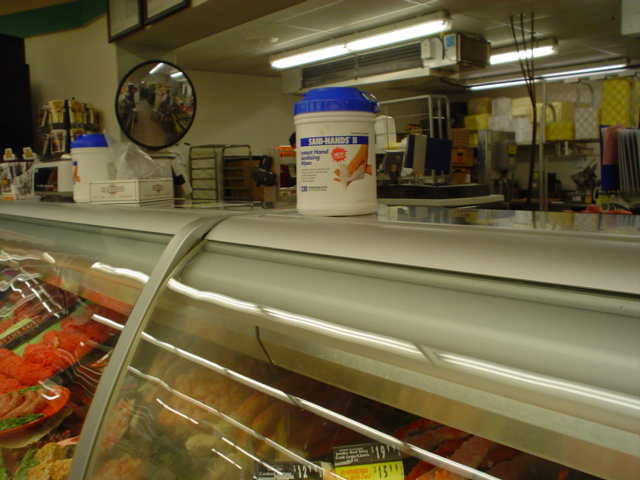
Memo to Australian retailers: provide sanitizing wipes in stores or pay to clean my shorts

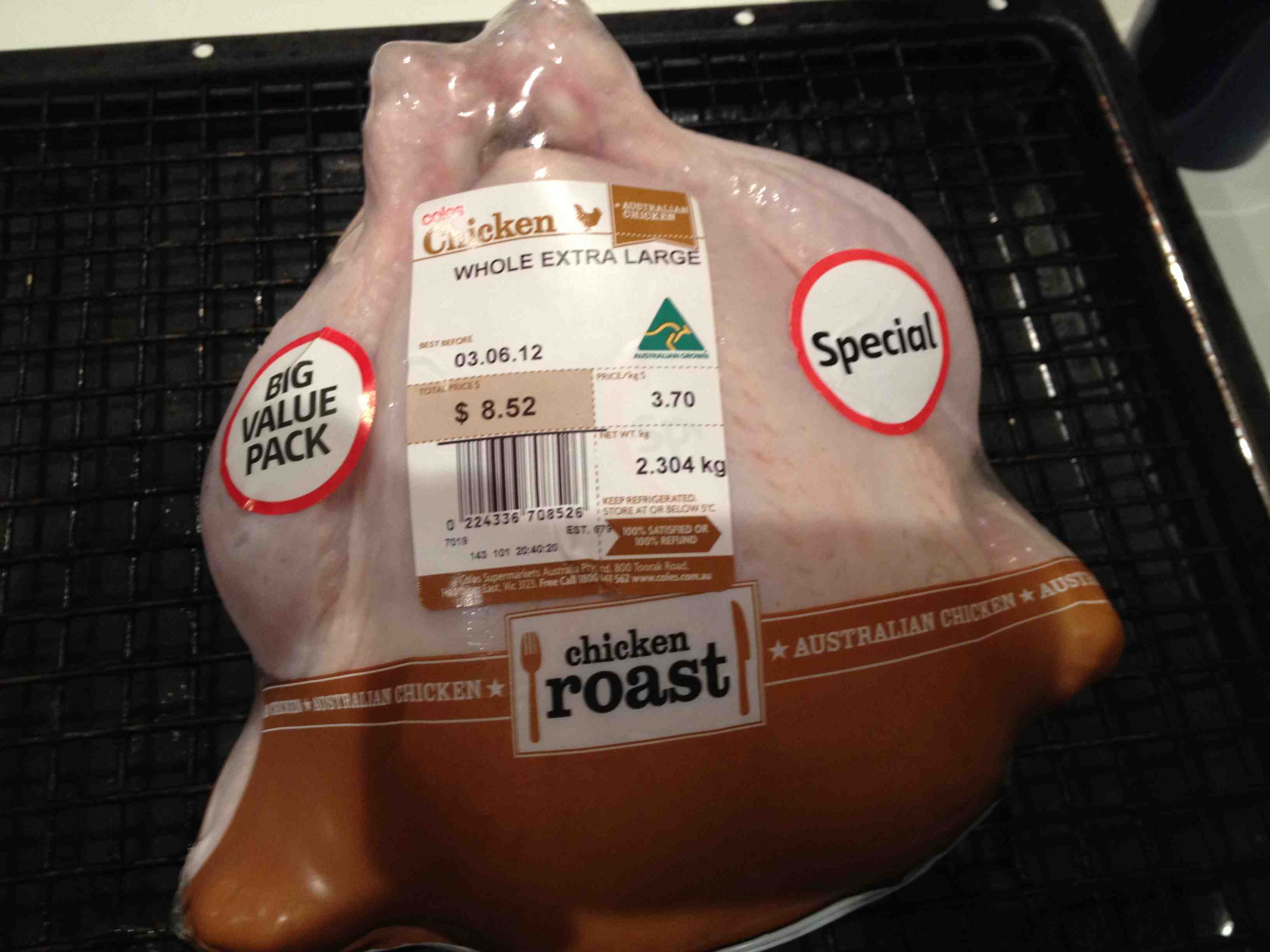
This is going to be transformed into dinner in about 12 hours, traditional comfort food as the people of Brisbane bundle up with lows as low as 59F and highs of only 69F with rain (people are dressed like it was Feb. in Saskatoon).

But when I picked the bird out of the cooler case yesterday, blood ran down my hand. I looked for something to help clean up the mess and could only find my shorts.

The same thing happened a few weeks ago with some marked-down packaged chicken pieces. I happened to pick a checkout aisle that was being manned by the manager. I asked Mr. Megalomart Manager if he had something form me to wipe my hands on.

Nope.

I asked about the bloody drippings now on the checkout conveyor. He looked around but couldn’t find the sanitizing solution he insisted was at every checkout.

I said, in the U.S. and Canada, it has become routine to find disposable sanitizing wipes not only near the meat counter, but any raw product such as produce, along with a variety of contraptions and wipes for sanitizing shopping carts.

Manager thought the wipes were a decent idea; they had a weekly food safety meeting and he’d bring it up with corporate.

Corporate trashed the idea because of cost and waste.

Something to keep in mind next time a vp of something proclaims, “food safety is our top priority.”

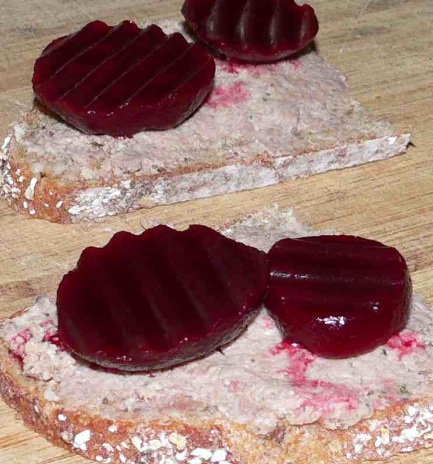
Failures abound as hotel fined for sickening wedding guests with Campylobacter via undercooked chicken pate

The fancy-pants Letchworth Hall Hotel in Hertfordshire, U.K., near London, was ordered to pay more than £12,000 after pleading guilty to two charges of poor food hygiene practice on Friday.

Hertford Magistrates’ Court heard that 49 of the 118 guests at the hotel in Letchworth Lane who had eaten a chicken liver pate starter had reported illness after the meal in September 2011.

Subsequently 22 cases of a Campylobacter infection were confirmed, including the bride and groom who both became ill while on honeymoon in Las Vegas. Symptoms of the infection included stomach cramps and diarrhea.

North Herts District Council (NHDC) received the initial complaint five days after the wedding on September 8 and two environmental health officers visited the hotel to investigate.

The officers established that the chef had cooked the chicken livers to 60 degrees C, in breach of hotel policy and Food Standards Agency guidance which recommends a temperature of 75 degrees C to prevent food poisoning.

Letchworth Hall Hotel admitted undercooking the pate, rendering it unsafe for human consumption, and failing to ensure the kitchen followed the company food safety policy and procedures, including a failure of management to uphold those procedures.

UK pool star falls ill, blames chicken

Is snooker sport?

The stars are still mortals and suffer from foodborne illness.

Judd Trump withstood a bout of suspected food poisoning to edge ahead of Dominic Dale as last year’s runner-up returned to the Crucible.

The Daily Mail reports the 22-year-old English potter was unusually subdued in the early stages of his Betfred.com World Championship opener, and when he trailed 3-1 at the mid-session interval it seemed he was in trouble.

Trump finished the session in style with a rapid 68 break, doubling in the black in thrilling style.

There was a raucous reception for Bristol-raised Trump as he emerged for the match. Trump has won the UK Championship and soared to No 2 in the world rankings. He also drives a Ferrari, an indication of how his life has been transformed.

Trump began his third World Championship campaign as the sponsors’ favorite to land the title, but the news that he had woken this morning feeling unwell raised questions over how he would perform against 40-year-old Dale, who was making his seventh Crucible appearance.

Trump’s management believe he became sick after eating chicken, and he continued to feel ill after the session was over.

Trump wrote on Twitter: ‘Not a good day led in bed, tryna get better for tomorrow. 1st time iv had food poisoning and hopefully the last.’

Why didn’t they find more? One in five UK chickens contaminated with campy; just cook it say lobbyists

One in five supermarket chickens is contaminated with campylobacter, according to an investigation – spurring claims of "scaremongering" by a retail consortium.

The study involved poultry bought from nine of the UK’s major supermarkets by the Which? consumer group.

As well as 18% of the samples containing campylobacter, 17% of them were contaminated with listeria, with salmonella present in 1.5% of the 192 chickens tested.

Whole chickens and chicken portions – standard, free range and organic, and all reared in the UK – were tested.

Sky News contacted all nine of the supermarkets tested in the survey. Most of them referred us to the British Retail Consortium (BRC).

The BRC’s food director Andrew Opie said: "Which? is scaremongering. Campylobacter is completely killed by normal cooking so providing people prepare chicken properly and follow sensible hygiene practices they’re at no risk."

There’s always a risk; especially with cross-contamination in home and food service kitchens.

In 2009, the UK Food Standards Agency (FSA) found (in a similar but not directly comparable test) that 65% of chickens were contaminated with campylobacter at the point of sale.

FSA said that tackling campylobacter was a “key issue” but warned that, despite the reduction in contamination, seasonal variations made it difficult to assess the merits of the decline.

Campylobacter was responsible for over 371,000 cases of food poisoning, including 88 deaths in the UK in 20009.

Which? executive director Richard Lloyd said: "We want to see the risk of contamination minimised at every stage of production, because for far too long consumers have been expected to clean up mistakes made earlier in the supply chain."

British Poultry Council chief executive Peter Bradnock said: "This report makes it clear that chicken is a safe and healthy product when properly cooked. These welcome findings show a big reduction in campylobacter presence on chicken, demonstrating the effectiveness of the biosecurity measures being taken by producers and processors against this naturally occurring bacteria."

Lidl issued a separate statement to Sky News saying: "All farms used to produce our fresh poultry range are members of the Assured Food Standards scheme for poultry, commonly known as the Red Tractor scheme, and are subject to independent third-party audits.

So what.

And journos repeated bad UK food safety advice to cook chicken until the juices runs clear: color is a terrible indicator of food safety in eat. Use a tip-sensitive digital thermometer and stick it in.

Vaccine to control campy in chicken?

A vaccine could be developed to prevent Campylobacter being carried in chickens according to an American scientist presenting his work at the Society for General Microbiology’s Spring Conference in Dublin.

Foodborne illness costs the UK an estimated £2 billion each year. Campylobacter is the leading cause of foodborne illness and is responsible for about 30% of cases in the UK. Campylobacter jejuni was responsible for more than 371,000 estimated cases in England and Wales in 2009, resulting in more than 17,500 hospitalizations and 88 deaths.

Scientists at Washington State University are studying the maternal antibodies that are passed from hens to their chicks. "These antibodies protect chicks from becoming colonized by Campylobacter in the first week of life," explained Professor Michael Konkel who is leading the research. "Our group has now identified the bacterial molecules that these antibodies attack, which has given us a starting point for a vaccine against Campylobacter," he said. "We have already found that chickens injected with these specific molecules – found on the surface of Campylobacter jejuni – produce antibodies against the bacterium. This response partially protects them from colonization."

"Preventing contamination of poultry at slaughter has not been effective at reducing illness in humans. It has been shown that about 65% of chickens on retail sale in the UK are contaminated with Campylobacter," explained Professor Konkel. "Ideally, the best way to prevent contamination is to stop chickens on the farm from becoming colonized with this microorganism in the first place, which could be achieved by vaccination. Our goal within the next 6 months is to test a vaccine for chickens that will reduce Campylobacter colonization levels. There’s still a long way to go, but I’m confident our lab and others are moving in the right direction."