Missed phone calls, changing stories: How E. coli spread at the San Diego County Fair

More than 1.1 million people had already passed through the gates of the San Diego County Fair this summer by the time an E. coli outbreak forced the closure of all animal exhibits and rides.

News that a 2-year-old boy had died after picking up the particularly nasty infection, which was also contracted by three other children with animal contact at the fair, stirred alarm within the community. Many had already roamed the midway, stuffed themselves full of fair food and passed through the venue’s cavernous livestock barns en route to pig races, pony rides and the petting zoo.

Paul Sisson of The San Diego Union Tribune reports hundreds of emails and other documents obtained through Public Records Act requests show that, while the public health team was able to move quickly, more frequent county case reviews, a more modern medical records system and more prompt and accurate responses from families with infected children might have gotten the investigation started days earlier.

The decision to shut down the animal exhibits on June 29, records show, came after four days of a behind-the-scenes scramble by the county’s public health department. With one death already on the books, they decided to notify the public even though testing had not yet confirmed that all four of those first four cases had E. coli infections.

It quickly became clear those initial instincts were accurate. In the following weeks, an additional seven people, plus two more whose infections weren’t confirmed, came forward, including another young boy who nearly died after suffering severe complications that attacked his kidneys.

Records show that zeroing in on the fairgrounds was no simple task. Epidemiologists had to eliminate a broad range of possible locations, from restaurants to a busy daycare center, before they were able to zero in on the fairgrounds.

And there was plenty of other work that had to be done simultaneously. County records show that the department investigated 435 disease cases in June alone. Of those, there were 43 cases of shiga toxin-producing E. coli reported that month, forcing disease detectives to sift out the 11 eventually confirmed to be part of the outbreak.

Determining whether there are connections between cases requires interviews with each subject or their legal guardians. Depending on the type of pathogen involved, it’s a process that often relies on frail human memory to recall the finest possible details of possible exposure routes from foreign travel and foods consumed to places visited and close contact with others.

The investigative process doesn’t get started until the health department is notified, usually after a test result administered in a doctor’s office or hospital comes back positive.

Subjects often aren’t interviewed until weeks after they got infected because many infections have incubation periods measured in days or weeks and it usually takes time before individuals decide to seek medical attention and additional time for medical providers to make a diagnosis.

Often, those charged with reading these particularly fragile tea leaves learn to trust their instincts, and that was certainly the case with the fairgrounds outbreak.

Emails show that the county’s epidemiology team first began to suspect that it might have an outbreak on its hands on June 24, the day that 2-year-old Jedidiah King Cabezuela (right) was admitted to the intensive care unit at Rady Children’s Hospital with severe kidney problems.

While discussing his condition, an epidemiologist noted that the boy had visited the fair before he got sick. And, she said, the county had been notified just before Cabezuela’s death of another boy, this one 9 years old, who tested positive for the type of toxin produced by the E. coli strain causing so much difficulty for Cabezuela.

Though the 2-year-old and 9-year-old hadn’t eaten the same foods at the fair, and the older boy’s parents said he didn’t visit animal areas, the fact that both visited the same location was enough for the epidemiologist to suggest that the department “should at least keep an eye on” the 9-year-old, even though he never got sick enough to need hospitalization.

By Tuesday, June 25, the public health department received the news that Cabezuela died overnight, and that information pushed the team to begin a relentless search for similar shiga toxin-producing E. coli infections.

They quickly found a report of a 13-year-old girl who had a positive toxin test after visiting the fair on June 8. Her parents had told interviewers that she had contact with animals and had eaten fair food afterward without first washing her hands.

Another girl, this one age 11, had also had a positive test but her parents had not returned repeated calls for an interview. It would not become clear that she, too, had visited the fair and had contact with animals until her parents were finally reached on June 28, the same day that the county announced it would close all public animal exhibits.

Then there was the 9-year-old boy mentioned in that prescient June 24 email. His parents initially said that he had no animal contact at the fair, but in subsequent interviews those parents remembered that, yes, their son did visit the livestock barn when the family visited on June 13.

With three, then four cases all reporting food consumption and animal contact at the fairgrounds, food inspectors descended on five different food vendors who sold items that the kids reported eating and found no traces of E. coli contamination.

Food poisoning ruled out, officials concluded that the E. coli exposure was most likely down to animals and, with the cooperation of the fair board, shut down all public access to animal exhibits and rides on June 29. Testing never did pinpoint the exact source of contamination, though the fair’s petting zoo and pony rides were ruled out.

Once public health nurses do their phone interviews and build up as clear a picture as they can of the circumstances surrounding each individual case, epidemiologists can begin looking for patterns, keeping an eye out for clusters of patients in specific geographic areas or with other commonalities such as foreign travel or consumption of tainted food.

A table of petting zoo outbreaks is available at https://www.barfblog.com/wp-content/uploads/2017/08/Petting-Zoo-Outbreaks-Table-7-26-17.xlsx

A timeline of the E. coli outbreak at the San Diego County Fair

May 31– San Diego County Fair opens

June 8 –11-year-old and 13-year-old girls visit fair

June 10 –13-year-old becomes ill

June 12 –11-year-old becomes ill after a second fair visit

June 13 – 9-year-old boy visits fair

June 15 – 2-year-old Jedidiah Cabezuela visits fair

June 16 – 9-year-old becomes ill

June 18 – Investigator call parents of 11-year-old, get no reply

June 19 – 13-year-old reports visiting animal areas at fair; Jedidiah becomes ill; county holds weekly analysis meeting

June 20 – Jedidiah admitted to Rady Children’s Hospital

June 21 – 4-year-old and 38-year-old who later test positive for E. coli infections visit fair

June 22 – Jedidiah diagnosed with severe E. coli infection; 6-year-old Ryan

Sadrabadi, 2-year-old Cristiano Lopez and his mother, Nicole Lopez, and another 2-year-old girl, visit the fair

June 23 – Family confirms Jedidiah visited fair’s animal exhibits; one-year-old girl later confirmed to have E. coli infection visits the fair

June 24 – Jedidiah dies from kidney failure; 9-year-old’s fair attendance confirmed, animal contact denied; County epidemiologist raises red flag about possible case cluster at fair; Nicole Lopez becomes ill, treated at Kaiser La Mesa

June 25 – County learns of Jedidiah’s death, begins exploring fair connections in depth

June 26 –Ryan, 2-year-old girl and 1-year-old become ill

June 28 – Family of 9-year-old revises statement, confirms visiting livestock barn; Family of 11-year-old confirms she visited sheep exhibit at fair; County announces E. coli cluster at Del Mar Fairgrounds; County inspects five food booths visited by first four cases, no E. coli found; Cristiano becomes ill

June 29 – County inspects all 160 food booths at fair, finds no E. coli contamination; All animal areas at the fair are closed; four-year-old becomes ill

June 30 – Ryan becomes ill diagnosed with E. coli infection

July 1 – 6-year-old’s case reported to county

July 2 – Cristiano admitted to Kaiser Permanente San Diego Medical Center with worsening symptoms, diagnosed with E. Coli infection

July 3 – 2-year-old girl and 4-year-old’s cases reported to county

July 4 – Fair closes with an attendance that exceeds 1.5 million; Cristiano’s infection reported to county; Cristiano transferred to Rady Children’s Hospital, undergoes dialysis for hemolytic uremic syndrome that attacks his kidneys

July 6 – 38-year-old becomes ill

July 9 – 38-year-old’s infection reported to county

July 10 – 30-year-old’s and 1-year-old’s infections reported to county

July 29 – Three families file claims against fair board, alleging they weren’t properly warned of E. coli risk

July 31 – Environmental and animal testing fail to reveal a clear source of outbreak, but exposure in fair’s livestock barn deemed “likely”

Best practices for planning events encouraging human-animal interactions

Zoonoses and Public Health

G. Erdozain , K. KuKanich , B. Chapman  and D. Powell

http://onlinelibrary.wiley.com/doi/10.1111/zph.12117/abstract?deniedAccess

Educational events encouraging human–animal interaction include the risk of zoonotic disease transmission. It is estimated that 14% of all disease in the US caused by Campylobacter spp., Cryptosporidium spp., Shiga toxin-producing Escherichia coli (STEC) O157, non-O157 STECs, Listeria monocytogenes, nontyphoidal Salmonella enterica and Yersinia enterocolitica were attributable to animal contact. This article reviews best practices for organizing events where human–animal interactions are encouraged, with the objective of lowering the risk of zoonotic disease transmission.

33 sick: Outbreak of E. coli infections linked to ground bison

According to the U.S. Centers for Disease Control (CDC) an outbreak of Shiga toxin-producing Escherichia coli (STEC) — E. coli O103 and E. coli O121 — linked to ground bison appears to be over.

CDC, several states, the U.S. Food and Drug Administration, and the Canadian Food Inspection Agency investigated a multistate outbreak of infections.

On July 16, 2019, Northfork Bison Distributions, Inc., in Saint-Leonard, Quebec, Canada, recalled external icon ground bison produced between February 22, 2019, and April 30, 2019. Recalled ground bison was sold to distributors as ground bison and bison patties, referred to as Bison Burgers and/or Buffalo Burgers. Recalled ground bison was also sold to retailers in 4-ounce burger patties.

Do not eat, sell, or serve recalled Northfork Bison products.

As of September 13, 2019, this outbreak appears to be over.

A total of 33 people infected with the outbreak strain of STEC O103 and STEC O121 were reported from eight states.

Eighteen people were hospitalized. No cases of hemolytic uremic syndrome, a type of kidney failure, were reported. No deaths were reported.

When ordering at a restaurant, ask that ground bison burgers be cooked to an internal temperature of at least 160°F.

Boy, 10, dies eight years after he was paralysed by contaminated Lidl beefburger

Nolan Moittie was 23-months-old when he became one of 15 children in the Hauts-de-France region to fall ill having eaten beef contaminated with E. coli.

The boy was left paralysed for life, unable to walk, talk or eat.

Yesterday he was rushed to intensive care when his heart stopped beating.

He died shortly afterwards, despite medics’ efforts to revive him, Le Parisien reported.

The other children suffer from conditions that will affect their kidneys for the rest of their lives.

The lawyer of Nolan’s family, Florence Rault, said the boy had suffered a ‘real ordeal since the accident’.

Bosses at Seb-Cerf, who marketed frozen steaks under the Steak Country brand, were tried at Douai Criminal Court in northern France in 2017.

Former boss Guy Lamorlette, 78, was sentenced to three years in prison for failing to carry out checks on the meat.

He was also banned from any industrial or commercial activity and ordered to pay damages to the victims.

At a February hearing Lamorlette tried to blame Laurent Appere, the company’s former quality manager who died just before the trial began.

Lamorlette is said to be considering an appeal.

Nolan’s family lawyer, Florence Rault, told Le Parisien: “I hope that the person responsible for this tragedy will have the decency to withdraw his appeal on points of law.

“At the first trial, he did not even want to watch Nolan, now he must serve his sentence and Nolan’s parents must be able to be compensated and mourn.”

Sweden: Mouse pies on fallow sausage in school kitchen—high levels of E. coli

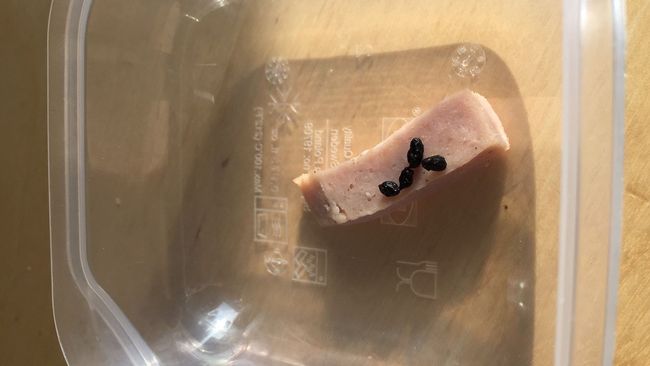
One morning when today’s school lunch was to be cooked at the Torskolan in Torsås, the staff discovered that the falu sausage that would have been cooked was covered with musbajs.

The school called me and told me that something similar to rodent spilling was found on the fallow basket. We then contacted the company from which we buy the sausage, which immediately withdrew it, says Gustaf Nilsson, environmental inspector at Torsås Municipality.

The planned sausage lunch was quickly replaced with soup and a detective work has been underway to find out where the mice have come in.

“I don’t know where they managed to get in, but before it came to school, the sausage was both at a factory and at a transhipment center. However, it is unlikely that it happened at school. The staff has detailed their routines there.

Gustaf Nilsson says he has not been to anything like it before.

“After all, the routines have failed and it is very unfortunate that this has happened. However, the staff at Torskolan did everything right to discover the pellet before starting to cook.”

Samples taken on the sausage show high levels of E. coli, ie some form of stool. The suspicion is that it comes from forest mice.

14 sick: Philadelphia officials issue health alert over E. coli outbreak

Rita Giordano of The Philadelphia Inquirer writes the Philadelphia Department of Public Health on Thursday announced an outbreak of E. coli infections that has sickened 14 people so far.

In a statement, city health officials said their investigation “has identified a few shared restaurant exposures.” It did not name the restaurants.

All 14 affected people, ranging in age from 7 to 90, “presented with signs of acute gastroenteritis with bloody and non-bloody diarrhea,” according to the statement.

The cases have been reported since Aug. 30.

The health department said the illnesses were due to Shiga-toxin E. coli, one of five E. coli strains. Symptoms usually start with non-bloody diarrhea, which can progress to bloody diarrhea after two to three days. Severe abdominal pain and fever may also occur.

Exposure to the bacteria often occurs through contact with food or water contaminated by human or animal stool, or through contact with an infected person. Outbreaks have been associated with consuming undercooked beef, unpasteurized milk, or raw leafy vegetables, as well as exposure at petting zoos.

Nicole Sikora, 31, a performing arts administrator who lives in Northern Liberties, said a severe stomach ache and bloody diarrhea caused her to go to the emergency room of Thomas Jefferson University Hospital about a week ago, where she was told she was infected by E. coli. She said her fiancé, who had similar symptoms, was admitted to Jefferson last weekend and is still at the hospital, being monitored for dehydration.

They sought care when their symptoms didn’t seem to be easing at home.

“I didn’t know if I was going to get better,” Sikora said. “It was really pretty painful.”

Two children die from E. coli complications in Denmark

The Local reports that Danish Patient Safety Authority (Styrelsen for Patientsikkerhed, DPSA) has confirmed that two children have died as a result of complications related to E. coli poisoning. The two cases are not connected.

Two children – one on the island of Funen and another in the Copenhagen area – died due to a rare complication related to VTEC, a strain of the E. Coli bacteria.

Both children died of kidney failure, but the two tragic cases are not connected. A third child also contracted kidney failure but survived, DPSA said.

A consultant doctor and head of department at Copenhagen infectious disease research institute SSI stressed that the cases were not evidence of an outbreak and that the number of cases was not improbable.

E. coli O111:H8: Chaource Lincet and Gaugry raw milk cheeses recalled in France

A few hundred Chaource raw milk cheese brands Lincet and Gaugry, sold throughout France, are subject to a recall procedure after the demonstration of the presence of Escherichia coli. A check has highlighted in these products, manufactured by the Lincet cheese factory in Vaudes in the Aube, the presence of Escherichia coli O111: H8, indicates the cheese Friday in a statement.

This bacterium is likely to cause serious problems in anyone consuming the product, she adds. Nearly 700 Chaource AOP cheeses of 500 grams raw milk, bearing the lot number 227.210 and with a deadline of consumption to 27 September 2019, are concerned, according to the press release.

Lincet brand cheeses have been sold in a variety of supermarket chains, both traditional and fresh, while Gaugry branded cheeses have been distributed in the dairy and market channels.

Adaptation to life inside cattle may be driving E. coli to develop harmful features

A large-scale study of the genetic differences and similarities among E. coli bacteria from cattle and humans indicates that features causing food poisoning in humans may continuously be emerging in bacteria from cattle as a means to better adapt to their environment.

While E. coli bacteria are one of the most well-known causes of food poisoning, a wide variety of E. coli strains exists, many of which are harmless, permanent residents of our intestines. However, the ingestion of harmful strains of E. coli on contaminated food can lead to severe illness, vomiting, and diarrhea.

“To develop the most effective preventive measures, we need a deep understanding of the source and living conditions of the bacteria,” says Yoshitoshi Ogura, associate professor at Kyushu University’s Department of Bacteriology, who led the research.

“Although cattle have long been thought to be a main source of E. coli that cause food poisoning, why dangerous forms would keep appearing in cattle has been unclear.”

Ogura’s group, in collaboration with researchers across Japan and in France, Belgium, and the United States, set out to help answer this question by investigating the genetics of E. coli bacteria collected from cattle and humans in 21 countries spanning six continents.

“To date, there have been only a limited number of reports of the genome sequences of E. coli from cattle, so we needed to fill that gap,” comments Yoko Arimizu, first author on the paper in Genome Research announcing the new results.

While the largest number of samples was from Japan, strains from other regions exhibited characteristics that were well distributed among those from Japan, indicating a good diversity of the set of samples.

Based on the genetic features of the bacteria, the researchers could generally separate the different strains of E. coli into two groups, with one primarily consisting of bacteria collected from humans and the other of those from cattle.

Applying the same analysis to clinically obtained E. coli that are known to cause illness, the researchers found that most of the strains causing intestinal problems belonged to the group associated with cattle.

Furthermore, many of the samples from cattle exhibited features similar to those causing food poisoning, such as the production of Shiga toxin. While these features generally appear not to cause illness in cattle, their prevalence in the investigated samples suggests that such characteristics are beneficial for life in a cattle’s intestine.

“As long as there is pressure to maintain or strengthen these illness-producing characteristics to better adapt to living in a cattle’s intestine, new variants of E. coli that cause food poisoning are likely to continue appearing,” states Ogura.

The researchers speculate that these characteristics may help E. coli protect itself from bacteria-eating organisms present in cattle intestines, but more work is needed to identify the exact reason.

How dangerous E. coli find the best place to infect

Scientists at the University of Virginia School of Medicine have learned how a foodborne illness takes hold.

They were looking into E.coli and how it seeks out the most oxygen-free parts of the human colon to cause the worst possible infection in the body.

According to a release, this new discovery shows how the pathogen knows where and when to begin colonizing the colon on the way to making a person sick.

E.coli reportedly can recognize the low-oxygen environment of the large intestine, which is where it can give itself the best odds of establishing a robust infection.

“Bacterial pathogens typically colonize a specific tissue in the host. Therefore, as part of their infection strategies, bacterial pathogens precisely time deployment of proteins and toxins to these specific colonization niches in the human host,” said researcher Melissa Kendall, PhD, of the UVA Department of Microbiology, Immunology and Cancer Biology. “This allows the pathogens to save energy and avoid detection by our immune systems and ultimately cause disease. By knowing how bacterial pathogens sense where they are in the body, we may one day be able to prevent E. coli, as well as other pathogens, from knowing where it is inside a human host and allow it to pass through the body without causing an infection.”

Humans naturally have E.coli in the colon, and most strains do not cause harm.

However, there are several strains that can cause cramps, diarrhea, vomiting, kidney failure and even death, especially in children.

Oxygen diffuses from the intestinal tissues into the gut, and the small intestine contains comparably higher levels than the large E.coli.

The pathogen waits until it has reached the lower oxygen large intestine before trying to establish an infection.

E.coli has a vital asset in the form of RNA, which activates particular genes when oxygen levels get low enough.

That is when the infection can become established, at which time, the bacteria begin to manufacture Shiga toxins, which are harmful to people.

It is believed other bacterial pathogens, like Shigella and Salmonella, may use a similar control mechanism, but more research is needed to establish that.

The findings concerning E.coli have been published in the scientific journal PNAS.

Food fraud: Connecticut meat supplier pleads guilty to fabricating E. coli test results

In the late 1990s, as on-farm food safety programs started to gain traction at the producer end – and a requirement by retailers – I had a couple of memorable conversations.

Genetically engineered Bt-corn was introduced in 1996 and growers loved it. But powerful technology requires powerful management so at least 20 per cent of a corn field had to be non-Bt-corn — a refuge — to stall the development of resistance. A grower told me he didn’t pay attention to that, his neighbor was his refuge.

At an informal meeting of chicken producers, one told me the paperwork wasn’t onerous, he sat down by the fire on Friday nights and filled out a week’s worth.

I told him it was supposed to be in real time.

But neither of these examples are as a Stafford Springs meat supplier who pled guilty to fabricating E. coli test results in federal court.

Officials told Doug Stewart of Fox 61 Memet Beqiri, also known as Matt Beqiri, 32, of Tolland, waived his right to be indicted and pleaded guilty Tuesday in Hartford federal court to a charge related to his meat processing business’s falsification of numerous E. coli test results.

Beqiri pleaded guilty to one count of making and using a false document and aiding and abetting, a charge that carries a maximum term of imprisonment of five years.  He is scheduled to be sentenced on November 12, 2019.  Beqiri was released on a $25,000 bond.

Ryan J. Woolf, the attorney for Matt Beqiri, said his client was made aware of the issue and worked to rectify the situation. He also said this will “never happen again,” and that “no injuries, illness resulted from this issue.”

Beqiri is the owner and general manager of New England Meat Packing, LLC, in Stafford Springs.

Officials said the company is required to perform one generic E. coli carcass swab for every 300 animals slaughtered and to periodically collect ground beef samples for E. coli testing.

Officials said, “Between November 3, 2016 and September 9, 2017, Beqiri authorized the preparation and submission in the company’s Lab Sample Report binder, which the USDA’s Food Safety Inspection Service (FSIS) reviews, a total of 36 documents relating to 52 separate carcass swabs and ground beef samples on behalf of New England Meat Packing.  The 36 documents were each on the letterhead of a certified laboratory that tests food product samples to ensure safety and wholesomeness and signed by the laboratory director.  The documents stated that the required E. coli testing of samples submitted by New England Meat Packing had been conducted and completed, and that all 52 samples tested negative for E. coli.  In fact, none of the 52 carcass swabs and samples had been submitted or tested by the identified laboratory, or any other laboratory, and the 36 documents were fraudulently prepared using laboratory letterhead obtained from previous testing that New England Meat Packing had conducted with that laboratory.”

Officials said  Beqiri admitted to an investigator with USDA’s FSIS that the documents were fraudulent, and that his business did not collect and submit the samples to the certified laboratory because he did not correlate the potential impact on food safety with his sampling program and wanted to create the appearance he was compliant with all USDA HACCP testing requirements.

There have been no known instances of illnesses reported by anyone who consumed the meat in any of the states where the meat was distributed, according to officials.