Students at UC Santa Cruz have got the spews

Last year I had a pretty crappy birthday – literally. I spent a few days on the toilet, and a few hours in the hospital, after contracting what was likely Norovirus. Today santacruz.com reports that several students at University California Santa Cruz (UCSC) are suffering from the same symptoms. 58 students and staff members are ill with flu-like symptoms, two of which have been hospitalized. One of the students, Zach Mialonis, who was ill less than 24 hours after eating at one of the campus cafeterias, said,

“I woke up around 4:30am throwing up and having horrible diarrhea. A bunch of other kids on my floor got sick too. I had a big quiz the next day that I had to miss.”

According to the report, epidemiologists believe the outbreak is linked to improper hygiene. Jessica Oltmanns, an epidemiologist with the Santa Cruz County Health Department, said,

“Our tests concluded that this was not a point source outbreak. The people affected by the virus were spread throughout campus, and in the end we couldn’t pinpoint where the outbreak occurred. This virus is most often spread by fecal mater and vomitus. It was not food poisoning.”

This isn’t the first outbreak of Norovirus on a campus. Last October Norovirus outbreaks affected Georgetown, USC and UVM; in November, the University of Wisconsin.  Norovirus is common in confined living spaces, like dorms and cruise ships, as it is easily transmitted by exposure to poop, vomit or blood. Symptoms usually persist for 48 to 72 hours, and in extreme cases can lead to hospitalization from dehydration.

The best way to prevent the spread of Norovirus is through proper handwashing, especially after using the washroom. If your roommate is sick, make sure the vomit is properly cleaned up.
 

Facing a recall without superhero senses leaves some vulnerable to confusion

I don’t like fresh tomatoes. Generally, my careful avoidance of them is a fairly unique practice. At least, I thought so until I met Bret. We stand together in our quest for vegetables that don’t leak acid on the rest of the salad.

We were on our honeymoon when the outbreak of Salmonella Saintpaul in tomatoes and/or hot peppers hit the news. Many people joined our stance on tomatoes then… but it took me a while to realize it.

Since I wasn’t reading FSnet while we were gone, I had to hear the warnings put out on eating tomatoes like a regular consumer would. It was like my superhero senses were turned off.

At the time, I wasn’t in the habit of watching the news. And according to the results of a Rutgers Food Policy Institute (FPI) survey,

“The majority of respondents (66 percent) first heard about the advisory on television.”

Throughout our trip, we ate at cafes, buffets, and casual dining establishments. When we didn’t eat out, we stopped at Wal-Mart for cereal and sandwich supplies. None of those places showed signs of produce being recalled.

The survey found,

“A small minority (8 percent) first heard about it from restaurants and retailers.”

As it happened, some of the first news I received came from my step-dad’s mom, who understood the problem to be in tomatoes sold with the vine still attached.

Hearing through the tomato-vine was problematic, though. I later learned the CDC advised,

“…persons with increased risk of severe infections…should not eat raw Roma or red round tomatoes other than those sold attached to the vine or grown at home…”

Those two words, “other than”, were missed (or misunderstood) at some point in the chain of communication that ended with me.

Lead author of the Rutgers FPI report, Dr. Cara Cuite said in a press release,

“Our results suggest that consumers may have a hard time taking in many details about these types of food-borne problems.”

Almost half (48 percent) of people surveyed indicated they were not sure which types of tomatoes were under suspicion.

I was back at superhero headquarters (i.e. in front of my Mac) when Salmonella Saintpaul was found in a sample of jalapenos from Mexico, and again when the outbreak strain was isolated from a Mexican serrano pepper and the water used to irrigate it.

Most consumers weren’t so lucky. From the survey,

“The researchers found that while almost all respondents (93 percent) were aware that tomatoes were believed to [be] the source of the illness, only 68 percent were aware…that peppers were also associated with the outbreak.”

Dr. Cara Cuite commented in the press release,

“This research is especially timely in light of the growing number of recalls as a result of the Salmonella outbreak associated with peanut butter and peanut paste.”
 

How can consumers be better informed? One practice seen in both outbreaks that helped alleviate some confusion was the use of club membership or “loyalty card” information to contact customers who had recently bought recalled products.

What else can be done to clear things up? After all, regular consumers don’t have superhero senses.
 

Norovirus season appears to be here

I’ve always loved the UK term for norovirus: winter vomiting virus. It’s so perfect and descriptive. Norovirus is great, but it doesn’t have the same ring to it.  Seeing that it’s winter in the Northern Hemisphere, parts of Canada and the US are burried under snow and ice, it’s about time for the increase of norovirus stories we seem to have every year. 

This week we’ve seen stories on the classic norovirus scenarios: cruise ships and university settings.

It was reported that Norwegian Cruise Line’s Pride of America ship was the site of an outbreak with 67 passengers and 14 crew members becoming ill.  In some fantastic writing on santacruz.com, staff writer Curtis Cartier reported on an outbreak of noro amongst 58 staff at students at UC Santa Cruz.  Carteir writes: 

Some students, like Zack Mikalonis, initially suspected nasty meatball subs as the culprit.
On the afternoon of Jan. 15, Mikalonis ate at UCSC’s Porter Dining Hall. Though he says he’s learned to steer clear of burritos, sub sandwiches are fair game. But less than 24 hours after chowing down on the hero, he found himself face down in a toilet bowl.
“I woke up around 4:30am throwing up and having horrible diarrhea,” he says. “A bunch of other kids on my floor got sick too. I had a big quiz the next day that I had to miss.”


This week’s food safety infosheet is all about noro.

A couple of months ago Mayra and I came up with our take on cleaning up potentially noro-laced vomit if it hits your locale.

Hong Kong chef attacks complaining customer with meat cleaver

A chef in a Hong Kong noodle bar was facing a jail term Friday after admitting attacking a woman with a meat cleaver when she complained about his food.

A 47-year-old woman grumbled about the meal she was served, so Cheng Chi-wai, 50, ran into the kitchen and came back with two meat cleavers, leaving the woman with a fractured skull and a 6-centimetre long wound that needed 11 stitches. The chef was restrained by other customers.

At a hearing Thursday, Cheng — who has been fired — pleaded guilty to wounding with intent. He will be sentenced on February 18 after background and psychiatric reports are drawn up.
 

Souse your steak to ward off cancer

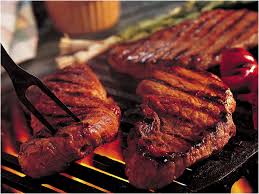
After spending all day leaning against an abandoned shed in the woods with just a rifle and a flashlight, my husband got his doe.

That means lots of deer burger, a few roasts and several steaks are now stuffed in our freezer to feed us cheap for a while.

I’m new to the taste of venison and really hate the way it smells when it’s browning, but my husband makes a delicious teriyaki marinade that covers the gamey taste of those deer steaks perfectly.

He leaves mine on the grill until it’s well-done. That’s how I like it. I think more rare meat has a stringy/gummy texture that is most undesirable.

I know my preference is among the minority, though.

My food microbiology professor boasted of eating his steaks near raw: As long as the steaks haven’t been pierced before cooking (which would allow any bacteria on the outside to get inside the meat), the cook only needs to sear the surface to be rid of most things that could make him sick.

Some people shy away from well-done steaks because meats cooked to high temperatures form heterocyclic aromatic amines (HAs). These HAs are thought to contribute to some types of cancer.

There is hope for the devout well-done crowd, though. Food chemists in Portugal have found that the formation of HAs is significantly reduced when beef steaks are marinated in red wine or beer for six hours before being pan-fried.

I wonder how it does with venison?
 

CHUCK DODD: Eating dirt can be bad for you

New York Times journalist Jane Brody suggests that eating dirt is an instinctive behavior in humans. In her article, Eating dirt can be good for you – just ask babies, she interviewed researchers who think people should eat dirt in order to stimulate their immune system.  Brody says that immune system disorders such as asthma and allergies have risen significantly in the United States. 
Although allergies do appear to be on the rise, the awareness of allergies, the ability to diagnose allergies, and the number of people at risk (the U.S. population) have also risen significantly. 

The director of gastroenterology and hepatology at Tufts Medical Center in Boston, Dr. Joel Weinstock, said in the interview,

"There are very few diseases that people get from worms. Humans have adapted to the presence of most of them. … Children should be allowed to go barefoot in the dirt, play in the dirt, and not have to wash their hands when they come in to eat…let kids have two dogs and a cat, which will expose them to intestinal worms that can promote a healthy immune system.”

Dr. Weinstock, I’m sure glad you aren’t my doctor. 

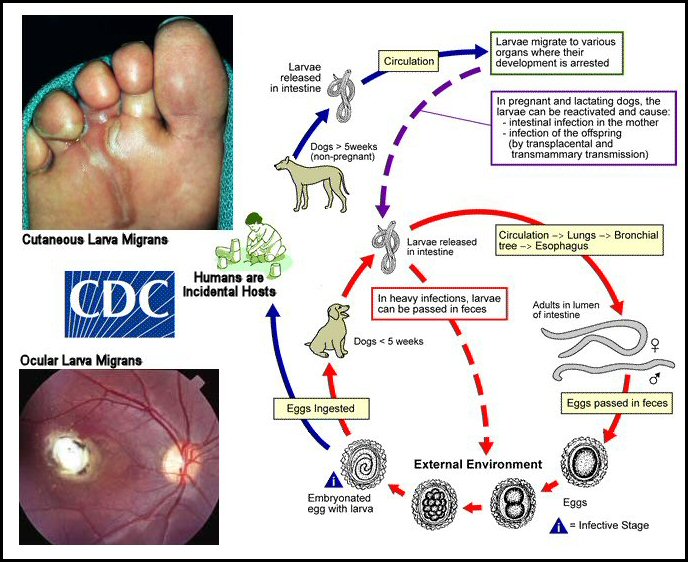
I agree that immune systems are naturally stimulated by various exposures to the environment, and that Americans use too many antibacterial products, but I question Dr. Weinstock’s knowledge of zoonotic diseases.  Intestinal parasites from animals that infect humans, since many are not adapted to humans, often leave the intestines and migrate through the body.  There are approximately 10,000 human cases of larva migrans in the U.S. each year.  Unfortunately, most of these cases are in children, and a few of these kids die.

Eating dirt is an instinct?  Not for me.  Babies eat dirt because they don’t know better.  Some may think that bad behavior is an instinct, but calling bad behavior an instinct doesn’t excuse it.  Bad advice shouldn’t be excused either. 

Dirt may have poop in it, so don’t eat it.


Top Chef Super Bowl

The Super Bowl of football (at least in the U.S.) is Sunday so Top Chef on Wednesday decided to do a football-themed challenge that was probably taped 6 months ago.

The football metaphors used in the show were as corny as the ones in a recent press release — USDA gives food safety advice to kick off your Super Bowl party – but at least USDA provided accurate cooking advice:

“Color is not a reliable indicator of safety — internal temperature is. Use a food thermometer to be sure meat and poultry are safely cooked. Steaks should be cooked to 145 °F, ground beef should be cooked to 160 °F and all poultry should be cooked to 165 °F.”

On Top Chef, Jeff and his excessively complex meals were sent packing, although the always entertaining Fabio should have lost for overcooking venison.

Judge: The deer was already dead. You didn’t have to kill it again.
Fabio: It was still bleeding when I sliced it; it was beautifully pink.
Judge: That’s medium-rare?
Fabio: Yes

Use a thermometer, Fabio. It will make you a better cook.

Oh, and Carla (below) won, and proclaimed, “Hands up, whoa. Touchdown Carla”


FDA announces massive Peanut Corp of America recall

Multiple outlets are reporting tonight that every peanut, every ounce of peanut oil and all peanut butter and paste products produced by Peanut Corporation of America in its Blakely, Georgia plant since January 2007 has been recalled.

From the FDA website:

PCA sells its products to institutional and industrial users for service in large institutions or for sale and further processing by other companies. PCA does not sell peanuts or peanut products directly to consumers in stores.

The expanded recall includes all peanuts (dry and oil roasted), granulated peanuts, peanut meal, peanut butter and peanut paste. All of the recalled peanuts and peanut products were made only at the company’s Blakely, Georgia facility; the lot numbers and a description of the products being recalled are listed at the end of this release. The Blakely, Georgia facility has stopped producing all peanut products.

Peanut Corporation of American released a statement tonight that includes the following:

“The goal of Peanut Corporation of America over the past 33 years has always been to
follow the U.S. Food and Drug Administration’s good manufacturing practices in order to provide a safe product for consumers. It is because of our commitment to our customers and consumers that PCA has taken extraordinary measures to identify and recall all products that have been identified as presenting a potential risk."

"PCA uses only two highly reputable labs for product testing and they are widely used by the industry and employ good laboratory practices. PCA categorically denies any allegations that the Company sought favorable results from any lab in order to ship its products."

"We want our customers and consumers to know that we are continuing to work day and night with the FDA and other officials to determine the source of the problem and ensure that it never happens again.”

Being proactive and keeping food that has tested positive for a pathogen off of the plates of consumers is good for public health.  Waiting until illnesses are reported is irresponsible and demonstrates a lack of concern for customers. PCA’s words say that they place the utmost importance in food safety, but their reported actions suggest that investigating and fixing a pathogen problem is only important when there are illnesses, not before they occur.

As for PCA’s customers, knowing the food safety practices of a supplier, no matter whether it’s at a farmers market or a multi-national is really important. If they’re in China or around the corner, they need to follow the rules and know how to reduce risks. This goes beyond relying on third-party audit results. Tracking where product goes and knowing what inputs went into it is the cornerstone of a good culture of food safety.

CRAIG ANDREW-KABILAFKAS: This article made me barf

I’m usually immune to many of the crazy notions that appear in FSnet, but having been touched by the recent and tragic Pseudomonas aeruginosa-linked death of Brazilian model Mariana Bridi, reading  Eating dirt can be good for you – just ask babies  made me barf. Surely it’s not too hard to understand that the evolutionary advantage Jane Brody references is Darwin’s survival of the fittest.  This means that the weak do not survive, they die.  Yes, it is better for humanity in the long run, but are there really parents alive today that want to play Russian roulette with their infants? 

Not me.

I know that 99% of the food that my kids eat is not sterile.  If tested it in a food microbiology lab there will be a bacterial count, but hopefully no pathogens.  I know that my mouth has trillions of bacteria resident in it even though I brush and floss my teeth twice daily.  I know that the air is not sterile and that my nose connects to my throat.  Some of the bacteria filtered by my nostrils will make their way into my throat and stomach.  Same with my kids.  I want my kids to survive and thrive so I get them to practice good personal hygiene.  I teach them about understanding and avoiding risk.  I think that it is an instinctive behaviour for children to crawl, but I prevented my children from crawling on the road because they had no concept of the risk of being hit by a car.

I also stopped them from putting dirt into their mouth.  They are still alive, strong and healthy today.  Bacteria don’t have discretion.  Mariana Bridi was in her prime and yet could not withstand the attack of a potent and pathogenic invader.  All of our knowledge, technology, and intellectual effort could not defeat her Pseudomonas aeruginosa infection.  Is society better off for her passing? 

Bridi’s untimely death has affirmed my knowledge that survival of the fittest is still in play.  It can also serve to remind that we are not good judges of what is truly meant by "fittest".  Your child may look healthy and robust, but by exposing her to pathogens that are readily found in dirt and pet faeces you are conducting a life threatening experiment. You are playing Russian roulette with your child’s life and that is not the way to ensure survival. 

Practice good personal hygiene, good parenting and just hope that you and your family are fortunate enough to avoid the deadly, painful and destructive pathogenic bacteria that surround us.

Craig is a food microbiologist working as a food safety consultant across the Australasian region.
 

When worlds collide: engineering and food safety

After breakfast in the morning, my husband and I go our separate ways until dinner. Bret, who studied agricultural engineering in college, designs turf equipment. That’s him at right on an old prototype mower managing the turf in our backyard.

As you all know, I studied food science and industry. With the help of Doug and Phebus, I found my way to writing about food safety.

Our worlds collided this morning when I pulled his engineering magazine out of the pile of mail in the kitchen and saw the words “food safety” staring back at me.

The cover article was by another ag engineer, Nathan Anderson, who works with the FDA’s National Center for Food Safety and Technology in Illinois.

In the article, Anderson points out that,

“Increased concern over microbiological safety in terms of public health and international trade has led to a shift in how microbial risks are assessed and controlled.”

In order to have fewer sick people and more world trade, governments are adopting new risk-based approaches to food safety management and ditching the old prescriptive control measures.

Anderson’s article describes the Food Safety Objective (FSO) approach to risk management, which sets as a goal a maximum population for a certain microbe in the food being processed.

Processors must then control the levels of the microbe on/in incoming product initially, reduce levels if necessary, and prevent any increases.

This, of course, can be expressed by a mathematical equation (since it’s an engineering concept). But I won’t do that here.

Developing processes based upon known risks—as opposed to long-standing beliefs—is a smart way to do business. Engineers just say it differently than food safety writers.

Engineer: 

burger + E. coli + food thermometer > burger + E. coli + color-based estimate

Food safety writer: