Florida not inspecting food at hospitals, nursing homes

In a few weeks we’ll be leaving for a month of seaside (Gulf-side) writing in Florida.

As food safety dude and axman Roy Costa has pointed out, I sure hope I don’t end up in a Florida hospital, because no one is doing food inspections.

The Department of Health told Associated Press yesterday it’s working with other agencies to figure out who will handle inspections at the state’s 286 hospitals and 671 nursing homes. Meanwhile, the Department of Children & Families is temporarily taking over the inspection of day-care centers, which were also part of the cuts.

The health department had been inspecting facilities four times a year until Gov. Charlie Crist signed a bill (HB 5311) stopping them. Experts say people at these facilities are the most vulnerable for foodborne illnesses.

DCF Secretary George Sheldon said his agency decided to fill the gap at day cares and will temporarily oversee inspections because “it was the right thing to do.”

DCF employees already inspect day-care facilities for safety issues. Sheldon said the Legislature was trying to consolidate inspections to prevent multiple state agencies from visiting the same facilities to inspect different standards.

The health department inspected more than 15,000 day-care centers last year, finding nearly 12,000 violations, including food from unsafe sources, poor hygiene and contaminated equipment.

I don’t really care who inspects as long as there is accountability in the system through — at a minimum — public availability of results and mandatory training for anyone who handles and prepares food.
 

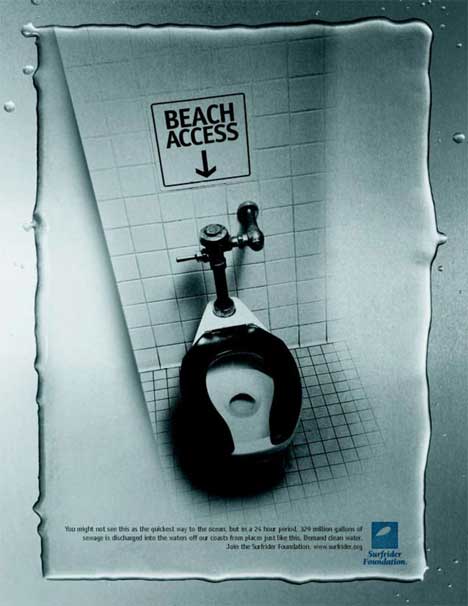
Beach barf: E. coli O157:H7 hospitalizes 3, closes beach in Bemidji, Minn.

There’s a beach closed somewhere every summer day, usually because of high E. coli counts, often linked to some form of sewage. I don’t report on the closings although am sympathetic if it’s your beach.

But when the beach at Diamond Point Park in Bemidji, Minnesota, was closed Thursday, I paid attention, because three swimmers seem to have acquired not the fecal coliform, but the far more dangerous E. coli O157:H7.

The Minnesota Department of Health spokesman Doug Schultz said three people became ill July 12 and July 13 from E. coli, and health officials have now determined that the common link was that all three had visited the beach sometime from July 8-11, adding,

"We would be looking for other possibilities, like food sources. But the common link appeared to be just the fact that they were swimming."

Minnesota Public Radio News reported that all three of those who became ill from the E. coli O157:H7 were hospitalized, and one person developed a complication called hemolytic uremic syndrome, which can affect the kidneys and can be fatal.
 

Over 80 sick from campylobacter in Montana resort well water

Whenever I go to a cottage or a camp – rare these days — I always ask about the water source, how often it is tested and whether it is chlorinated. Most people can readily answer; some can’t.

County and state health officials on Friday said several people have become ill after consuming water from a privately owned public water supply near Hebgen Lake, Montana (right, exactly as shown).

The Montana Department of Public Health and Human Services has confirmed 14 cases of campylobacter gastrointestinal illness. Information collected about the cases "strongly suggests that exposure occurred at the Campfire Lodge Resort," according to the statement. At least 70 more cases are considered "probable."
Along with county health agents and DPHHS, the Montana Department of

The owners of the resort are cooperating with the probe, and have taken action to prevent future illnesses.

New Jersey man sentenced for vomiting on baseball fans

Mugshot hall-of-famer and deliberate vomiter on other people at baseball games, Matthew Clemmens, 21 (right, exactly as shown), was sent to prison for at least 30 days, given two years probation, and ordered to serve 50 hours of community service, and pay $315 in restitution after the incident.

Reuters cited the district attorney’s office as saying in a statement that,

"Clemmens pleaded guilty to making himself throw up on a young girl at a Phillies game.”

USA Today reported in April, 2010, the barf started brewing when the man’s friend was kicked out of the stadium after the police captain complained to security about their drunktard ways which included cursing and spitting at people. When the man’s friend was escorted out of the place, he retaliated by putting his fingers down his throat and barfing all over an off-duty police captain and his 11-year-old daughter.

When police arrived to arrest the man, he spewed on another officer. In addition to attacking the officers with the insides of his stomach the man also punched a couple of cops.

Baseball is so boring.

Muppet and RNC chairman Michael Steele sidelined with food poisoning

Republican National Committee Chairman and Muppet impersonator Michael Steele had to cancel an appearance today before a national meeting of black journalists because of a bad case of food poisoning.

A RNC spokesman said in an email to CNN,

"While traveling out West the Chairman came down with a bad case of food poisoning. He is disappointed to miss the opportunity to take part in this valuable dialogue and looks forward to engaging with NABJ in the very near future."

The Daily Show With Jon Stewart Mon – Thurs 11p / 10c
Steele Crazy After All These Years
www.thedailyshow.com
Daily Show Full Episodes Political Humor Tea Party

Are catered meals the biggest source of foodborne illness in America?

In the wake of several high-profile outbreaks of foodborne illness at catered events – 180 people barfing after 3 events prepared by an unlicensed caterer in North Dakota last year, and 57 people barfing at events at an Illinois catering hall this month – MSNBC reports today catered events make more people sick than outbreaks involving meals at restaurants or prepared at home.

Uh-huh.

The story says that new figures from the U.S. Centers for Disease Control “show that illnesses from reported outbreaks of food poisoning linked to catering outpace those from restaurants or home cooking. 36 illnesses per catering outbreak; 13 at restaurants or home-prepared meals.

Between 1998 and 2008, there were 833 outbreaks of foodborne illness traced to caterers, incidents that sparked 29,738 illnesses, 345 hospitalizations and 4 deaths, according to Dana Cole, a CDC researcher.

Proportionately, the outbreaks from catering are higher than the 22,600 illnesses from 1,546 reported home cooking outbreaks and the 101,907 illnesses from 7,921 outbreaks in restaurants and delis.

“Partly that’s because at larger banquets and weddings the number of people served tend to be larger,” Cole said.

Uh-huh.

I hadn’t heard about this new data, and can’t comment on its validity because it hasn’t, as far as I can tell, been published anywhere. One, Dana Cole, and a couple of others from CDC are scheduled to present results next Tuesday at the annual meeting of the International Association for Food Protection in a talk entitled, Sources and settings: contaminated food vehicles and the settings of foodborne disease outbreaks.

Usually the media stuff happens after the data is at least presented, and preferably after the paper is peer-reviewed and published. I look forward to reading the scoring system the researchers uses: if spinach is contaminated on a farm with E. coli O157:H7 and makes people barf after eating at a catered event, a restaurant, or a home, how is that scored? And does it matter?

Jacob, C.J. and Powell, D.A. 2009. Where does foodborne illness happen—in the home, at foodservice, or elsewhere—and does it matter? Foodborne Pathogens and Disease, 6(9): 1121-1123.
http://www.liebertonline.com/doi/abs/10.1089/fpd.2008.0256

??Foodservice professionals, politicians, and the media are often cited making claims as to which locations most often expose consumers to foodborne pathogens. Many times, it is implied that most foodborne illnesses originate from food consumed where dishes are prepared to order, such as restaurants or in private homes. The manner in which the question is posed and answered frequently reveals a speculative bias that either favors homemade or foodservice meals as the most common source of foodborne pathogens. Many answers have little or no scientific grounding, while others use data compiled by passive surveillance systems. Current surveillance systems focus on the place where food is consumed rather than the point where food is contaminated. Rather than focusing on the location of consumption—and blaming consumers and others—analysis of the steps leading to foodborne illness should center on the causes of contamination in a complex farm-to-fork food safety system.

Kidding around with St. Louis goats- how to inform the public about petting zoo dangers

I find it physically impossible for me to get enough animal interaction. I suppose that means I must’ve chosen the right profession: Veterinary Medicine. I’m a frequent patron of Sunset Zoo here in Manhattan, Kansas, but during my last visit I was sad to learn that the petting zoo area was sectioned off from the public. Zoo patrons are still able to go up to the fence to pet the goats, but they can no longer walk amongst them in their enclosure. I have no idea if this change had to do with any of the recent petting zoo outbreaks, but I suppose it’s a step in the right direction for public health.

 I still love going to petting zoos, though they have quite a bad rap these days. The most memorable petting zoo outbreak that comes to mind is of the E. coli O157 outbreak at the Godstone Farm petting zoo that sickened 93.
 
The large number of sick kids resulted from a combination of poor food safety information and slow reporting by health officials. There are quite a lot of petting zoos that do things wrong, such as not providing access to handwashing stations after animal interaction. This past weekend I visited a petting zoo in St. Louis, and I was pleased to see some food safety signs posted outside the gate of the animal area and also by the handwashing station right next to the animals.
 
 
The petting zoo I visited was inside of http://www.grantsfarm.com, a historic plot of land within St. Louis formerly owned by Gen. Grant and currently operated by the Busch family. The petting zoo was entirely made up of goats, and for a few dollars patrons could purchase a baby bottle full of milk to feed to the goats. The handwashing stations with soap and water right next to the exits satisfied my public health concerns. However, I would’ve been happier with paper towels for drying rather than the hand dryers that were available.
 
I was also happy about the signs posted around the petting zoo that read,
 
In accordance with the U.S. Center for Disease Control and Prevention, we provide hand washing stations, antibacterial soap, warm water, and air hand dryers for visitors to our animal interaction areas. Additionally, petting brushes are available to reduce hand contact with the animals.
 
Posted below was,
 
Pregnant women, senior citizens and immunocompromised persons are at higher risk of serious infections. When contacting animals, Grant’s Farm suggests heightened precautions, and children under 5 years be closely supervised.
 
Of course these signs were nice to have around, but it doesn’t mean anything if parents don’t read them. Unfortunately I saw quite a few kids with their hands in their mouths inside the petting enclosure. I think Grant’s Farm did a good job of informing the public of the risks while still encouraging people to pet the animals. The petting brushes are a germ-a-phobe’s dream, though I didn’t use one.
 
All in all, the kids had a blast and the goats were fed. And now I have 52 pictures of goats on my camera.

What’s in a label? Is chicken injected with salt and water ‘all-natural’

Food is 21st century snake oil.

And shopping for food can be so confusing.

Natural, organic, local, antioxidants, welfare-friendly, whole wheat made predominantly with white flour, hormone-free, hucksterism of whatever kind.

Juliana Barbassa of Associated Press reports today that a disagreement among poultry producers about whether chicken injected with salt, water and other ingredients can be promoted as "natural" has prompted federal officials to consider changing labeling guidelines.

The U.S. Department of Agriculture had maintained that if chicken wasn’t flavored artificially or preserved with chemicals, it could carry the word "natural" on the package.

But the agency agreed to take another look at its policy after some producers, politicians and health advocates noted that about one-third of chicken sold in the U.S. was injected with additives that could represent up to 15 percent of the meat’s weight, doubling or tripling its sodium content. Some argue that could mislead or potentially harm consumers who must limit their salt intake.

The USDA’s Food Safety and Inspection Service plans to issue new proposed rules this fall.

Perdue, the nation’s third largest poultry producer, is among those pushing for a change. The company has joined a group called the Truthful Labeling Coalition, which has hired a lobbyist and launched an advertising campaign.

The two largest chicken processors, Pilgrim’s Pride and Tyson Foods, are among those that affix "natural" labels to chicken injected with extra salt and water.

A buyer perusing the chicken counter at a San Francisco supermarket agreed.

Muembo Muanza, 30, said he read the label and considered the price but never thought to check the salt content when buying fresh chicken.

"If it says natural, I expect it to be all natural – nothing but chicken," he said.

I’d be more interested if food-types would start marketing based on microbial food safety.

FDA needs to fix ‘audit creep’ if it can says Georgia fruit and veg growers

Audit creep is not something Chapman was knowingly called while visiting farms – maybe behind his back.

For this story, audit creep refers to the expanding inclusion of more requirements on growers of fresh produce, many which have nothing to do with food safety. The Georgia Fruit and Vegetable Growers Association explains excetpts below from a submission to the U.S. Food and Drug Administration on ways to improve preventative controls for produce safety (thanks to Tom Karst of The Packer for continuing to keep his eye on comments being submitted).

Food safety has long been a crucial part of GFVGA with the creation of the Georgia Good Agricultural Practice Food Safety Program (GA GAP) in 2000. We provide food safety education to producers across the southeast at various conferences as well as one-on-one farm visits. The GA GAP program also helps in the implementation of food safety plans, documentation and training on farms and in packing facilities as well as preparing producers for third party food safety audits.

Currently, there are more than 75 farms or packing facilities that have passed a certified third party food safety audit through the GA GAP program. We have provided one-on-one food safety training at approximately 300 farms and packing facilities across the southeast.

The 1998 FDA document, Guide to Minimize Microbial Food Safety Hazards for Fresh Fruits and Vegetables, has served as the basis for food safety policy in the United States. It has allowed our nation and the produce industry to set a foundation from which sound, safe farming and handling practices were established.

The Georgia Fruit and Vegetable Growers Association supports a federal food safety policy. Federal oversight is seen as the only way to establish and enforce a level playing field for all parts of the industry from producer to broker, retail chain to consumer.

In the current situation with no federal oversight, the food safety industry is decided by each retail supplier, food service organization, or brokerage firm. In 1998 there were no problems with food safety audit company checklists drifting far from the common foundation of the new FDA guidance. As consumers became more educated about their food and food sources and technology allowed for more quickly identifying food borne illness clusters, retail organizations began asking for more stringent food safety standards to lower their liability and tout their safer food supply.

They also began to demand the inclusion of non-food safety related materials such as business practices and sustainability on third party food safety audits. These tighter standards and non-food safety related demands are not bad, however they are not based on any science or industry practice; simply the idea that more is better.

Over the past twelve years this “audit creep” has continued and audit company’s marketing teams and delivery systems have grown more sophisticated. Many retail chains will pick one audit company format and require all suppliers use that service. Many of the larger producer, packer, shipper operations with multiple customers must undergo multiple audits.

Research has shown all audits contain 85% to 90% of the same questions. This proves to be a monetary, personnel, and time burden as audits begin at $750 (not including auditor travel expenses), audits last on average one to one and a half days and the auditor must be accompanied at all times during the audit. Food safety is no longer a small piece of the marketing program but an integral cog in the entire operation.

The common message from grower members of GFVGA is they see the value of food safety programs and are willing to make the necessary changes. What growers do not like is having the audit standards change year to year. Many of the grower’s customers will require one audit company and format one year and change to a different required audit company and format the second year. While most of the information is encompassed in their food safety, the difference in audit format, audit expectation, different metrics and constant change takes time and money.

The Georgia Fruit and Vegetable Growers Association supports a common foundation with the updating of the 1998 FDA guidance. We feel any federal food safety program, guidance and/or oversight should consist of science based regulations. This is one area that will require substantial time and resources as the research is simply not available. One example is water quality. In the absence of definitive microbial standards for irrigation water, the authors of the California Leafy Greens Market Agreement Best Practices Document have chosen to use the U.S. Environmental Protection Agency’s recreational water standards. Scientific research is needed to show if these standards are appropriate for irrigation water. …

The expense of a food safety program is not in implementing the program, changes and documentation. The expense is in having a third party audit. If federal guidance does not require a private audit from a third party, much of the monetary anxieties are taken away. An argument can be made that a smaller operation has less literal hands involved and can be more closely monitored. However E. coli and other harmful bacteria do not know whether they are in a 2 acre field or 200 acre field. Having a food safety program in place with documentation to remind and ensure Good Agricultural and Handling Practices are used is beneficial for all farms and consumers.”

Respectfully submitted,
Beth Bland
Director of Education and Food Safety
Georgia Fruit and Vegetable Growers Association